Milford Sound and Fiordland National Park: A Visitor Guide to the Fiord
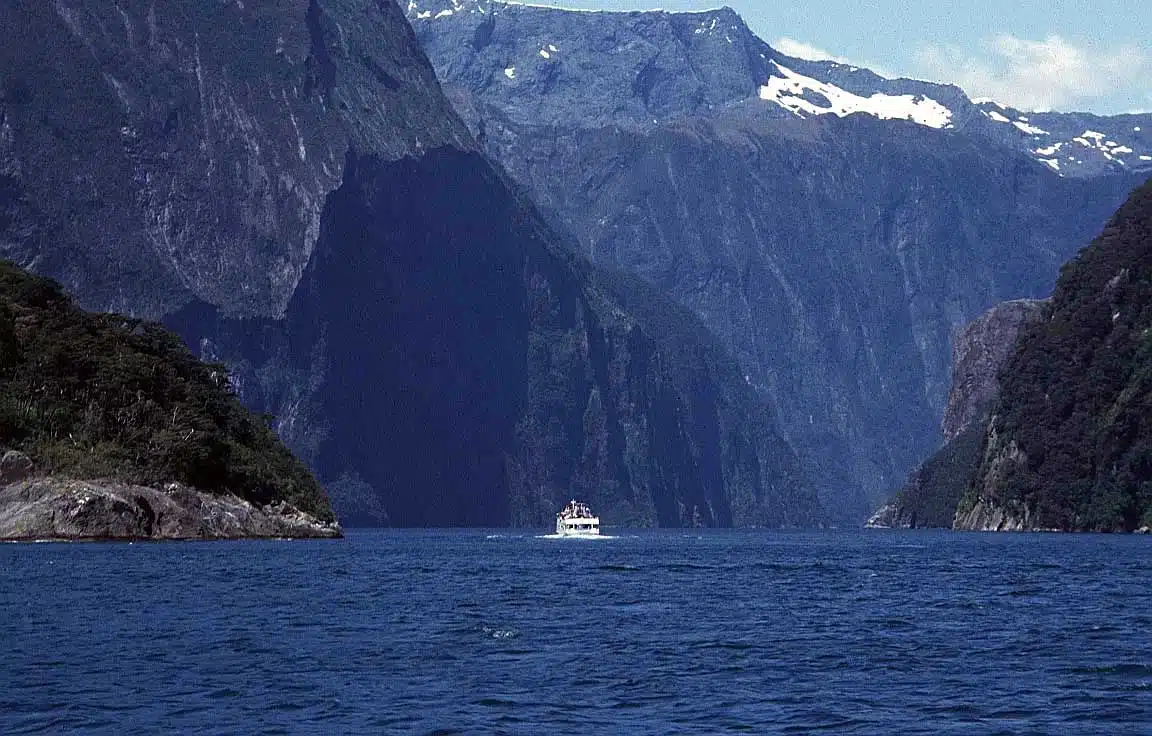
Milford Sound, or Piopiotahi in Māori, is a fiord on the wild south-west coast of New Zealand’s South Island. Granite walls rise straight out of dark water, waterfalls drop from hanging valleys and Mitre Peak stands guard over the fiord. It lies in Fiordland National Park, New Zealand’s largest national park and part of the Te Wāhipounamu World Heritage Area.
Beyond the boat cruise there are alpine walks, beech forest, kayaking, wildlife and a quieter fiord at Doubtful Sound. Browse our free photos of New Zealand to get a feel for the scenery before you go. Here are the 10 best things to do in Milford Sound and Fiordland National Park, with tips on when to go and how to plan your trip.
1. Take a cruise on Milford Sound
The classic way to see the fiord is from the water. Day cruises sail from the terminal out towards the Tasman Sea and back, under cliffs that rise more than a kilometre from the water. Several companies run trips, and a few offer overnight stays on board. Book ahead in summer, when visitor numbers now hit records. Midday is the busiest time at the terminal, so early or later sailings are often calmer.
2. See Stirling Falls and Lady Bowen Falls

Two permanent waterfalls are the highlights of any cruise. Lady Bowen Falls drops close to the terminal, so you see it before you even board. Stirling Falls pours from a hanging valley further along the fiord, and most boats edge in close enough for people on deck to feel the spray. After heavy rain, hundreds of short-lived waterfalls appear across the cliffs. Many locals say a wet day is the best time to visit.
3. Look up at Mitre Peak

Mitre Peak, at 1,692 metres, is the pointed mountain on almost every Milford Sound postcard. You get the best view from the water, but a short foreshore walk near the car park also gives the classic scene across the fiord. Come early or late in the day, when the light is softer and the water is more often still enough to reflect the peaks.
4. Paddle a kayak on the fiord
Guided kayak trips leave from Deepwater Basin, near the head of the fiord, and many use stable double kayaks that suit beginners. Sitting low on the water, you feel the true size of the cliffs. Wind often picks up during the day, so guides choose the route on the day. Book in advance, wear warm layers and expect to get a little wet.
5. Watch for dolphins, seals and penguins

Part of the fiord is protected as the Piopiotahi Marine Reserve. Bottlenose dolphins often visit, and New Zealand fur seals rest on rocks near the entrance. From late winter into spring, look for tawaki, the Fiordland crested penguin. Below the surface, a layer of fresh rainwater keeps the sea dark, so black coral grows much shallower than usual. Fishing is not allowed in the reserve. Keep your distance from animals.
6. Drive the Milford Road
State Highway 94 runs about 120 kilometres from Te Anau to Milford Sound and is one of New Zealand’s great alpine drives. The Eglinton Valley opens into wide grassy flats, and the Mirror Lakes boardwalk shows the Earl Mountains reflected on calm days. Higher up, the single-lane Homer Tunnel runs through solid rock, controlled by traffic lights. Kea, the cheeky alpine parrots, often wait near the tunnel. Do not feed them, as human food harms them.
7. Walk to Key Summit and Lake Marian

For the best short hike, start at The Divide on the Milford Road. The first part of the Routeburn Track climbs through beech forest draped in moss to a side track for Key Summit. Allow about three hours return. At the top, small alpine tarns sit among tussock, with views over the Hollyford Valley and the Darran Mountains. Nearby, the Lake Marian Track passes waterfalls on its way to a lake set below steep peaks. Its upper section is rough.
8. Hike the Milford Track
The Milford Track is New Zealand’s best-known Great Walk, a four-day route of about 53 kilometres. It starts at the head of Lake Te Anau, follows the Clinton Valley, crosses Mackinnon Pass and passes Sutherland Falls before ending at Sandfly Point, where a boat takes you to Milford. In the Great Walks season, from November to April, the three huts must be booked well in advance and camping is not allowed. Bookings usually open in May and fill quickly.
9. Fly over Fiordland
A scenic flight shows how vast Fiordland is. Small planes and helicopters fly from Queenstown, Te Anau and the Milford Sound airstrip, passing over glaciers, lakes and remote fiords. Fly, cruise and fly packages from Queenstown avoid the long drive altogether. Flights depend on the weather and are often cancelled when cloud sits low, so plan a spare day if a flight matters to you.
10. Visit Doubtful Sound
Pātea Doubtful Sound is one of Fiordland’s largest fiords, and much quieter than Milford because no road reaches it. The trip has three stages: a boat across Lake Manapōuri to West Arm, a coach over Wilmot Pass, then a cruise through the long, branching fiord. Day trips and overnight cruises leave from Manapōuri, a short drive from Te Anau. Many visitors remember the silence when the boat cuts its engines.
When to visit Milford Sound
Summer, from December to February, brings the longest days, the warmest weather and the biggest crowds, and the Milford Track season runs from November to April. March and April are often quieter. Winter brings snow on the peaks and some clear, still days, but avalanche season on the Milford Road usually runs from June to October, and the road can close at short notice. Rain falls in every season here, but it also fills the waterfalls. Sandflies bite in the warmer months, so carry repellent.
Tips for planning your trip
Te Anau is the best base, with places to stay, shops and the last reliable fuel before Milford, as Milford has only an emergency pump that takes some credit cards. The drive takes around two hours without stops. A day trip from Queenstown is possible but long, so many people take a coach tour or fly instead. Check road conditions before you set off, and in winter carry snow chains when signs require them. Parking at the Milford terminal is charged. Stay at least two nights to allow for weather. In Te Anau, the boat trip to the Te Anau Glowworm Caves fills a spare evening. The government has proposed an entry charge for international visitors to Milford Sound, so check the Department of Conservation website for the latest rules. Before you travel, check your government’s current travel advice for New Zealand.
Questions about Milford Sound
Is Milford Sound worth visiting in the rain?
Yes. Rain brings hundreds of temporary waterfalls down the cliffs, and many people think the fiord looks its most dramatic on a wet day.
Can you visit Milford Sound as a day trip from Queenstown?
You can, but the road trip is long, often around four hours each way. A coach tour or a scenic flight saves you the driving.
Should I choose Milford Sound or Doubtful Sound?
Milford Sound is easier to reach and has Mitre Peak and the big waterfalls. Doubtful Sound is larger and quieter but takes a full day, so choose it if you have more time.


