Best Time to Visit England: Month by Month Guide to Weather, Crowds and Festivals

The best time to visit England is from May to September, when the days are long, the weather is at its mildest and gardens, coast paths and outdoor events are at their best. For good weather with fewer crowds, aim for late May, June or September, outside the school summer holiday that runs from late July to early September.
This guide goes through England season by season: what the weather is like, when the crowds peak, which festivals are worth timing a trip for and what closes in winter. For ideas on where to go, browse our free photos of England, from London to the Jurassic Coast.
Best time to visit England at a glance
- Best overall: May, June and September, with long days, mild weather and smaller crowds than in high summer.
- Best for good weather: July and August, the warmest months, with highs of around 21 to 23°C in the south.
- Best for fewer crowds and lower demand: January to March, outside the February half term, when museums and cathedrals are quiet.
- Best for beaches and coast walks: July to September, when the sea off Dorset reaches around 17 to 18°C.
- Best for festivals and events: June to August, from Wimbledon and the Proms to Notting Hill Carnival.
- Time to avoid: no month is bad, but November to January brings the most rain and the shortest days.
Spring (March to May)
Spring starts cool and damp in March, with highs of around 11 to 12°C, but it warms up quickly and May is often mild and bright. The clocks go forward in late March, so evenings get longer fast. Daffodils come first, then bluebells fill the woods from late April into May, and gardens are at their freshest. Many National Trust houses and other seasonal sights reopen in March or by Easter after their winter closure.
Crowds stay moderate, except during the Easter school holidays and the two May bank holiday weekends, when hotels and coast roads fill up. Events worth timing a trip for include the London Marathon in April and the RHS Chelsea Flower Show in May.
Summer (June to August)
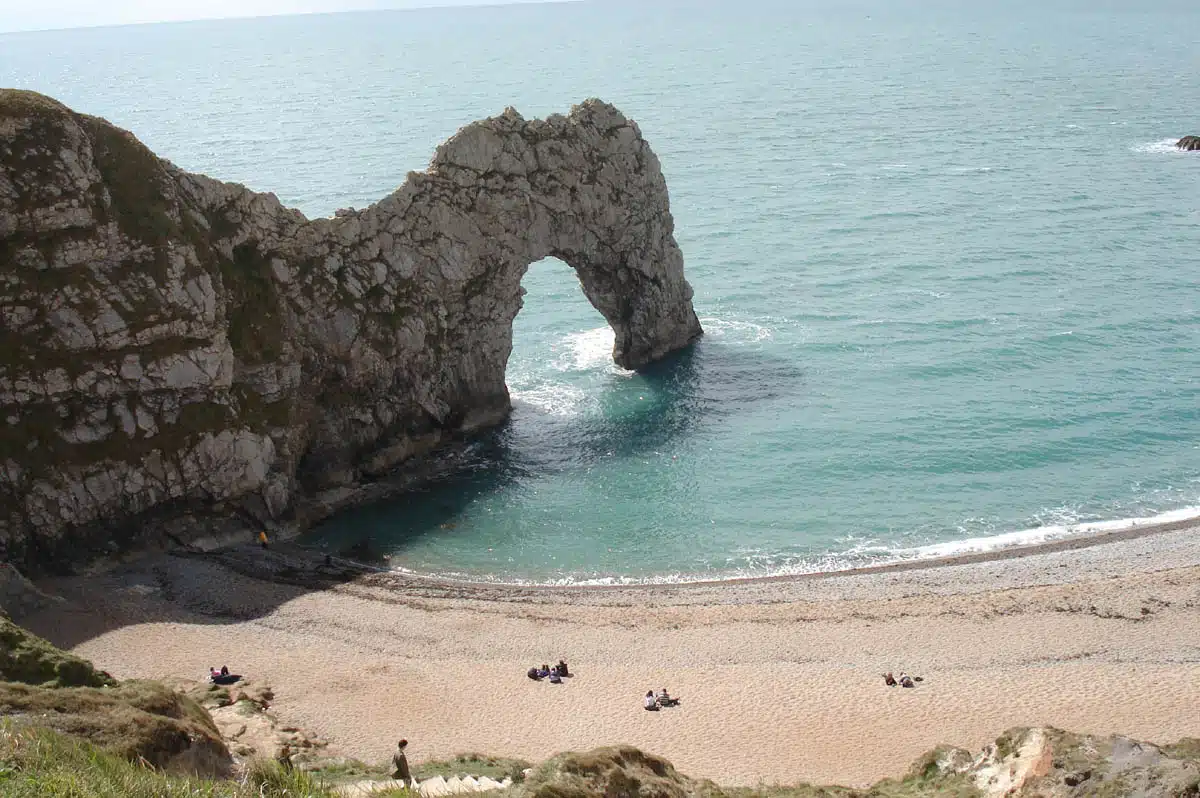
Summer is the warmest and busiest season. London averages around 23°C in July, and heatwaves have become more common in recent years, though showers and grey days are still part of a normal summer. Around midsummer it stays light until after 9pm. This is the best time for the coast: the beaches of Dorset, Devon and Cornwall, and walks on the Jurassic Coast. The sea is still cool, so expect a bracing swim.
From late July the school holidays make Cornwall, the Lake District and the south coast very busy. In London, the State Rooms of Buckingham Palace open to visitors from July into September. For ideas, see our guide to things to do in London.
Autumn (September to November)

September is one of the best months of the year. The weather is often settled and mild, the sea is still near its warmest, and beaches and national parks get much quieter once schools go back. October brings autumn colour to parks, forests and the hills, though it is wetter and the October half term makes one week busier.
November is the dullest month for many visitors: it is wet, often windy, and after the clocks go back in late October it gets dark by around 4pm. Some seasonal attractions close at the end of October. On the plus side, cities are calm, Bonfire Night lights up the sky on 5 November, and Christmas lights and markets appear during the month.
Winter (December to February)

Winter is cool, damp and dark, with highs of around 8°C in London in January. Snow is rare in the south but more likely on high ground in the north, such as the Pennines and the Lake District. Days are short, with sunset around 4pm in December.
December is busy in the cities, with Christmas markets, shopping, theatre and New Year’s Eve fireworks on the Thames. Trains do not run on Christmas Day, and services are limited on Boxing Day. January and February are the quietest months, which makes them good for museums, galleries and cathedrals. Many stately homes and gardens stay closed until spring, so check before you travel.
Festivals and events by month

- April: London Marathon, one of the world’s biggest city races, past Tower Bridge and along the Thames.
- May: RHS Chelsea Flower Show, the famous garden show in west London.
- June: Trooping the Colour, the parade for the King’s official birthday on Horse Guards Parade.
- June: Glastonbury Festival in Somerset, held in most years but with a fallow year every few years.
- June to July: Wimbledon, the tennis championships in south west London.
- July to September: the BBC Proms, a long season of concerts at the Royal Albert Hall.
- August: Notting Hill Carnival, a Caribbean street festival on the August bank holiday weekend.
- November: Bonfire Night on 5 November, with fireworks and bonfires across the country.
Tips for planning your trip
Book accommodation early for the school summer holidays, half terms, bank holiday weekends and the weeks before Christmas, especially in Cornwall, Devon, the Lake District and London. Pack layers and a waterproof jacket in any month, as the weather can change quickly. The south and east are usually the driest and warmest parts of England, while the west and north get more rain, and the Lake District is one of the wettest places in the country. Rail engineering works often take place on bank holiday weekends and over Christmas, so check your route before you travel. Check current entry rules, including whether you need an Electronic Travel Authorisation, and your government’s latest travel advice before you book.
Questions about visiting England
What is the cheapest month to visit England?
January and February, outside the February half term, are usually the cheapest months. Demand for hotels and flights is low after the Christmas and New Year rush.
What is the rainiest month in England?
Rain falls in every month, but October to January is the wettest stretch, with November and December usually the wettest. The west and north get much more rain than the south east.
Is England worth visiting in winter?
Yes, if you want cities, museums, cathedrals and Christmas markets with fewer tourists. It is less suited to coast walks and country houses, as days are short and many stately homes are closed.


