Best Time to Visit China: Seasons, Weather, Crowds and Festivals

The best time to visit China is spring (April and May) and autumn (September and October), when most of the country is mild, fairly dry and good for sightseeing. Try to avoid the national holiday weeks in early May and early October, and the weeks around Chinese New Year, when trains, hotels and big sights fill up with domestic travellers.
This guide covers the weather season by season, from cold Beijing winters to the Hong Kong typhoon season, plus crowds, festivals and the best months for each kind of trip. To get a feel for the places, browse our free photos of China from Beijing and Hong Kong.
Best time to visit China at a glance
- Best overall: April, May, September and October, outside the holiday weeks.
- Best for good weather: late September and October, with clear skies and comfortable days in most regions.
- Best for fewer crowds and lower demand: November, and the winter months outside the Chinese New Year rush.
- Best for walking the Great Wall: April to May and September to October.
- Best for Hong Kong: October to December, when it is dry, sunny and less humid.
- Time to avoid: the first week of October and the Chinese New Year travel period, unless you come for the celebrations.
Spring (March to May)
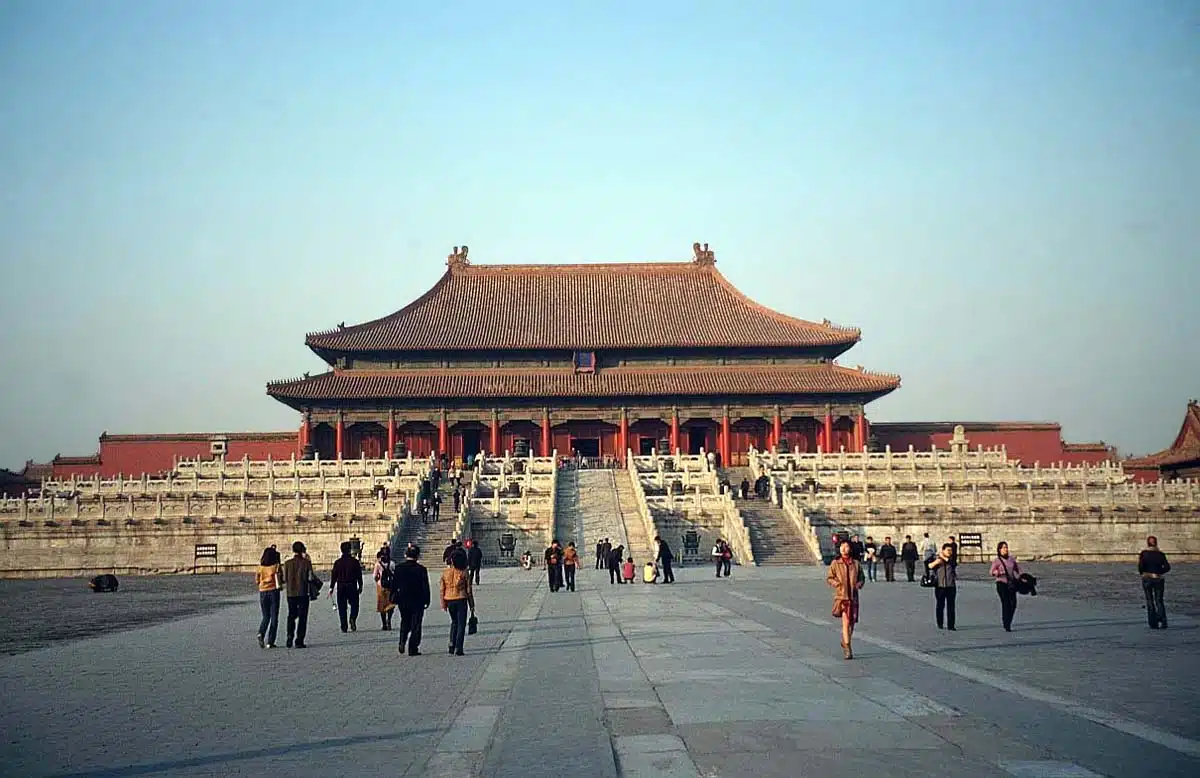
March is still cool in the north, but by April Beijing, Xi’an and Shanghai have mild days, cool evenings and blossom in the parks. It is a good time for the Great Wall, the Forbidden City and the Temple of Heaven before the summer heat. Northern China can get dusty, windy days in spring, so a mask is handy. In the south, Hong Kong and Guangzhou turn warmer and more humid, with fog and drizzle common. Two short holidays bring crowds: Qingming in early April and the May Day holiday at the start of May, when trains and top sights are packed for several days. For ideas in the capital, see our guide to things to do in Beijing.
Summer (June to August)

Summer is hot, humid and wet across most of China. Beijing averages around 27°C in July, and July is also its rainiest month, with heavy thunderstorms. Along the Yangtze, including Shanghai, Suzhou and Hangzhou, the plum rain season brings weeks of steady rain from about mid-June to mid-July. Hong Kong’s typhoon season runs from May to November, with most storms from July to September. When a strong typhoon signal is raised, ferries, buses and many businesses stop until it passes. School holidays in July and August make this a busy time for domestic travel. Summer does suit high places: Tibet, the grasslands of Inner Mongolia and the mountains of the west are green and easier to reach.
Autumn (September to November)

Autumn is the favourite season for many visitors. Skies clear, humidity drops and days are comfortable from Beijing to Guilin. The leaves turn in October in the north, a good time to walk the Great Wall. Hong Kong is at its best from October to December, with dry, sunny days for hiking and harbour views; see our guide to things to do in Hong Kong. The catch is Golden Week, the National Day holiday from 1 to 7 October, when hundreds of millions of people travel and every train, hotel and big sight is busy. The Mid-Autumn Festival, in September or early October, brings lanterns and mooncakes. By November the north turns cold, but crowds are thin.
Winter (December to February)
Winters in northern China are cold and dry. Beijing averages a few degrees below freezing in January, but skies are often clear and the big sights are much quieter. Harbin, in the far north-east, holds its Ice and Snow Festival from around late December or early January into February. The south is milder: Hong Kong averages around 16°C in January, and Hainan Island is warm enough for the beach. The big event is Chinese New Year, in late January or February. A travel rush of about 40 days surrounds it, so trains sell out, and some shops and restaurants close for the first days of the holiday. Lanterns and temple fairs make it worth seeing if you book early.
Festivals and events by month

- January: Harbin Ice and Snow Festival, giant ice and snow sculptures lit up at night, running into February.
- January or February: Spring Festival (Chinese New Year), the biggest holiday of the year, with fireworks, family meals and temple fairs.
- February or March: Lantern Festival, on the 15th day of the new year, with lantern displays that close the New Year season.
- April: Qingming Festival, a tomb-sweeping day and short public holiday early in the month.
- April: Water-Splashing Festival in Xishuangbanna, Yunnan, the Dai New Year celebrated with friendly water fights.
- May or June: Dragon Boat Festival, with dragon boat races on rivers and in harbours, and sticky rice dumplings.
- September or October: Mid-Autumn Festival, a night for moon-watching, mooncakes and lanterns.
- October: National Day Golden Week, 1 to 7 October, the busiest travel week of the year.
Tips for planning your trip
Book trains, flights and hotels weeks ahead if your dates touch the May Day holiday, Golden Week, Chinese New Year or the July and August school holidays, as high-speed trains between big cities sell out fast. Pack layers for spring and autumn, a warm coat for northern winters and light rain gear for summer. Remember how big China is: Harbin can be far below freezing while Hainan is warm, and Yunnan stays mild for most of the year. Foreign visitors need a special permit for Tibet, and access can change at short notice. In summer, typhoons can delay flights and stop ferries along the south coast. Entry rules have changed in recent years, with longer visa-free transit for many nationalities, so check your government’s current travel advice and the latest rules before you book.
Questions about visiting China
What is the cheapest month to visit China?
November and the early winter weeks before the Chinese New Year rush usually have the lowest demand for flights and hotels. Avoid the holiday weeks, when demand is at its highest.
Is China worth visiting in winter?
Yes, if you dress warmly. Beijing’s sights are quiet under clear skies, Harbin has its ice festival, and the south, from Hong Kong to Hainan, stays mild.
What is the rainiest month in China?
It depends on the region, but summer is the wettest season almost everywhere. July is the rainiest month in Beijing, mid-June to mid-July brings the plum rains along the Yangtze, and Hong Kong gets most of its rain from May to September.


