Best Time to Visit Croatia: Month by Month Guide to Weather and Crowds

The best time to visit Croatia is June or September. The sea is warm and the days are long, and the coast is calmer than in July and August. May and early October are best for sightseeing, hiking and the national parks. July and August bring the hottest weather, the busiest beaches and the big summer festivals.
This guide covers the weather on the coast and inland season by season, along with sea temperatures, crowds, ferry timetables, the main festivals and the best months for each kind of trip. To see the coast, cities and islands before you go, browse our free photos of Croatia.
Best time to visit Croatia at a glance
- Best overall: June and September, for warm sea, long days and fewer people than in peak summer.
- Best for good weather: July and August, when it is hot, sunny and dry, with highs around 28 to 30°C on the coast.
- Best for fewer crowds and lower demand: May and early October, when it is mild and most sights, ferries and hotels are open.
- Best for swimming and island hopping: late June to mid September, when the sea is around 24°C in August and ferries run full timetables.
- Best for hiking and national parks: May, plus late September to October.
- Time to avoid: November to March for a beach holiday, when many island hotels close and ferries run less often.
Spring (March to May)
March is still cool and often wet on the coast, and many island hotels and restaurants stay closed until around Easter. April is mild, and by May daytime highs reach around 20°C in Split and Dubrovnik. The sea is still cool, around 18°C in May, so only keen swimmers go in. Spring is good for walking. The waterfalls at Plitvice Lakes and Krka carry plenty of water, and the trails in Paklenica and on Velebit are pleasant before the summer heat. Old towns such as Dubrovnik, Split and Trogir are easy to explore without long queues. Easter and the late spring holidays in Germany and Austria bring busy weekends to Istria and Kvarner. On Hvar, the Za Križen procession runs overnight from Maundy Thursday into Good Friday.
Summer (June to August)

Summer is hot, dry and sunny. On the Dalmatian coast, highs are around 28 to 30°C in July and August, and the sea warms to around 24°C. June is the best summer month, with warm water, long evenings and fewer people than in July. July and August are peak season. European school holidays fill Dubrovnik, Split, Hvar and Plitvice Lakes, and roads to the coast are busiest at weekends. Ferries and catamarans run their full summer timetables, so island hopping is easiest now. Inland, Zagreb can be hot and humid, with afternoon storms. Summer is also wildfire season on the dry coast, so follow local fire bans and never light fires outdoors. The Dubrovnik Summer Festival, Ultra Europe in Split and the Sinjska alka all take place in these months.
Autumn (September to November)

September is many visitors’ favourite month. The sea is still around 22°C, the days are warm and the crowds thin out once schools go back. It is a good month for sailing, boat trips to the Kornati islands and swimming on quieter beaches. October is cooler, with highs around 19°C on the coast. It suits city breaks, hiking and the national parks. In Istria, autumn brings the grape and olive harvests and truffle fairs in the inland hill towns. From late October many island hotels, beach bars and restaurants close, and ferries switch to winter timetables. November is usually the wettest month on the coast and one of the quietest of the year.
Winter (December to February)

Winter on the coast is mild but changeable, with daytime highs around 10°C, rain and spells of the cold bura wind. Strong bura can cancel ferries and close some coastal roads and bridges. Inland, Zagreb is cold, often close to freezing, and snow is possible. This is the cheapest and quietest season. Split and Dubrovnik stay open all year and their old towns feel local again, but most island resorts are closed. Plitvice Lakes can look lovely under snow, though some paths may close in icy weather. Zagreb’s Advent market in December is one of the best reasons to come. February brings the Feast of St Blaise in Dubrovnik and the carnival season in Rijeka.
Festivals and events by month
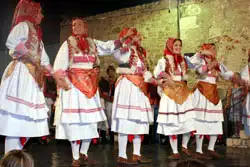
- February: Feast of St Blaise, Dubrovnik’s patron saint day, with processions through the old town.
- February or March: Rijeka Carnival, the country’s biggest carnival, ending in a large costume parade before Lent.
- March or April: Za Križen on Hvar, an overnight Holy Week procession between the island’s villages.
- July: International Folklore Festival in Zagreb, with folk dance and music groups in the city centre.
- July: Ultra Europe, a large electronic music festival in Split.
- July to August: Dubrovnik Summer Festival, with theatre and concerts in the old town’s squares and forts.
- August: Sinjska alka, a historic knights’ tournament on horseback in the town of Sinj.
- December: Advent in Zagreb, with Christmas markets, lights and food stalls across the city.
Tips for planning your trip
For July and August, book accommodation, rental cars and car spaces on ferries well ahead, and buy Plitvice Lakes tickets online. The same goes for Zagreb during Advent. Pack light clothes, a hat and strong sun cream for summer, plus water shoes, as many beaches are pebbly or rocky. In spring and autumn, bring layers and a rain jacket. Croatia is a varied country. Istria and Kvarner in the north are a little cooler than Dalmatia, Dubrovnik in the south is the warmest, and inland Zagreb and Slavonia have cold winters and hot summers. Ferry and catamaran timetables are much fuller in summer than in winter, and some fast lines run only in the warmer months, so check before you plan an island route. Croatia uses the euro and is part of the Schengen area, but entry checks for non-EU visitors are changing, so check your government’s current travel advice before you go.
Questions about visiting Croatia
What is the cheapest month to visit Croatia?
January to March is usually the cheapest time, though many coastal hotels are closed then. For a mix of good weather and lower demand, choose May or early October.
When is the sea warm enough to swim in Croatia?
Most people find the sea comfortable from mid June to late September, when it is above 20°C. It is warmest in August, at around 24°C.
Is Croatia worth visiting in winter?
Yes, if you want city breaks rather than beaches. Zagreb’s Advent market, quiet old towns in Split and Dubrovnik and the snowy lakes at Plitvice make good winter trips, but most island resorts are shut.


