Best Time to Visit Beijing: Seasons, Weather, Crowds and Festivals

The best time to visit Beijing is September and October, with mid-April to May a close second. These months usually bring mild, dry days and clear skies, which suit long walks around the palaces, parks and the Great Wall. If you can, avoid the first week of October and early May, when national holidays fill every major sight.
This guide goes through Beijing season by season: the weather, the crowds, what is good to do and the festivals worth planning around. It ends with planning tips and answers to common questions. You can also browse our free photos of Beijing to see the city before you go.
Best time to visit Beijing at a glance
- Best overall: September and October, but not the National Day holiday in the first week of October.
- Best for good weather: mid-September to mid-October, with dry, sunny days and cool evenings.
- Best for fewer crowds and lower demand: November to February, apart from the Spring Festival holiday.
- Best for autumn leaves: mid-October to early November, when the Fragrant Hills turn red.
- Best for blossom: late March to April, for the cherry trees at Yuyuantan Park.
- Time to avoid: July and August if you dislike heat and heavy rain, and the national holidays in early May and early October.
Spring (March to May)
Spring is short and the weather changes a lot. March is still cool and dry, and it warms up quickly through April and May. Spring is also the windiest season, and on some days in March and April dust or sand storms can turn the sky yellow. The good news is that the parks fill with blossom. Cherry trees flower at Yuyuantan Park from late March into April. It is also a good time to stroll in the Temple of Heaven park, where locals dance, sing and play cards under the old trees. Our Temple of Heaven visitor guide has more. Late April and May are among the nicest weeks of the year. The short Qingming holiday in early April and the Labour Day holiday in early May both bring big domestic crowds.
Summer (June to August)

Summer is hot, humid and the wettest time of year. July is the hottest and rainiest month, with average highs of around 31°C. Most of the year’s rain falls in July and August, often in heavy storms. June is hot but usually drier. School holidays run through July and August, so Chinese families crowd the big sights and Forbidden City tickets can sell out days ahead. Our Forbidden City visitor guide explains how to book. Start early, rest in the middle of the day and save the evenings for walks in the hutongs and around the Shichahai lakes. If you plan to hike the wilder sections of the Great Wall, check the forecast first, because rain makes the steep paths slippery.
Autumn (September to November)

Autumn is Beijing’s best season. September is still warm, and October brings dry, sunny days with cool nights. This is ideal weather for the Great Wall and for long days on foot. The one problem is National Day Golden Week, 1 to 7 October, when the whole country travels and the main sights hit their daily visitor limits. Come in mid-September or after the holiday instead. The Mid-Autumn Festival falls in September or early October. Shops sell mooncakes then, and families gather to look at the full moon. From mid-October to early November, the leaves turn red at the Fragrant Hills in the western suburbs. Go on a weekday, as weekends there are very busy. November turns cold quickly, and the city’s heating comes on in the middle of the month.
Winter (December to February)
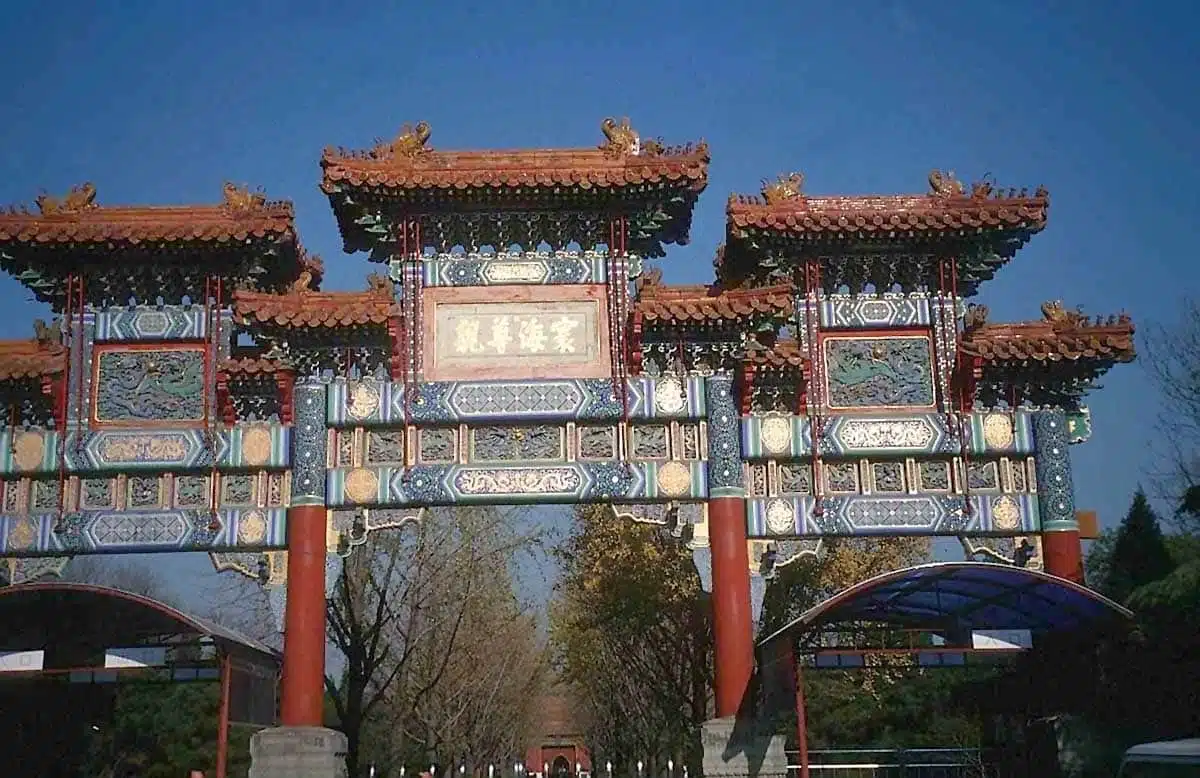
Winter is cold, dry and often sunny. January is the coldest month, with an average temperature of around minus 4°C, and the wind makes it feel colder. Snow is light and does not fall every year. Crowds and hotel demand are at their lowest, except around the Spring Festival (Chinese New Year) in late January or February. During that holiday many locals leave town and some small restaurants close. At the same time, temple fairs fill parks such as Ditan and Longtan, and crowds come to the Lama Temple to pray for luck. From late December to early February, the frozen Shichahai lakes become ice rinks. Air quality has improved a lot, but check the daily pollution index on still days.
Festivals and events by month

- January or February: Spring Festival, the Lunar New Year, with temple fairs at Ditan, Longtan and other parks.
- February or March: Lantern Festival, the last day of the New Year celebrations, with lanterns and sweet rice dumplings.
- Late March to April: Yuyuantan Cherry Blossom Festival, Beijing’s best-known blossom display with thousands of cherry trees.
- May or June: Dragon Boat Festival, a public holiday when people eat zongzi, sticky rice wrapped in leaves.
- September or October: Mid-Autumn Festival, a family holiday of mooncakes and moon viewing.
- October: National Day Golden Week, China’s biggest travel week, with large flower displays in the city centre.
- Mid-October to early November: red leaves season at the Fragrant Hills, the city’s favourite autumn outing.
Tips for planning your trip
Book hotels and trains early if your trip overlaps with Spring Festival, the Labour Day holiday in early May or National Day in early October. Forbidden City tickets are sold online only, a week ahead, in your passport name. There are no same-day tickets, and the palace is closed on Mondays except on public holidays. For spring, pack layers and a scarf or mask for windy, dusty days. For summer, bring light clothes and an umbrella. Winter needs a warm coat, hat and gloves. The Great Wall sections in the hills north of the city are cooler and windier than central Beijing, so take an extra layer. Many nationalities can now visit China visa-free or use the 240-hour visa-free transit scheme, but the rules change often. Check your government’s current travel advice and entry rules before you book.
Questions about visiting Beijing
What is the cheapest month to visit Beijing?
Demand is usually lowest from November to early January and in March, outside the national holidays. Avoid the Golden Weeks, Spring Festival and the summer school holidays if you want quieter sights and better hotel deals.
Is Beijing worth visiting in winter?
Yes, if you dress warmly. Skies are often clear, the big sights are quieter, and you can skate on the frozen lakes or visit Spring Festival temple fairs.
What is the rainiest month in Beijing?
July is the rainiest month, followed by August. Most of the year’s rain falls in these two months, often in short, heavy storms, while winter is very dry.


