Things to Do in Riga: 12 Best Sights and Experiences
Riga, the capital of Latvia, lies on the Daugava river close to the Gulf of Riga. It is the largest city in the Baltic states, and its historic centre is a UNESCO World Heritage Site, known for a medieval old town and some of the finest Art Nouveau buildings in Europe.
The city is compact and easy to walk. You can climb a church tower in the morning, have lunch in a market built from old airship hangars and be on a sandy beach by late afternoon. Browse our free photos of Riga to get a feel for the streets before you go. Here are the 12 best things to do in Riga, with tips on when to go and how to plan your trip.
1. Walk the cobbled lanes of Old Riga
Vecrīga, the old town, sits on the east bank of the Daugava and is small enough to cross on foot in about 15 minutes. Its narrow lanes mix medieval warehouses, guild halls and church spires. Go early, before the tour groups, and wander without a plan. Look out for the Great and Small Guild halls and the Cat House, named after the black cats with arched backs on its roof.
2. Town Hall Square and the House of the Blackheads
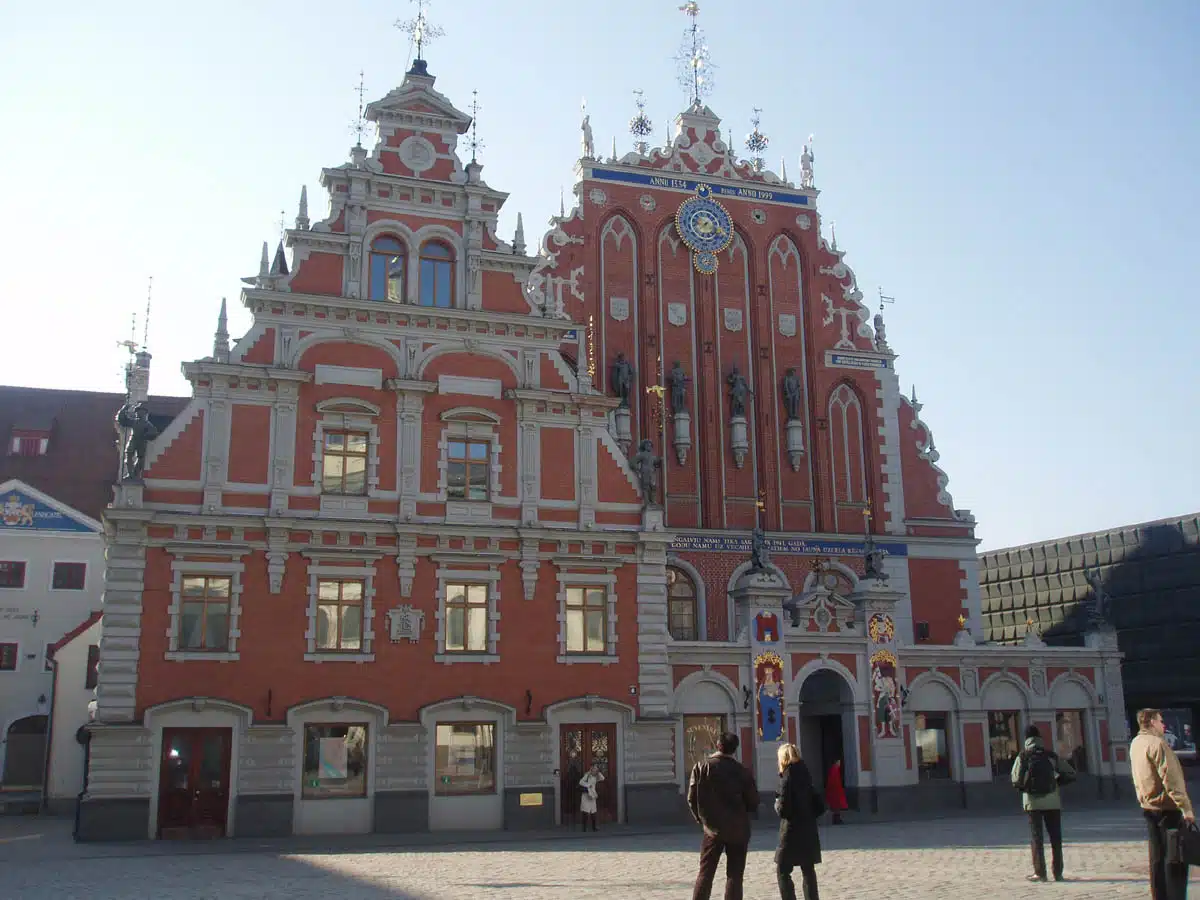
The House of the Blackheads is Riga’s best known building. It was used for centuries by the Brotherhood of Blackheads, a society of unmarried merchants. The original was wrecked in 1941 and later demolished; the copy you see today was finished in 1999. Its tall gable is covered with figures, a clock and gilded detail. Across Rātslaukums stand the rebuilt Town Hall and a copy of the Roland statue. Check whether the interior is open before you go.
3. Climb St Peter’s Church tower
St Peter’s Church is the tallest church in Riga, and its tower is the best viewpoint in the old town. A lift takes visitors to an open gallery at 72 metres. From there you see the red roofs of Vecrīga, the Daugava with its bridges and port, and the newer city beyond. Tickets are needed for the tower, and parts of the church may be under restoration.
4. Riga Cathedral and Dome Square

Riga Cathedral, called the Doms by locals, was founded in 1211 and is the largest medieval church in the Baltic states. Inside, the great organ from the 1880s is the main draw. The cathedral holds short organ concerts and longer evening ones, so check the programme and book ahead for popular dates. Dome Square outside has café terraces in summer and a Christmas market in December.
5. The Three Brothers and Mazā Pils iela

On Mazā Pils iela, three houses side by side show how Riga’s homes changed over time. The Three Brothers are the oldest medieval dwelling houses in the city, and the white house with the stepped gable is the oldest of the three. Today they hold the Latvian Museum of Architecture. Carry on down the street to Riga Castle, the official residence of the President, on the river bank.
6. The Powder Tower, Swedish Gate and Jacob’s Barracks

The round Powder Tower is one of the last pieces of Riga’s old fortifications. Since 1919 it has housed the Latvian War Museum, which covers Latvia’s military and political history with a focus on the 20th century. Nearby, the Swedish Gate cuts through a row of houses on Torņa iela, where the long yellow Jacob’s Barracks now hold cafés and shops.
7. Museum of the Occupation of Latvia
To understand modern Latvia, spend an hour or two in this museum next to the House of the Blackheads. It tells the story of the Soviet and Nazi occupations between 1940 and 1991, including the deportations to Siberia. The museum reopened in 2022 in its renovated building on Latviešu strēlnieku laukums, with a new exhibition that is moving and well presented.
8. The Freedom Monument and the city canal
The Freedom Monument, unveiled in 1935, marks the edge of the old town. The figure on top, known as Milda, holds up three golden stars, and an honour guard stands at its base. Around it, Bastejkalns park follows the old city canal, with small bridges and lawns. In the warmer months, small boats offer short trips along the canal and out onto the Daugava.
9. Look up in the Art Nouveau district

Riga grew fast around 1900, leaving street after street of Art Nouveau apartment houses. The best are on Alberta iela and Elizabetes iela, a short walk north of the old town, where facades carry faces, masks and stylised plants. To see inside, visit the Riga Art Nouveau Centre at Alberta iela 12, built in 1903 as the home of architect Konstantīns Pēkšēns. The entrance is around the corner on Strēlnieku iela.
10. Riga Central Market
Riga Central Market fills five huge pavilions built from the frames of German Zeppelin hangars from the First World War. It opened in 1930 and is part of the UNESCO World Heritage area. Separate halls sell meat, fish, dairy and vegetables. It is a good place to try smoked fish, dark rye bread and local berries in season. Watch your bags in the crowds.
11. Latvian Ethnographic Open-Air Museum
On the wooded shore of Lake Jugla, on the north-eastern edge of the city, this museum gathers old farmhouses, windmills, a wooden church and fishermen’s huts from every region of Latvia. It is one of the oldest open-air museums in Europe, with paths through pine forest between the buildings. Allow half a day, and take a city bus from the centre.
12. Day trip to Jūrmala
Jūrmala is a long, narrow resort town on the Gulf of Riga, with a white sand beach backed by pine forest. Trains from Riga’s central station reach it in about half an hour. Get off at Majori for Jomas iela, the main pedestrian street, and walk a few minutes to the sea. Look out for the wooden villas with carved verandas. Ķemeri National Park lies further west.
When to visit Riga
Late May to early September is the best time for most visitors. Days are long, terraces are open and July and August bring beach weather in Jūrmala. Midsummer, on 23 and 24 June, is a major holiday when many locals leave for the countryside, so some businesses close. December is cold and dark by mid-afternoon, but the Christmas market draws visitors. Winters can be well below freezing, so pack warm layers.
Tips for planning your trip
From Riga International Airport, bus 22 runs to the city centre and you can buy a ticket from the driver; a taxi is quicker. The old town, the Art Nouveau district and the market are within walking distance of each other. For longer trips, use the trams and buses, and validate your ticket. Long-distance buses to Tallinn and Vilnius leave from the coach station next to the market. Allow two or three days, plus one for Jūrmala. Latvia uses the euro and is in the Schengen area; check your government’s current travel advice before you go. For a good-value lunch, try a self-service buffet restaurant serving Latvian dishes, and wear comfortable shoes for the cobbles.
Questions about Riga
How many days do you need in Riga?
Two days is enough for the old town, the Art Nouveau district and the market. Add a third day for Jūrmala or the open-air museum.
Is Riga easy to explore on foot?
Yes. Most sights are within a short walk of each other, and trams and buses cover the rest.
Can you swim in the sea near Riga?
Yes, the beaches at Jūrmala are popular in summer. The Baltic is shallow and cool, so the water is most pleasant in July and August.
