Things to Do in Düsseldorf: 12 Best Sights and Experiences

Düsseldorf is the capital of North Rhine-Westphalia, a city of more than 600,000 people on the Rhine in western Germany. It is worth visiting for its lively old town, a car-free riverside promenade, first-class art museums, modern architecture and a famous shopping street.
The centre is compact, so most sights are a short walk or tram ride apart. Before you go, browse our free photos of Düsseldorf. Here are the 12 best things to do in Düsseldorf, with tips on when to go and how to plan your trip.
1. Walk through the Altstadt
The old town lies between the Rhine and Heinrich-Heine-Allee. Start at Burgplatz, where the round Schlossturm is all that remains of the old city palace and now holds a shipping museum. Nearby, St. Lambertus has a twisted spire, and the Marktplatz has the old town hall and the statue of Elector Jan Wellem on horseback. The poet Heinrich Heine was born on Bolkerstraße. The food market on Carlsplatz is a few minutes south.
2. Drink Altbier in a brewery pub
Düsseldorf’s own beer is Altbier, a dark, top-fermented beer served in small glasses. Several historic pubs in and around the old town brew their own, including Uerige, Füchschen, Schumacher and Zum Schlüssel. Waiters, called Köbes, keep bringing fresh glasses until you put your beer mat on top. With so many bars in a small area, the Altstadt is known as “the longest bar in the world”.
3. See the Wilhelm-Marx-Haus
On Heinrich-Heine-Allee, at the edge of the old town, the Wilhelm-Marx-Haus was one of Germany’s first high-rise buildings when it was finished in 1924. Designed by Wilhelm Kreis, the brick tower is a fine example of 1920s Expressionist architecture. It is an office building, so admire it from the street on your way between the Altstadt and the Kö-Bogen.
4. Stroll the Rhine promenade
The Rheinuferpromenade runs along the river from the old town south to the MedienHafen. Traffic was moved into a tunnel below, so the walk is free of cars. The wide steps near Burgplatz are a favourite sunset spot, and the Kasematten below are lined with bars. Sightseeing cruises leave from landing stages along the river, mainly in the warmer months.
5. Go up the Rheinturm
The 240-metre television tower, built between 1979 and 1982, is the city’s best-known landmark. A lift takes you to the viewing level, called M168, with a bar and wide views over the river and the old town. After dark, look at the lights on the shaft: they form a light sculpture that works as a giant clock. Tickets are needed, and private events sometimes close the viewing level, so check before you go.
6. Explore the MedienHafen
The old commercial harbour next to the Rheinturm is now a district of media companies, offices, hotels and restaurants. Its most famous buildings are Frank Gehry’s three curved Neuer Zollhof towers: one white, one shiny metal and one red brick. Look out for the colourful climbing figures on the facade of the Roggendorf-Haus. It is a good place for an evening walk and dinner by the water.
7. Shop and people-watch on the Königsallee

The Königsallee, or “Kö”, is a boulevard divided by a tree-lined canal. Luxury fashion stores and galleries line the east side, while the west side is quieter, with banks and offices. At the northern end of the canal stands the Triton fountain. It is a classic Düsseldorf walk, even if you buy nothing. For high-street shops, head to nearby Schadowstraße.
8. Visit the Kö-Bogen and the Hofgarten

North of the Kö, Daniel Libeskind’s Kö-Bogen has deep cuts in its stone and glass facade. Next to it, Kö-Bogen II is covered in hornbeam hedges, one of the largest green facades in Europe. It faces the curving white Schauspielhaus theatre and the slim Dreischeibenhaus, a classic 1960s office tower. Behind them lies the Hofgarten, one of the oldest public parks in Germany, with ponds and shady paths.
9. See art at K20, K21 and the Kunstpalast
Düsseldorf has a strong art scene, helped by its famous art academy. K20 on Grabbeplatz, behind a black granite facade, shows modern classics, including a large collection of works by Paul Klee. K21, in the former state parliament building by the Kaiserteich pond, focuses on contemporary art. The Kunstpalast at the Ehrenhof, near the Rhine, covers art from the Middle Ages to today, plus a large glass collection.
10. Step into the Johanneskirche
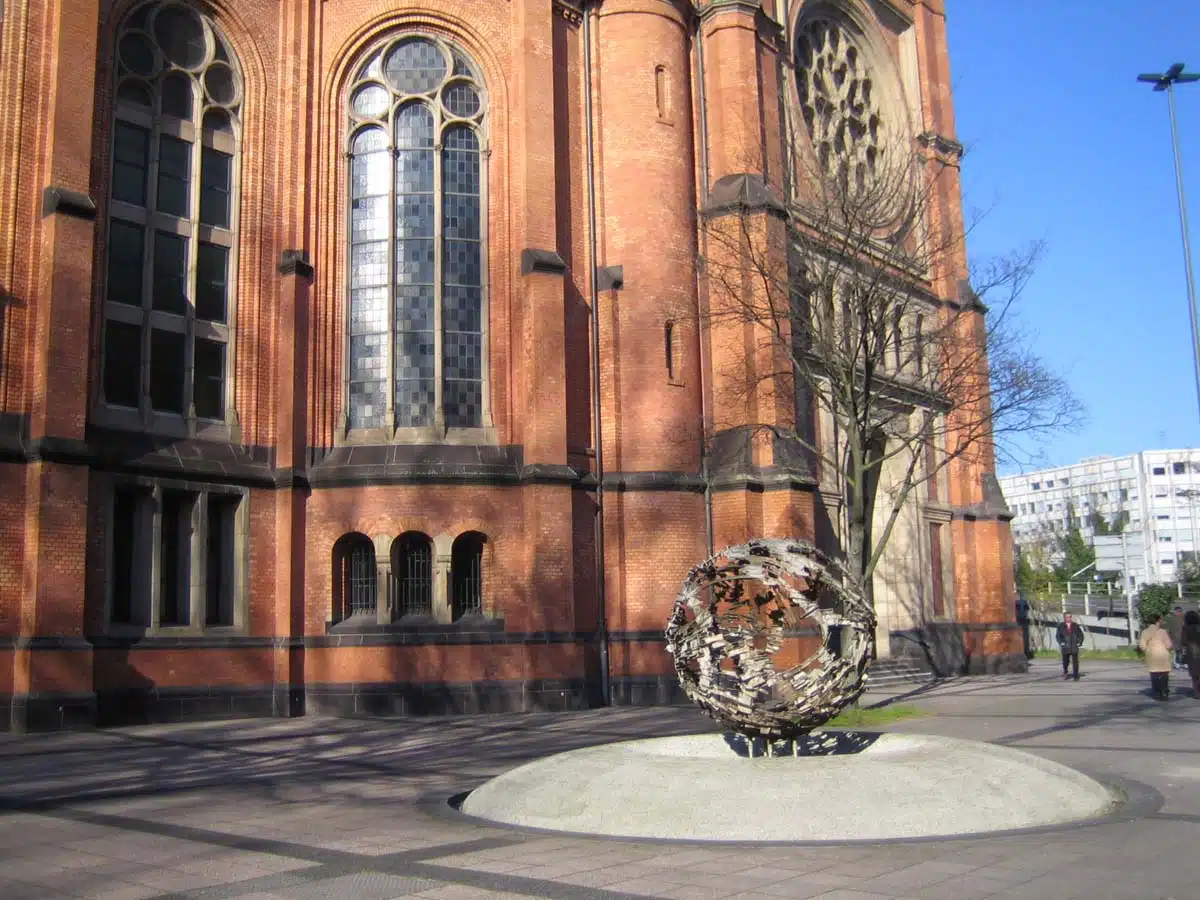
The Johanneskirche on Martin-Luther-Platz, at the end of Berliner Allee, is the largest Protestant church in Düsseldorf. Built between 1875 and 1881 in the round-arch style, it was the first Protestant church in the city to stand freely on a square. It was badly damaged in the Second World War and reopened in 1953. Today it hosts regular concerts and events.
11. Discover Japanese Düsseldorf
Düsseldorf has one of the largest Japanese communities in Europe, centred on Immermannstraße near the main station. Come for ramen, sushi and Japanese bakeries. In the Nordpark, a Japanese garden was a gift from the Japanese community. Across the Rhine in Niederkassel, the EKŌ-Haus has a Buddhist temple and garden; check its visiting days first. The Japan-Tag festival usually takes place in late spring and ends with fireworks over the Rhine.
12. Tour Schloss Benrath
In the south of the city, Benrath Palace is an 18th-century pink pleasure palace designed by Nicolas de Pigage for the Elector Carl Theodor. You can only see the rooms on a guided tour, so check tour times and English options in advance. The large park, with long avenues and a pond, is free to walk in. Trains and trams link Benrath with the centre.
When to visit Düsseldorf
Late spring to early autumn is the best time for the promenade, beer gardens and boat trips. Summer brings the large Rhine funfair, usually in July. Carnival is the city’s biggest party, with Altweiber on the Thursday and the Rosenmontag parade, in February or March; expect crowds and full pubs. From late November, several Christmas markets fill the centre. Hotel prices rise sharply during big trade fairs, so check the fair calendar before you book.
Tips for planning your trip
Düsseldorf Airport lies just north of the city and has its own railway station, linked to the terminals by the SkyTrain; S-Bahn and regional trains reach the main station quickly. In town, walk the centre and use the Rheinbahn trams, U-Bahn and buses; buy a ticket from a machine or app before you ride. Two or three days is enough for the main sights, with extra time for a day trip to Cologne or the riverside district of Kaiserswerth. For more ideas around the country, see our pictures of Germany.
Questions about Düsseldorf
How many days do you need in Düsseldorf?
Two days cover the old town, the promenade, the Königsallee and a museum or two. Add a third day for Schloss Benrath or a day trip.
What is Düsseldorf best known for?
It is known for Altbier and its old town pubs, the Königsallee shopping street, its art museums and academy, and its large carnival.
Is it easy to visit Cologne from Düsseldorf?
Yes. Frequent regional and fast trains link the two main stations, and the journey takes well under an hour.


