Elephanta Caves and the Gateway of India: A Visitor Guide
The Elephanta Caves are a group of rock-cut temples on Elephanta Island, also called Gharapuri, in Mumbai Harbour, about 10 km east of the city. The main cave holds some of the finest stone carving in India, and the site has been a UNESCO World Heritage Site since 1987. Boats to the island leave from the Gateway of India, Mumbai’s best-known landmark, so one trip covers both.
A visit takes most of a day. You spend about an hour on the water each way, climb a short hill and then explore the caves, which are dedicated to the Hindu god Shiva. Before you go, you can browse our free photos of Mumbai, the Gateway of India and Elephanta. Here are the 10 best things to do at the Gateway of India and the Elephanta Caves, with tips on when to go and how to plan your trip.
1. See the Gateway of India
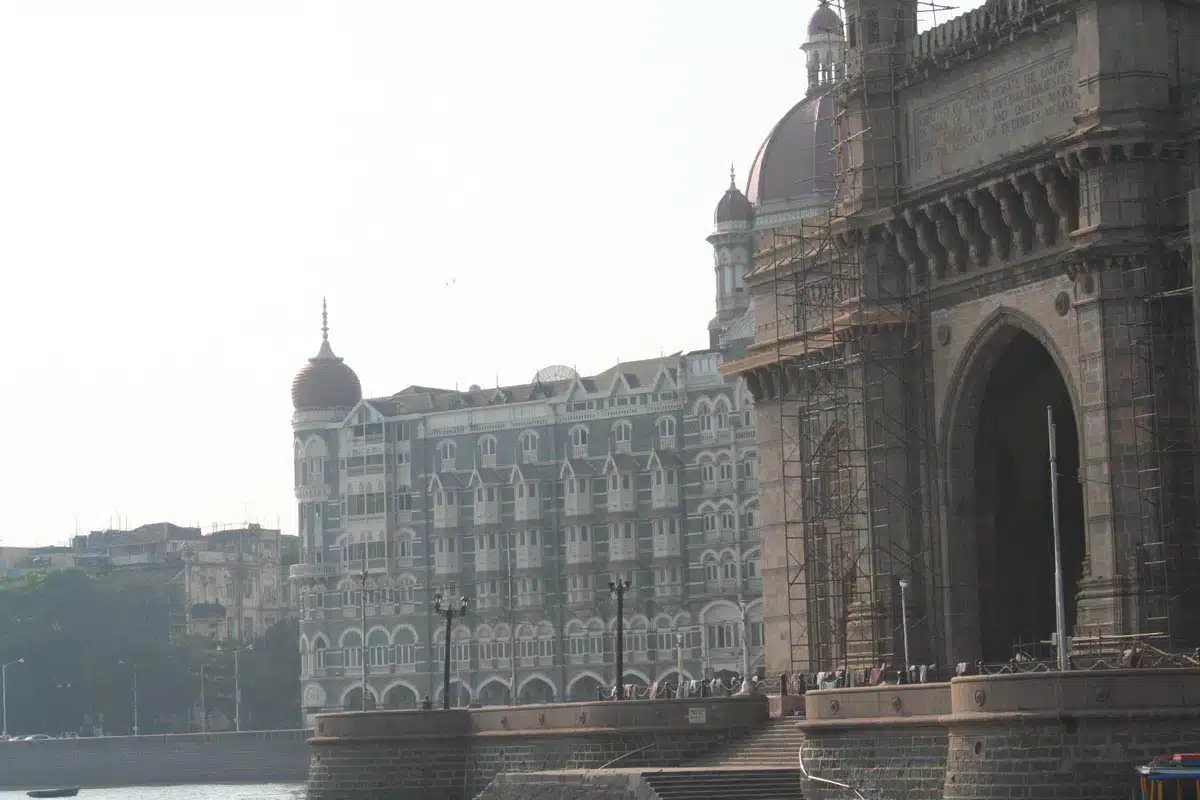
The Gateway of India is a large stone arch on the waterfront at Apollo Bunder in Colaba. It was built to mark the 1911 visit of King George V and Queen Mary. George Wittet designed it, and it was completed in 1924. Its style mixes Indian, Islamic and European ideas. In 1948 the last British troops left India through it. Expect bag checks before you enter the plaza. Restoration work has been going on in recent years, so parts of the arch may be covered.
2. Walk Apollo Bunder and see the Taj Mahal Palace
Across the road stands the Taj Mahal Palace, a grand hotel that opened in 1903, two decades before the Gateway was finished. The promenade along the sea wall is busiest in the evening, when families come out to walk and sellers offer snacks and balloons. Colaba Causeway, a busy shopping street with stalls and cafés, is a few minutes’ walk away.
3. Take the ferry across Mumbai Harbour

Ferries to Elephanta leave from the jetties beside the Gateway, and you buy tickets at the booths on the waterfront. The crossing takes about an hour. Look back for a good view of the Gateway and the Taj from the sea, then watch for naval ships and fishing boats. After a serious accident in December 2024, ferry passengers in Maharashtra must now wear life jackets, so put one on when the crew hands them out.
4. Ride the toy train along the jetty

The boats land at a long pier on the north side of the island. A small toy train runs along the pier towards the shore, and children enjoy it. The walk is not far, though. On foot you can look out over the mudflats, where old wooden boats lie on the mud at low tide. Before you leave the pier, check the time of the last boat back.
5. Climb the steps through the market
From the shore, about 120 stone steps lead up the hill to the caves. They are not steep but are tiring in the heat. Stalls along the way sell cold drinks, fruit, hats and souvenirs. Watch out for the macaques. They are bold and will grab food, bottles and bags, so keep snacks out of sight and do not feed them. If you find stairs difficult, porters can carry you up in a chair.
6. Stand before the Trimurti in the Great Cave

Cave 1, the Great Cave, is the main reason to come. It is a wide hall full of pillars, cut from solid basalt about 1,500 years ago, though scholars still debate the exact dates. The centrepiece is the Trimurti, also called Sadashiva. This carving is about 6 metres tall and shows three faces of Shiva: one calm, one fierce and one gentle. Give your eyes a minute to adjust to the dim light. A local guide can help you understand the stories carved in the stone.
7. Read the carved panels and the linga shrine

Large carved panels around the hall tell stories of Shiva. Look for these scenes:
- Ardhanarishvara, who is half Shiva and half Parvati
- Gangadhara, with the river Ganga flowing down from Shiva’s hair
- Nataraja, Shiva as the cosmic dancer
- the wedding of Shiva and Parvati
- Ravana trying to shake Mount Kailash
Many figures are damaged, but their size and movement still impress. A square shrine inside the hall holds a linga, a stone symbol of Shiva, with tall guardian figures on each side of its doors. Walk all the way round it.
8. Explore the smaller caves and Cannon Hill
Caves 2 to 5 are close to the Great Cave on the same hill. They are smaller and less complete but quieter, and some still have carved doorways and shrines. A path continues to the top of Cannon Hill, named after the old cannons that once guarded the harbour. On a clear day you get wide views over the water towards the port and the mainland. Allow extra time and carry water for this part.
9. Walk to Stupa Hill and the Buddhist caves
The eastern hill is much quieter than the main site. It has two Buddhist caves, Caves 6 and 7, with water cisterns. You can also see the remains of stupa mounds, which may go back to the 2nd century BCE. Paths here are rougher and poorly marked, so wear good shoes and leave enough time to get back for your boat.
10. See the original Elephanta elephant in Byculla
The island got its name from a large stone elephant that once stood near the old landing place. The Portuguese took control of the island in 1534 and named it Elephanta after the statue. The elephant later broke while it was being moved, and it was put back together in Mumbai. Today it stands in Jijamata Udyan in Byculla, outside the Dr. Bhau Daji Lad Museum, the city’s oldest museum. It is worth adding to your Elephanta day.
When to visit the Elephanta Caves and the Gateway of India
The best time to go is October to March, when the weather is drier and a little cooler. April and May are hot and humid. The monsoon, roughly June to September, brings heavy rain, rough seas and slippery steps, and ferries can be cancelled at short notice. The caves are closed every Monday. Weekends and public holidays are crowded, so go on a weekday and take an early boat if you can. At the Gateway, early morning and sunset give the best light and the smallest crowds.
Tips for planning your trip
The Gateway of India is in Colaba in south Mumbai, a short taxi ride from Chhatrapati Shivaji Maharaj Terminus or Churchgate station. Ferry tickets are sold at the Gateway, and entry tickets for the caves are sold on the island. Allow at least five hours for the round trip, or a full day if you want to see Stupa Hill. Bring water, a hat, sun cream, cash and comfortable shoes. Ferry rules and departure times change with the season, so check them on the day. Before you travel, check your government’s current travel advice. If you are touring more of the country, see our pictures from across India.
Questions about the Elephanta Caves
Are the Elephanta Caves open on Mondays?
No. The caves are closed every Monday, so plan your trip for any day from Tuesday to Sunday.
How long do you need for Elephanta?
Allow about two hours for the ferry there and back, plus two to three hours on the island.
Can you visit Elephanta during the monsoon?
Sometimes, but between June and September the ferries can be stopped when the sea is rough. Check on the morning of your trip and have a backup plan in the city.

