Things to Do in Luang Prabang: 12 Best Sights and Experiences
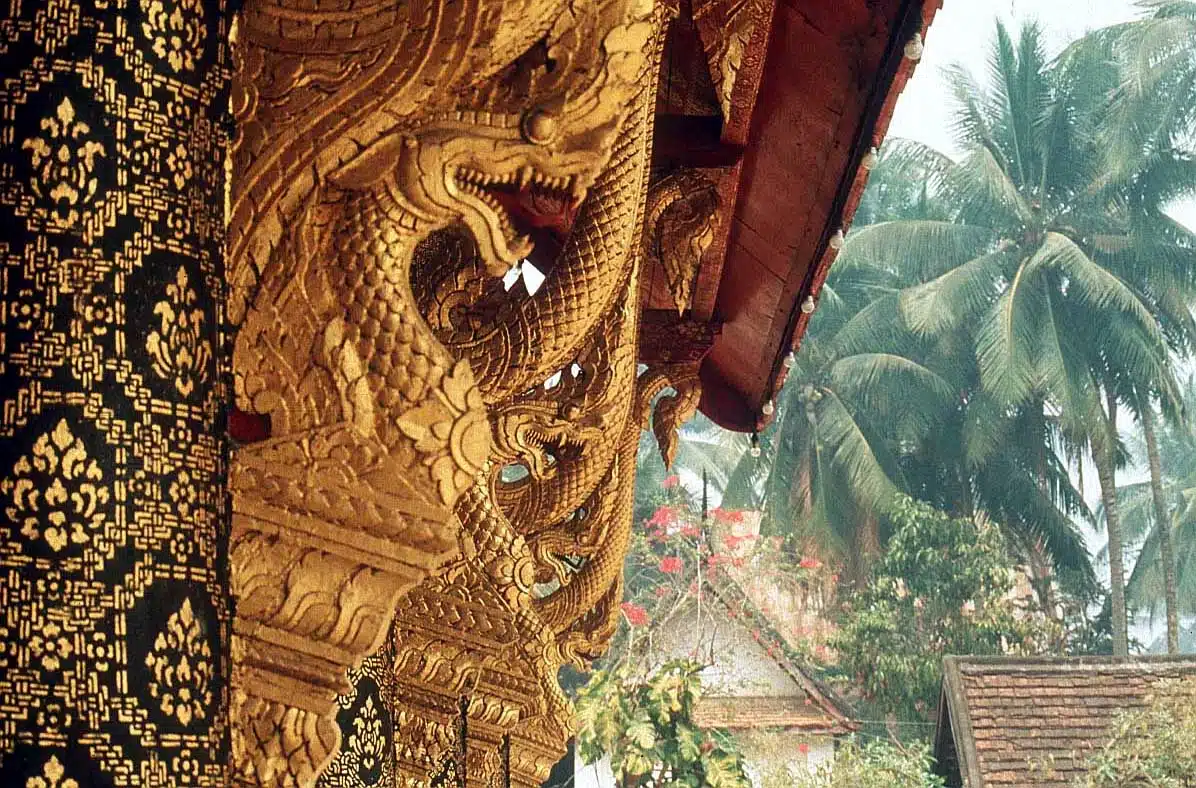
Luang Prabang is a small town in northern Laos, on a narrow peninsula where the Nam Khan river flows into the Mekong. It was the royal capital for centuries, and since 1995 the old town has been a UNESCO World Heritage Site. Gilded temples stand beside wooden Lao houses and French colonial shophouses, and monks in saffron robes walk the quiet streets.
The town is easy to explore on foot, and waterfalls, caves and river trips lie close by. To get a feel for the place, browse our free photos of Luang Prabang. Here are the 12 best things to do in Luang Prabang, with tips on when to go and how to plan your trip.
1. Wat Xieng Thong
Near the tip of the peninsula, Wat Xieng Thong is the town’s most famous temple. It was founded in the 16th century under King Setthathirath, and its main hall has low roofs that sweep almost to the ground. On the back wall is the Tree of Life, a glass mosaic on a dark red background. Another hall holds a royal funeral carriage. A ticket is needed, and shoulders and knees must be covered.
2. The Royal Palace Museum (Haw Kham)
The former palace on Sisavangvong Road dates from French rule and is now the National Museum. Inside are the throne room, royal living quarters and gifts from foreign states. The Pha Bang, the gold Buddha image that gave the town its name, is kept in a temple in the grounds. The dress code is strict, shoes come off and photos are not allowed inside. It closes over lunch, so check times first.
3. Climb Mount Phousi
Mount Phousi is the steep hill in the old town. Stairs lead up from the main street opposite the Royal Palace, and another path climbs from the Nam Khan side past Buddha statues and shrines. At the top stands That Chomsi, a gilded stupa, with views over the rooftops and both rivers. Sunset draws big crowds, so sunrise is calmer. A ticket is needed at the gate.
4. Walk the temples of the old town
Dozens of temples line the old town, best seen on foot. Start at Wat Mai, next to the Royal Palace, where gilded relief panels on the veranda show Buddhist stories and village life. Continue to Wat Visoun and its rounded “watermelon” stupa, then to Wat Sensoukaram with its red and gold facade. Look out for carved doors, naga serpents on stair rails and glass mosaic walls.
5. Watch the morning alms giving (Tak Bat)

At dawn, lines of monks leave the temples to collect sticky rice from local people kneeling along the streets. Tak Bat is a religious ritual, not a show. Watch quietly from across the road, keep your distance and never use flash. If you take part, dress modestly, kneel, stay silent and avoid street sellers pushing rice at tourists.
6. Browse the morning market

After the alms giving, walk to the morning market in the lanes near the Royal Palace. Local women sell herbs, vegetables, river fish, sticky rice and dried Mekong river weed, a local snack. It is a working market for residents, so ask before taking portraits. Come early, as stalls pack up by mid-morning.
7. Shop at the night market
Each evening, part of Sisavangvong Road closes to traffic and fills with stalls. Sellers, many from villages in the hills, offer woven textiles, embroidered bags, paper lanterns, silver jewellery and coffee. Bargaining is normal, but keep it friendly. Nearby, a narrow lane of food stalls serves grilled fish, sausages, spring rolls and cheap vegetarian buffets. It makes an easy first evening in town.
8. Traditional Arts and Ethnology Centre
This small museum at the foot of Mount Phousi explains the many ethnic groups of Laos through clothing, tools, textiles and photos. It opened in 2006 and has clear English labels. Visit before the night market to understand the crafts on sale. The shop sells good quality handmade items, and part of the money goes back to the makers.
9. Take a sunset boat on the Mekong

Long wooden boats wait along the Mekong riverbank, and many offer short trips in the late afternoon. You drift past fishermen, sandbanks and green hills as the sun drops behind them. Join a shared cruise or hire a boat for your group. On land, riverside cafés make good places to watch the sunset.
10. Pak Ou Caves
About 25 km upstream, two caves in a limestone cliff above the Mekong hold thousands of Buddha images left by pilgrims over the centuries. The lower cave opens onto the river. The upper cave is up steep steps and dark inside, so bring a torch. Most people go by boat, a trip of about two hours upstream, often with a village stop. Going by road is quicker.
11. Kuang Si Falls and the bear rescue centre
Kuang Si Falls, about 30 km south of town, tumbles over limestone terraces into a chain of turquoise pools in the forest. Swimming is allowed in some pools, and signs show where. A trail climbs beside the main fall. Near the entrance, the Tat Kuang Si Bear Rescue Centre, run by the charity Free the Bears, cares for moon bears saved from the illegal wildlife trade. Go early to beat the crowds.
12. Cross the bamboo bridge over the Nam Khan
In the dry season, a bamboo footbridge crosses the Nam Khan near the tip of the peninsula. It comes down when the rains arrive and is rebuilt every year, and a small toll is charged. On the far side are quiet lanes, village houses and a few cafés. Late afternoon light on the river is lovely.
When to visit Luang Prabang
November to February is the best time, with dry, warm days and cool nights, but also the busiest, so book early. March and April are hot, and smoke from field burning can bring haze. Lao New Year in mid-April means water fights and processions. The rainy season, roughly May to October, brings green hills and fewer visitors. The festival of lights at the end of Buddhist Lent, usually in October, fills the town with lanterns.
Tips for planning your trip
Luang Prabang has an airport with regional flights. The Laos-China Railway links it with Vang Vieng and Vientiane; the station is outside town, so take a shared van or tuk-tuk, and book tickets in advance with your passport. The slow boat from Huay Xai on the Thai border takes two days, with a night in Pakbeng. The old town is walkable and bicycles are easy to rent. Plan three or four days and carry kip in cash. Unexploded bombs from past wars remain in rural areas, so stay on marked paths. Check your government’s current travel advice and entry rules before you go. For more of the region, see our free pictures of Asia.
Questions about Luang Prabang
How many days do you need in Luang Prabang?
Three or four days is ideal. That covers the temples, markets and day trips to Kuang Si Falls and the Pak Ou Caves.
How do you get from Vientiane to Luang Prabang?
The quickest way is the Laos-China Railway, which takes about two hours. Tickets can sell out, so book ahead with your passport details.
Can you swim at Kuang Si Falls?
Yes, swimming is allowed in some of the pools, marked with signs. Bring something to cover up with, as modest clothing is preferred.


