Things to Do in Beijing: 11 Best Sights and Experiences

Beijing is the capital of China and one of the world’s great historic cities. Its old centre is laid out along a north to south line, the Beijing Central Axis, which became a UNESCO World Heritage Site in 2024. Along it you find the Forbidden City, Tiananmen Square, the Temple of Heaven and old city gates, with lanes, lakes and temples close by.
Many sights now need advance booking with your passport, so a little planning helps. The reward is imperial palaces, working temples and lively streets, with the Great Wall within a day trip. Browse our free photos of Beijing before you go. Here are the 11 best things to do in Beijing, with tips on when to go and how to plan your trip.
1. Tiananmen Square and the Gate of Heavenly Peace
Tiananmen Square is one of the largest city squares in the world. It is framed by the Great Hall of the People, the National Museum of China and Mao’s Mausoleum. Entry is free, but you need a real-name reservation made in advance with your passport, and you must show the same passport at security. Early risers can watch the flag-raising at sunrise. At the north end, the red Gate of Heavenly Peace with Mao’s portrait leads to the Forbidden City.
2. The Forbidden City
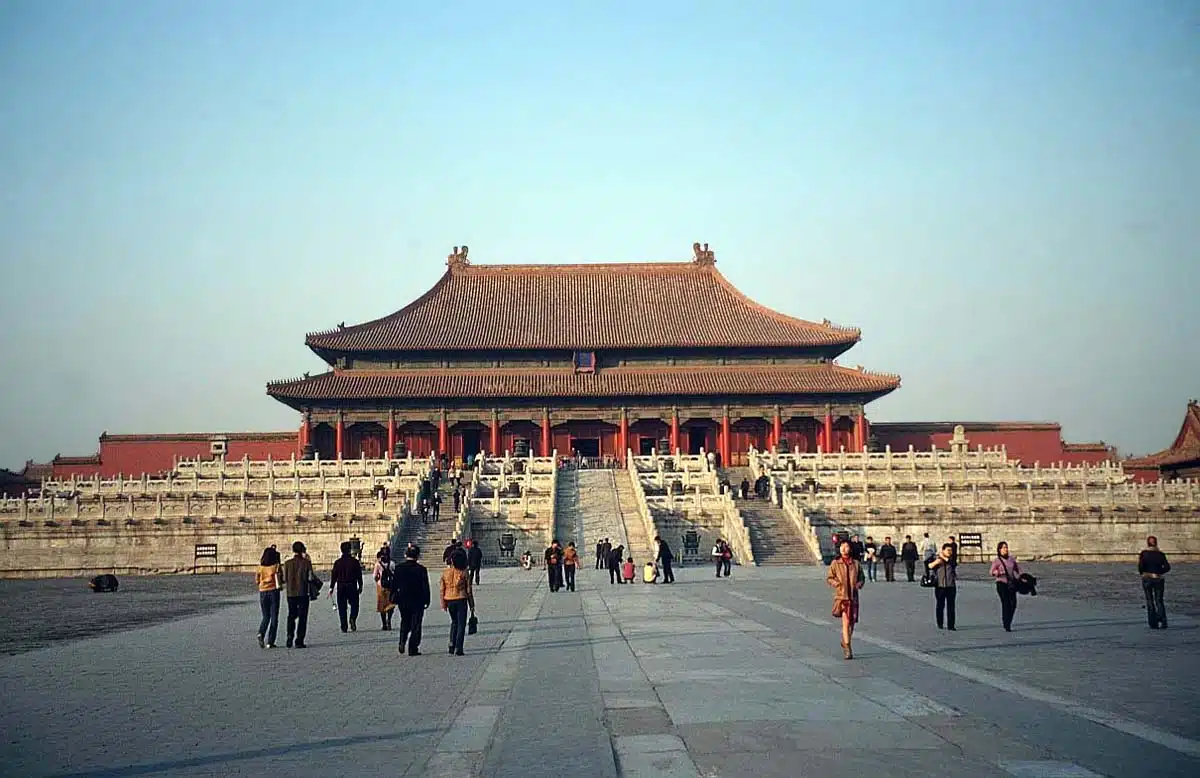
The imperial palace of the Ming and Qing emperors is now the Palace Museum. Enter through the Meridian Gate, cross to the Hall of Supreme Harmony and walk north past halls and gardens to the Gate of Divine Might. Tickets are sold online only, released seven days ahead, one per passport per day, and they sell out in busy periods. The museum is closed on Mondays, except on some public holidays. Allow at least half a day.
3. Jingshan Park
Leave the Forbidden City by its north gate and cross the road to Jingshan Park. Its hill was built from earth dug for the palace moat. A short climb leads to Wanchun Pavilion, where you look straight down the central axis over the golden palace roofs. Come late in the afternoon for softer light, or in spring when the peonies flower.
4. The Temple of Heaven

Emperors came to this large walled park, now a UNESCO World Heritage Site, to pray for good harvests. The round, triple-roofed Hall of Prayer for Good Harvests stands on a marble terrace. To the south are the Imperial Vault of Heaven, the Echo Wall and the open Circular Mound Altar. Buy the combined ticket, as the basic park ticket does not cover the main buildings. Arrive early to see locals doing tai chi, dancing and singing under the old trees.
5. Qianmen and Dashilar
At the south end of Tiananmen Square stand Zhengyangmen and its arrow tower, the main surviving gates of the old inner city wall. South of them, Qianmen Street is a restored pedestrian street with traditional shopfronts. Turn west into Dashilar, a lane of long-established businesses selling silk, tea, cloth shoes and Chinese medicine. The hutongs behind it are quieter and good for lunch.
6. The Lama Temple (Yonghe Gong)

This Tibetan Buddhist temple began as a prince’s residence and became a lamasery in the 18th century. It is still active, with monks, prayer wheels and worshippers lighting incense in the courtyards. The halls lead north to the Wanfu Pavilion, home to an 18-metre Maitreya Buddha carved from a single sandalwood trunk. Photography is not allowed inside the halls. You need a ticket, and it gets busy at weekends and festivals.
7. The Confucius Temple and Imperial Academy
A short walk west of the Lama Temple, along tree-lined Guozijian Street, you reach the Confucius Temple and the Imperial Academy. Here scholars studied for the imperial exams, and rows of stone tablets list the names of those who passed. The courtyards, shaded by old cypresses, are much calmer than the big sights, and the street outside has small cafés.
8. The hutongs around Shichahai

Hutongs are the narrow lanes of grey courtyard houses that once filled old Beijing. Some of the best are around Shichahai, a chain of lakes including Houhai, north of Beihai Park. Walk or hire a bike, and look for the Drum Tower and Bell Tower at the northern end of the central axis. Nanluoguxiang is the busiest lane, so explore the side lanes too.
9. The Summer Palace
In the north-west of the city, the Summer Palace was the imperial retreat from the summer heat and is a UNESCO World Heritage Site. Paths lead around Kunming Lake and up Longevity Hill, past temples, bridges and the painted Long Corridor, whose beams carry thousands of small paintings. Do not miss the stone Marble Boat at the lake shore. Plan at least half a day and go by subway.
10. The Great Wall at Mutianyu
Mutianyu is one of the best sections of the Great Wall for a day trip, about one and a half to two hours by road north-east of the city. The wall is restored, with many watchtowers along a forested ridge. A cable car or chairlift takes you up, and in good weather you can ride a toboggan down. Book entry and transport ahead: tourist buses, tours and private cars all go there. Badaling is easier to reach by train but much busier.
11. Peking duck and Beijing food
Eating roast duck is a classic Beijing experience. The chef carves the crisp duck at your table, and you wrap slices in thin pancakes with spring onion, cucumber and sweet bean sauce. Also try jiaozi dumplings, zhajiangmian noodles with soybean paste and the snacks sold in old lanes around Qianmen. For more Chinese food cities, see our Chengdu guide.
When to visit Beijing
Spring, from April to May, and autumn, from September to October, are the best times, with mild days and clearer skies. Summer is hot, humid and often rainy, and school holidays bring big crowds. Winter is cold and dry but quieter, and the palaces look striking after snow. Avoid national holidays such as the first week of October and Chinese New Year, when tickets sell out and queues are long.
Tips for planning your trip
Beijing has two main airports, Capital and Daxing, both linked to the city by rail, and high-speed trains run to cities such as Shanghai; see our Shanghai travel guide if you are combining the two. The subway is cheap, signposted in English and the easiest way around. Plan three to four days, including one for the Great Wall. Carry your passport every day, as many sights check it. Visa rules have relaxed for many nationalities, but they depend on your passport, so check your government’s current travel advice and the Chinese embassy before you book.
Questions about Beijing
Do I need to book the Forbidden City in advance?
Yes. Tickets are only sold online, open seven days ahead and need your passport number, and the palace is closed on most Mondays.
How many days do I need in Beijing?
Three days covers the main sights in the centre. Add a fourth day for the Great Wall or the Summer Palace.
Can I pay with a foreign bank card in Beijing?
Most payments are made by phone, so set up Alipay or WeChat Pay and link your card before you arrive. Carry some cash as a back-up, as smaller shops may not take foreign cards.


