Forbidden City Beijing: A Visitor Guide to the Palace Museum

Forbidden City is the old imperial palace at the centre of Beijing. It sits directly north of Tiananmen Square. Ming and Qing emperors ruled China from here for nearly five centuries. Since 1925 it has been the Palace Museum, and UNESCO lists it as a World Heritage Site. Its courtyards, red walls and yellow-tiled roofs make up one of the largest groups of old timber buildings anywhere.
The palace is big, busy and has strict entry rules, so it helps to plan ahead. You enter at the south gate and walk one way to the north. Before you go, browse our free photos of Beijing and the Forbidden City for a first look. Here are the 10 best things to do in the Forbidden City, with tips on when to go and how to plan your trip.
1. Enter through the Meridian Gate
The Meridian Gate (Wumen) is the only public entrance. Its tall walls and wings form a U shape around a large forecourt. In imperial times, edicts were read out here and the new calendar was issued each year. Today, the galleries in the gate building host major temporary exhibitions. In 2025 they held the centenary show on the museum’s history. Look up as you pass through the deep tunnels, then cross the Golden Water River over one of its five marble bridges.
2. Hall of Supreme Harmony
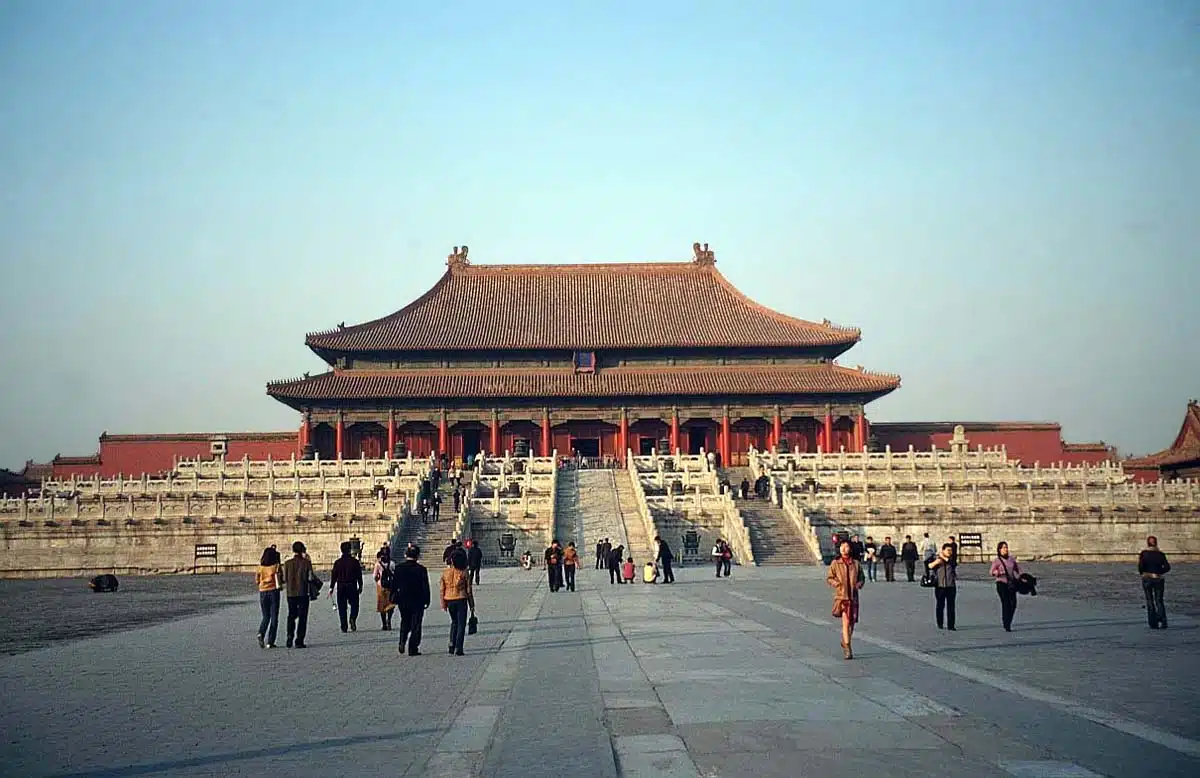
Pass the Gate of Supreme Harmony, with its pair of bronze lions, and you reach the largest courtyard in the palace. At the far end stands the Hall of Supreme Harmony. Coronations, imperial weddings and the biggest state ceremonies took place here. You cannot go inside, but you can look in from the doorway at the Dragon Throne under its gilded ceiling. Arrive early if you want photos of the open courtyard without crowds.
3. The marble terraces of the Outer Court

The three great halls of the Outer Court stand together on a raised, three-tiered terrace of white marble. Walk round the balustrades and look at the carved dragon heads, which drain rainwater from the terraces. The emperor rested in the Hall of Central Harmony before ceremonies. The Hall of Preserved Harmony was used for banquets and for the final stage of the imperial examinations. Behind it, a huge carved stone ramp shows dragons among clouds.
4. Palaces of the Inner Court
North of the Gate of Heavenly Purity, the scale becomes more personal. This was the home of the emperor and his family. In the Palace of Heavenly Purity, a plaque above the throne hid a sealed box naming the chosen heir. Next come the Hall of Union, where imperial seals were kept, and the Palace of Earthly Tranquillity. Qing emperors used it for shamanist rites and as a wedding chamber. You view all three from the doorways, so expect a bit of jostling.
5. Hall of Mental Cultivation
West of the Inner Court, the Hall of Mental Cultivation reopened in December 2025 after almost ten years of conservation. From the Yongzheng Emperor onwards, Qing rulers lived and worked here rather than in the grander halls. Empress Dowager Cixi also ruled “from behind the curtain” in this hall. The rooms now show their original historical layout, with more than a thousand objects on display. Because it has only just reopened, it is likely to be busy. Go early in your visit if you can.
6. Treasure Gallery and Nine Dragon Screen
In the north-east of the palace, the Palace of Tranquil Longevity holds the Treasure Gallery. It was built for the Qianlong Emperor’s retirement. Inside you will find jade, gold, jewellery and ceremonial objects from the imperial collection, as well as an opera stage. Outside its entrance is the glazed Nine Dragon Screen, one of the best-known sights in the complex. The gallery needs its own ticket on top of standard entry. Add it when you book.
7. Clock and Watch Gallery
The Clock and Watch Gallery shows mechanical clocks collected by the Qing court. Some were made in the palace workshops, and many were gifts from European, especially British, makers. Some clocks have moving figures, birds or water effects, and staff run demonstrations at set times. Like the Treasure Gallery, it needs a separate ticket that you add to your booking. The rooms are small and fill up quickly, so it is worth fitting in before midday.
8. Look up at the roofs

Some of the best details are above your head. Yellow glazed tiles were kept for the emperor. Along the roof ridges, a line of small guardian figures follows a man riding a phoenix. The number of figures shows how important a building was. The Hall of Supreme Harmony has the most of all. Bring a zoom lens or binoculars to see them clearly. Late afternoon light makes the gold and red colours look warmest.
9. Imperial Garden and the palace walls

At the northern end, just before the exit, the Imperial Garden is a calm place for a rest after so much stone and paving. It has old cypress trees, rockeries and small pavilions. The palace wall runs right round the complex, with a corner tower at each turn. In 2018 most of its length opened as a raised walk with views over the rooftops. Check on the day which sections are open. Later, walk along the moat outside to see the corner towers from the water.
10. View the palace from Jingshan Park
After you leave through the Gate of Divine Prowess, cross the road into Jingshan Park. It is a former imperial garden built on an artificial hill. A short, steep climb takes you to the Wanchun Pavilion at the top. From there you can see the whole Forbidden City laid out to the south, with a sea of golden roofs. To the north, the city’s central axis runs on to the Drum and Bell Towers. Late afternoon is a good time to go.
When to visit the Forbidden City
Spring (April to May) and autumn (September to October) usually bring the most comfortable weather. Autumn often has clear blue skies that suit photos. Summer is hot and humid, with most of the year’s rain in July and August. Winter is cold and dry, and a light snow on the golden roofs is a lovely sight. Try to avoid the May Day holiday at the start of May, the National Day week in early October and summer weekends, when tickets sell out fast. The museum is closed on Mondays, except on public holidays, and opening times change by season.
Tips for planning your trip
Entry is by timed, real-name booking only. No tickets are sold at the gate on the day. Foreign visitors book on the official Palace Museum website with a passport number. Bookings open seven days ahead in the evening, Beijing time. Bring the same passport on the day, because it is checked at entry and there are security checks around Tiananmen. Each passport can hold one booking per day. Visitor numbers are capped every day, and the Treasure and Clock galleries need extra tickets. The nearest metro station to the Meridian Gate is Tiananmen East on Line 1. You leave through the north or east gate, so arrange onward transport from there. Allow at least half a day, and a full day if you want to see the galleries and the wall. Wear comfortable shoes and carry water, as distances are long. If China is part of a longer trip, our Shanghai travel guide and our page on Chengdu can help you plan your next stops. Please check your government’s current travel advice and China’s entry rules before you go.
Questions about the Forbidden City
Can I buy Forbidden City tickets on the day?
No. The Palace Museum does not sell same-day tickets, so book online in advance using the passport you will carry on the day.
How long do I need in the Forbidden City?
Most visitors spend three to four hours on the main south to north route. Add one or two hours if you visit the Treasure Gallery, the Clock and Watch Gallery or the wall walk.
Which gate do I use to enter and leave?
You enter only through the Meridian Gate in the south. You leave through the Gate of Divine Prowess in the north or the East Prosperity Gate.


