Best Time to Visit Hvar: Month by Month Guide to Weather, Crowds and Festivals

Best time to visit Hvar: June and September are the best months. The sea is warm, the days are long and sunny, and Hvar Town is much calmer than in July and August, which are the hottest, busiest and most expensive months on the island.
This guide goes through Hvar season by season. It covers the weather, the sea, the crowds, what is open and the festivals worth planning a trip around. To see the old town and the fortress before you go, look through our free photos of Hvar.
Best time to visit Hvar at a glance
- Best overall: late May, June and September, for warm sea, long days and fewer people.
- Best for good weather: July and August, the sunniest and hottest months, with very little rain.
- Best for fewer crowds and lower demand: late April, May and early October, when most places are open but the streets and ferries are quieter.
- Best for beaches and swimming: mid-June to mid-September, when the sea is at its warmest.
- Best for lavender and culture: late June and early July, for the lavender bloom and the start of the Hvar Summer Festival.
- Time to avoid: November to March if you want beaches and nightlife, as many hotels, bars and restaurants in Hvar Town close.
Spring (March to May)
Spring starts slowly. March can still be cool, windy and wet, and a lot of Hvar Town is still shut. Easter brings the island’s most important tradition, the Za Križen night procession, which falls in March or April. From mid-April the season gets going: cafés reopen, boats start running to the Pakleni islands and the hills turn green.
May is one of the best months for walking. You can climb to the Spanish Fortress, cycle the old roads across the Stari Grad Plain or explore the inland villages without the summer heat. The sea is still fresh in May, so swimming is for the brave. Book ahead for Easter and for long weekends in May and June, when Croatians and other Europeans travel to the islands.
Summer (June to August)
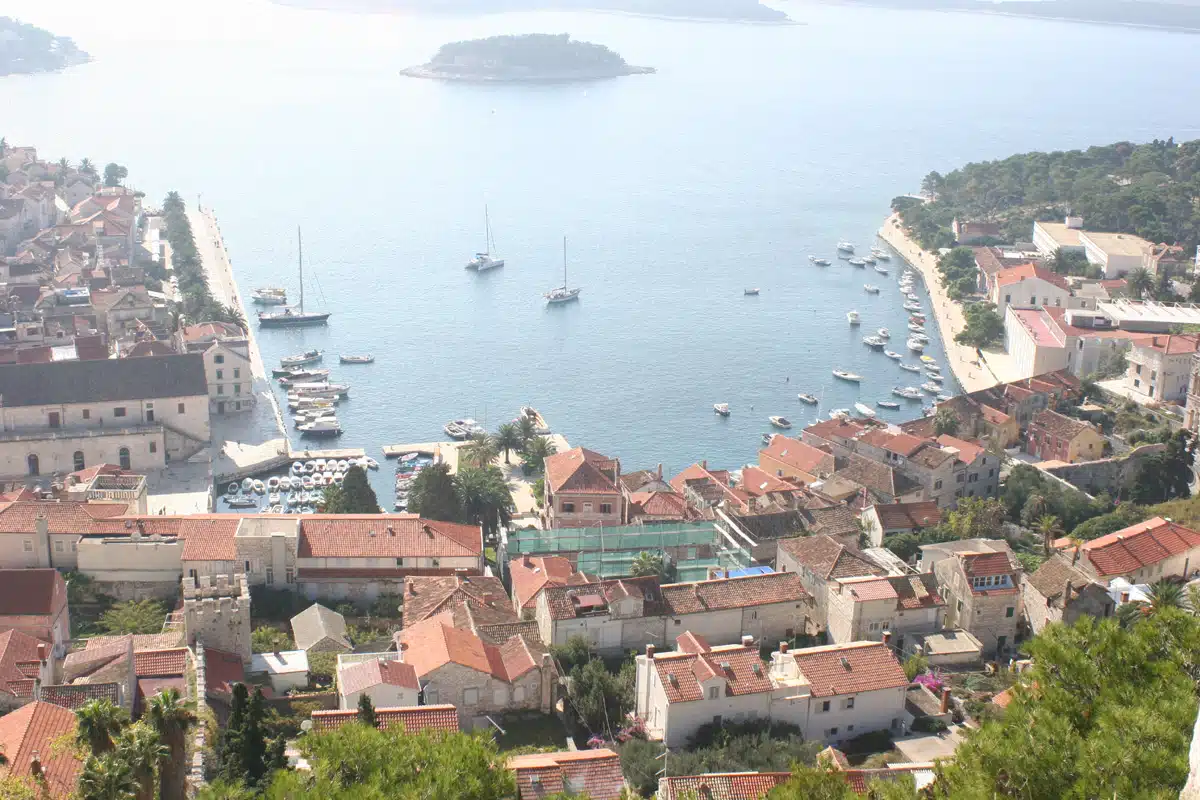
Hvar is often called the sunniest island in Croatia, with more than 2,600 hours of sunshine a year. July is the peak, with almost 12 hours of sun a day. In July and August, daytime highs are around 30°C, rain is rare and the sea is warm, sometimes above 27°C. The peak season runs from early July to early September. This is when Hvar Town’s harbour fills with yachts, beach clubs and bars are busiest, and the ferries from Split are often full.
June is the best summer month for most people. The sea has warmed up, the lavender is in bloom and the Hvar Summer Festival opens late in the month. To get the most out of the long days, see our guide to things to do in Hvar.
Autumn (September to October)

September is the other best month to visit Hvar. The sea keeps its summer warmth, the air is less hot and the crowds thin out quickly after the European school holidays end. It is a good month for swimming, boat trips to the Pakleni islands and wine tasting in the villages around Jelsa and Svirče, as the grape harvest takes place around this time.
October is quieter and less certain. There are still plenty of sunny days and some people still swim, but the weather starts to change and showers become more common. From mid-October, many hotels, beach bars and tour boats close for the winter, and ferries switch to a reduced winter timetable. Early October is good value if you mostly want to walk and explore the island.
Winter (November to February)

Winter on Hvar is mild but quiet. January and February are the only months when the average temperature drops below 10°C. Daytime highs are usually in the low teens, but a cold bura wind from the north can make it feel much colder. November and December tend to be the wettest months. Most of the summer bars, beach clubs and many restaurants in Hvar Town close, and some hotels shut until spring.
Hvar in winter suits travellers who want the stone streets, churches and waterfront to themselves and are happy to stay somewhere with heating. Ferries and catamarans still run but less often, so plan connections carefully. Carnival in February adds some life to the island towns before Lent.
Festivals and events by month

- February: Carnival, costumes and street fun in the island towns before Lent.
- March or April: Za Križen, an all-night Maundy Thursday procession through six villages in central Hvar. It is on UNESCO’s list of intangible cultural heritage.
- Late June or early July: Lavender Festival in Velo Grablje, a village celebration of the lavender harvest with music and local products.
- June to September: Hvar Summer Festival, concerts and theatre in the historic venues of Hvar Town, held every year since 1961.
- August: Assumption Day on 15 August, a national public holiday with church processions and busy roads and ferries.
- Late August: Faros Marathon, a 16 km open water swimming race in Stari Grad Bay.
Tips for planning your trip
Book accommodation and car ferry places early if you are travelling in July or August, or over Easter. The car ferry from Split goes to Stari Grad, about 20 km from Hvar Town, while catamarans go straight into Hvar Town. In summer there are more sailings. From October to late May there are fewer, so check the timetable before you book. Hvar Town is the lively centre. Stari Grad, Jelsa and Vrboska are calmer bases, and the inland villages are quietest of all. In summer, pack sunscreen, a hat and water shoes for the pebble beaches. In spring and autumn, bring a light jacket for windy evenings. Hvar Town fines visitors for walking around town in swimwear and for drunken behaviour in public, so dress for the street when you leave the beach. Croatia is in the Schengen area, so check your government’s current travel advice and entry rules before you go.
Questions about visiting Hvar
What is the cheapest month to visit Hvar?
Winter is the cheapest time, but much of the island is closed then. For the best value with most places open, go in May or early October.
Is Hvar worth visiting in winter?
Yes, if you want quiet streets, mild weather and local life rather than beaches and nightlife. Expect closed bars and hotels, some rain and fewer ferries.
When is the sea warm enough to swim in Hvar?
For most people, the sea is comfortable from mid-June to late September and warmest in August. Hardy swimmers start in late May and keep going into October.


