Things to Do in Hvar: 11 Best Sights and Experiences

Hvar is a long, narrow island in central Dalmatia, Croatia, just south of Split and Brač. Its main town, Hvar Town, sits on a sheltered bay with a Venetian old town, a big stone square and a fortress on the hill above. The island is known for sunshine, lavender, wine and clear water.
Most visitors stay in Hvar Town, but it is worth crossing the island to Stari Grad, Jelsa and the quiet inland villages. Get a first look in our free photos of Hvar Town and the fortress. Here are the 11 best things to do in Hvar, with tips on when to go and how to plan your trip.
1. St Stephen’s Square and the Cathedral
St Stephen’s Square, called the Pjaca by locals, is one of the largest squares in Dalmatia. It runs from the harbour up to St Stephen’s Cathedral and its tall Renaissance bell tower. Look for the old stone well in the middle. Come early in the morning to see it quiet, before the day trippers arrive.
2. Walk the Lanes of the Old Town

North of the square, stepped lanes climb between stone houses and old palaces. Look out for Gothic windows, carved coats of arms, stone lions and sundials. There are no cars, so take your time and get a little lost. In the evening, small restaurants set their tables out on the steps.
3. Climb to the Spanish Fortress
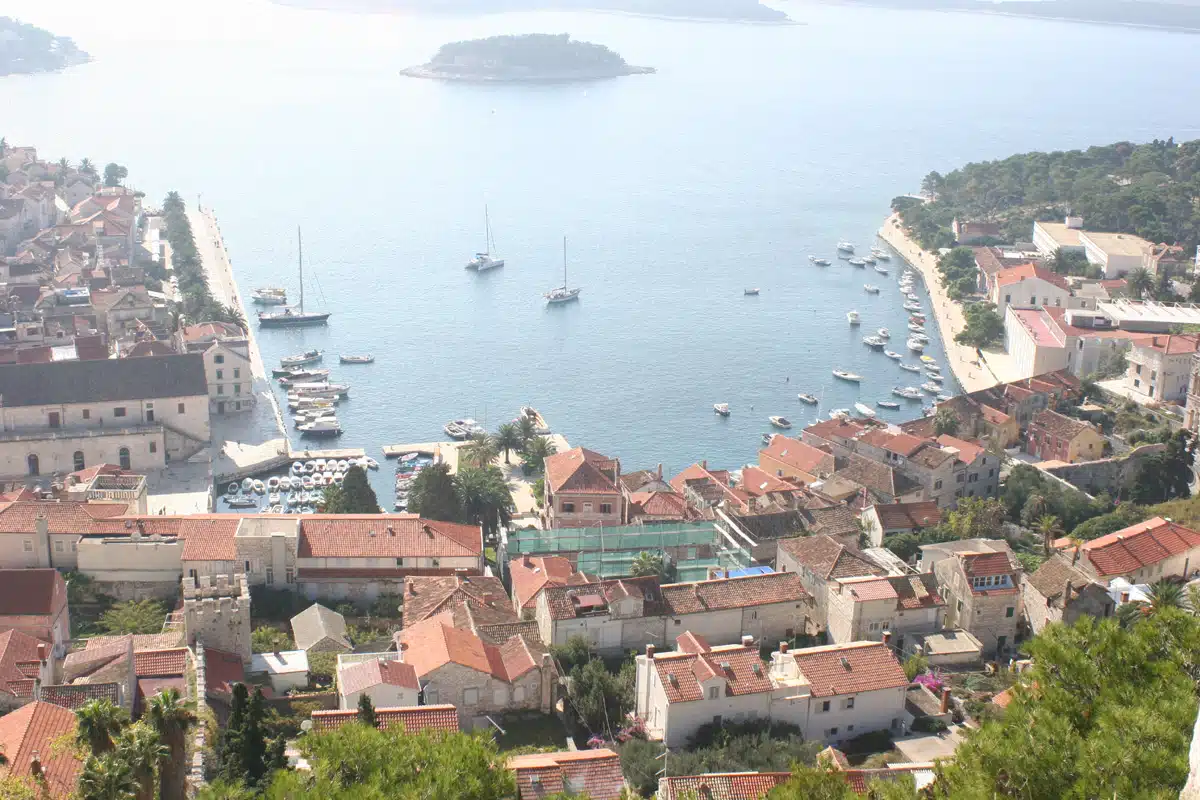
The Fortica, also called the Spanish Fortress or Španjola, was built by the Venetians in the 16th century to guard the town. From the square, go through the old town gate and follow the steps and the path through the pine park. The walk uphill takes about 15 to 20 minutes. The views over the red roofs, the harbour and the Pakleni islands are the best in town. You need a ticket to get in, and opening times change by season.
4. The Arsenal, the Old Theatre and the Loggia

On the south side of the square, the large Arsenal once sheltered Venetian war galleys. Upstairs is the Hvar Theatre, opened in 1612 and one of the oldest public theatres in Europe. Close by on the waterfront are the Renaissance Loggia and the clock tower. A combined ticket covers these sights, the fortress and St John’s church. It is good value if you plan to see several.
5. The Franciscan Monastery
A short walk east along the shore brings you to the 15th century Franciscan monastery on its own small bay. Its museum holds church art and a large painting of the Last Supper in the old refectory. The cloister is calm and cool, and the garden has a very old cypress tree. Opening times vary through the year.
6. Agave Lace at the Benedictine Convent
The Benedictine nuns of Hvar Town keep alive a rare craft: lace made from fine threads taken from agave leaves. The work is slow and each piece is unique. Lacemaking in Croatia, including Hvar’s agave lace, is on the UNESCO list of Intangible Cultural Heritage. The convent displays examples of the lace, and a short visit shows a side of the island most tourists miss.
7. Take a Boat to the Pakleni Islands

Just off Hvar Town lies a chain of small, pine covered islands, the Pakleni islands. In summer, taxi boats leave the harbour throughout the day. Palmižana on Sveti Klement has beaches, a marina and restaurants, while Jerolim, the closest island, is a long established naturist spot. The water is clear and good for snorkelling, or you can rent a small boat or kayak and find your own cove.
8. Swim at Dubovica and Other Coves
Hvar Town has rocky swimming spots along its promenade, but the nicer beaches are a short trip away. Dubovica, east of town, is a pebble cove with a few old stone houses. You reach it by a steep path down from the main road. Most beaches are pebble or rock, so bring water shoes, plus water and shade.
9. Stari Grad and the Stari Grad Plain
Stari Grad, on the north coast, is one of the oldest towns in Europe. Greek settlers founded it as Pharos in the 4th century BC. Visit Tvrdalj, the fortified summer house of the Renaissance poet Petar Hektorović, with its fish pond. Behind the town, the Stari Grad Plain is a UNESCO World Heritage Site. The farmland is still divided as the Greeks laid it out, with dry stone walls, vines and olives. Walk or cycle its quiet lanes.
10. Jelsa and Vrboska
Jelsa is a relaxed harbour town with a pretty square, cafés and beaches nearby. A few kilometres away, Vrboska is a small fishing village along a narrow inlet crossed by little bridges. Its fortified church of St Mary was built as a refuge from pirate raids. The villages around Jelsa also hold Za Križen, a night procession before Good Friday listed by UNESCO as Intangible Cultural Heritage.
11. Lavender Villages and Island Wine
Inland from Hvar Town, the old road crosses the hills to Brusje and Velo Grablje, once the centre of the island’s lavender trade. In early summer the fields turn purple, and Velo Grablje holds a lavender festival. Hvar is also a wine island. The steep south slopes grow the red Plavac Mali grape, and the local white Bogdanjuša is worth trying. Many family wineries offer tastings, but book ahead.
When to visit Hvar
June and September suit most visitors. The sea is warm, the days are long and Hvar Town is calmer than in July and August, when it gets crowded, pricey and loud at night. Lavender is usually at its best from mid June to early July. May and October suit walkers and cyclists. In winter many hotels, restaurants and boat services close, and ferries run less often.
Tips for planning your trip
Most people arrive from Split. The car ferry docks at the port near Stari Grad, and passenger catamarans run to Hvar Town and Jelsa. Timetables change by season, and in summer it is wise to book catamaran seats ahead. A short car ferry also links Drvenik on the mainland with Sućuraj at the island’s eastern tip. Buses connect the ferry port, Stari Grad, Jelsa and Hvar Town. A car or scooter helps for beaches and villages, but Hvar’s old town is car free. Allow at least three days. Hvar Town fines people for walking around town in swimwear and for drinking in the street. For more ideas, see our Croatia travel guides and our beginner’s guide to Mediterranean islands.
Questions about Hvar
How many days do you need in Hvar?
Three days covers Hvar Town, the fortress, a boat day on the Pakleni islands and a trip to Stari Grad. Add two more for Jelsa, Vrboska and the inland villages.
Is Hvar only a party island?
No. Hvar Town has a lively night scene in summer, but the island also suits families, walkers and anyone who likes history, food and wine. Stari Grad and Jelsa are quieter bases.
Do you need a car on Hvar?
Not for Hvar Town, which is best explored on foot. A car or scooter is useful for remote beaches, lavender villages and wineries.


