Banff to Jasper Road Trip: 11 Best Stops in the Canadian Rockies

The drive from Banff to Jasper runs through the heart of the Canadian Rockies in Alberta, linking two national parks that are part of the Canadian Rocky Mountain Parks World Heritage Site. Along the way you pass turquoise lakes, glaciers, deep canyons and the highest peaks in the range.
Most people start in Banff, follow the Icefields Parkway north to Jasper and, with an extra day, continue into British Columbia to see Mount Robson. Browse our free photos of North America to get a feel for the scenery. Here are the 11 best things to do on a Canadian Rockies road trip from Banff to Jasper, with tips on when to go and how to plan your trip.
1. Banff town and Sulphur Mountain
Banff is the base for the first part of the trip, with hotels, restaurants and shops along Banff Avenue below Cascade Mountain. For an overview, ride the Banff Gondola up Sulphur Mountain, where a boardwalk follows the ridge to an old weather station. Tickets are needed, and booking ahead is wise in summer. Lake Minnewanka and the Vermilion Lakes are short drives from town and lovely at sunrise.
2. Johnston Canyon on the Bow Valley Parkway
Between Banff and Lake Louise, the Bow Valley Parkway (Highway 1A) is a quieter alternative to the Trans-Canada Highway. Its best-known stop is Johnston Canyon, where steel catwalks are fixed to the canyon walls above the creek. An easy walk leads to the Lower Falls, and a steeper path continues to the Upper Falls. The car park fills early in summer, and parts of the parkway have seasonal vehicle restrictions.
3. Lake Louise
Lake Louise is the famous turquoise lake below Victoria Glacier. Walk the flat lakeshore path, rent a canoe in summer, or climb through the forest to the Lake Agnes Tea House. Parking at the lake is paid and fills very early in peak season, so many visitors use the Parks Canada shuttle, which needs a reservation.
4. Moraine Lake
Moraine Lake lies in the Valley of the Ten Peaks, near Lake Louise, and its blue-green water is one of the most photographed views in Canada. Climb the rockpile at the end of the lake for the classic view. Since 2023 the road has been closed to private vehicles, so book a Parks Canada shuttle or use public transit or a tour. The road only opens from early summer to early autumn.
5. Bow Lake and Peyto Lake
North of Lake Louise the Icefields Parkway (Highway 93 North) begins, about 230 km of road to Jasper. Bow Lake sits right beside it, with Crowfoot Glacier above and a trail to Bow Glacier Falls. Near Bow Summit, a short path climbs through forest to the Peyto Lake viewpoint, where a bright blue lake shaped a bit like a wolf’s head lies far below. Come early or late to avoid the coaches.
6. Mistaya Canyon
Mistaya Canyon is a short downhill walk from the parkway to a footbridge over a narrow, curving slot cut into the rock by the Mistaya River. It is quieter than the big lakes. Just north, Saskatchewan Crossing has a seasonal café and the only fuel on the parkway, so fill up in Lake Louise before you set off.
7. Athabasca Glacier and the Columbia Icefield

After Sunwapta Pass you enter Jasper National Park and reach the Columbia Icefield, the largest in the Rocky Mountains. The Athabasca Glacier flows down from it almost to the road. A short trail leads to the Toe of the Athabasca Glacier, with markers showing how far the ice has retreated. Stay behind the barriers: the glacier has hidden crevasses, and people have died after walking onto it without a guide.
8. Ice Explorer tours and guided glacier walks

To stand on the ice safely, join a tour. From the Columbia Icefield Discovery Centre, large Ice Explorer vehicles drive onto the glacier, often combined with the Columbia Icefield Skywalk, a glass-floored platform above the Sunwapta Valley. Licensed guides also lead ice walks on foot. All need tickets, run only in the warmer months and are worth booking ahead for July and August. Bring warm layers.
9. Athabasca Falls and Jasper town
Just south of Jasper, Athabasca Falls is a short walk from the car park, where the river forces its way through a narrow gorge. Jasper itself is a quieter railway town than Banff. In July 2024 a wildfire destroyed about a third of its buildings. The town is open and rebuilding, so staying locally helps. The park is also a dark sky preserve, good for stargazing on clear nights.
10. Maligne Canyon and Maligne Lake
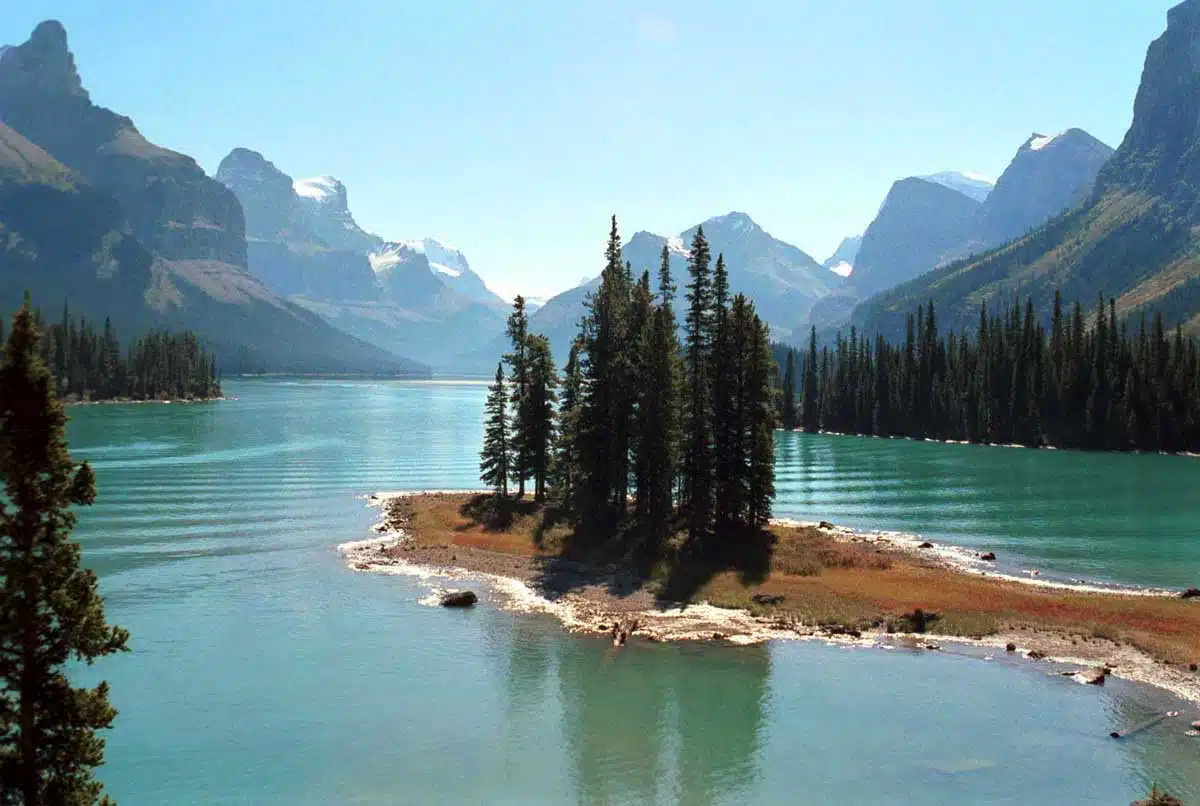
East of Jasper, Maligne Lake Road passes Maligne Canyon, a deep, narrow gorge crossed by footbridges, before reaching Maligne Lake, about an hour from town. Spirit Island, a small wooded island far up the lake, is reached by a boat cruise that needs a ticket, and you can rent canoes. The 2024 wildfire affected parts of this area, so check Parks Canada for current road and trail conditions.
11. Mount Robson

From Jasper, the Yellowhead Highway (Highway 16) crosses into British Columbia, and after about 90 km you reach Mount Robson Provincial Park. At 3,954 m, Mount Robson is the highest peak in the Canadian Rockies, rising straight above the visitor centre on clear days. The walk to Kinney Lake fills half a day. The longer Berg Lake Trail was badly damaged by floods in 2021, so check BC Parks for its status.
When to visit the Canadian Rockies
Late June to mid-September is the best time. The lakes are free of ice, the Moraine Lake road and glacier tours are running, and services along the parkway are open. Book rooms, shuttles and tours early for July and August. September is quieter, and the larches around Moraine Lake turn gold, but snow can fall at any time. In winter the parkway may close for snow or avalanche control.
Tips for planning your trip
Most visitors fly into Calgary, about 90 minutes from Banff, and fly home from Calgary or from Edmonton, about four hours from Jasper. You need a car or a tour, as there is little public transport on the parkway. A Parks Canada pass is required to stop in Banff and Jasper National Parks. Plan a full day for the drive and five to seven days for the trip. Download offline maps, as mobile signal is patchy. Never stop on the road for wildlife, and stay in your car near bears. Most visitors need an eTA or visa to enter Canada, so check your government’s current travel advice. For more ideas, see our guide to the best places to visit in Canada.
Questions about the Canadian Rockies
How long does it take to drive from Banff to Jasper?
The drive is about 290 km and takes around four hours without stops. Most people spend a full day on it to see the lakes, glaciers and waterfalls.
Can you drive your own car to Moraine Lake?
No. Since 2023 the road has been closed to private vehicles, so book a Parks Canada shuttle, take public transit or join a tour.
Is the Icefields Parkway open in winter?
Yes, but conditions can be severe, services are few and the road may close at short notice. Winter tyres are required, so check road reports before you leave.


