Best Time to Visit Chiang Mai: Seasons, Weather, Smoke and Festivals by Month

The best time to visit Chiang Mai is November to early February, the cool and dry season. Days are warm and sunny, nights are fresh, the air is usually clear, and November often brings the Yi Peng lantern festival.
This guide covers Chiang Mai’s three seasons, the smoky months to avoid, crowds, and the main festivals by month. It also has tips to help you pick the right time for your trip. The pictures come from our free photos of Chiang Mai, taken by our own photographers in the city’s temples.
Best time to visit Chiang Mai at a glance
- Best overall: November to early February, for dry, sunny days and cool nights.
- Best for good weather: December and January, with days around 29°C and nights around 15°C.
- Best for fewer crowds and lower demand: June to September, the green season, when hotels are quieter.
- Best for festivals: November for Yi Peng and Loy Krathong, and mid-April for Songkran.
- Best for hiking and mountain views: November and December, when trails are dry and the air is clear.
- Time to avoid: March and early April, when smoke from seasonal burning hangs over the valley.
Cool season (November to February)
This is when Chiang Mai is at its best. The rain stops by early November, skies clear and days are warm, around 29 to 30°C. In December and January nights drop to around 15°C. Bring a fleece for early mornings, and a warmer layer for Doi Inthanon, Thailand’s highest mountain, which is much colder than the city. This is peak season. It is busiest from Christmas to New Year and around Chinese New Year, so rooms fill up and prices rise. It is the best time to climb the naga stairs at Doi Suthep for views over a clear city; see our Doi Suthep visitor guide. Trekking, cycling and trips into the rice fields are pleasant now. Haze can start to build from mid-February, so the first half of the month is the safer choice.
Hot season and burning season (March to May)
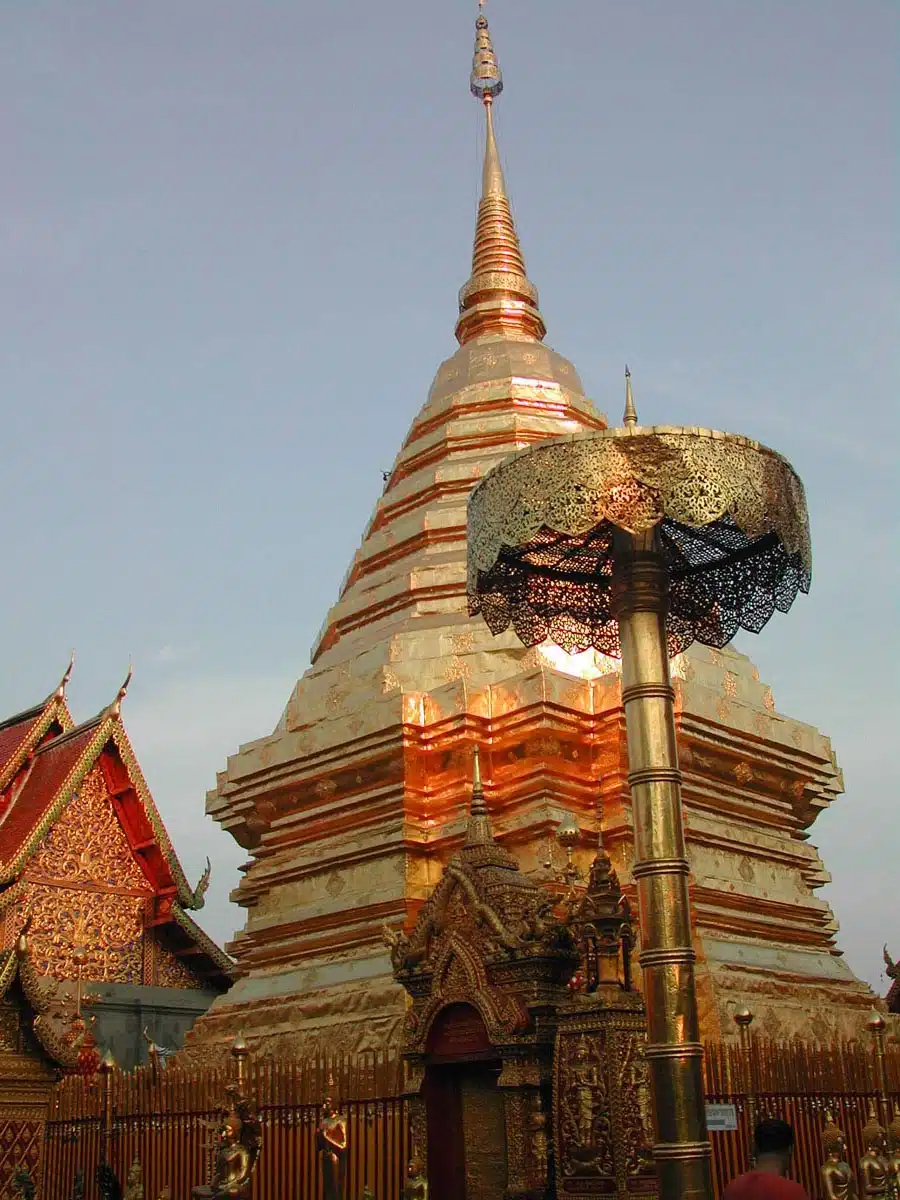
From March the heat builds, and April is the hottest month, with highs around 36°C. This is also the burning season. Smoke from farm fires and forest fires in northern Thailand and nearby countries collects in the valley. The air is usually at its worst in March and early April, and views of Doi Suthep often vanish. Travellers with asthma or heart problems, and families with young children, may prefer another time. If you do go, check local air quality readings each day and pack good masks.
The big draw is Songkran, the Thai New Year, in mid-April. The city turns into a huge water fight around the old city moat. Thai school holidays also fall in these months. The first storms usually arrive in late April or May and clear the air, though May stays hot and humid.
Rainy season (June to October)

The monsoon brings rain from around May to October, and August and September are the wettest months. Rain usually comes as heavy afternoon or evening showers rather than all-day downpours, and daytime highs ease to around 31 to 32°C. The hills turn green, rice is planted and the waterfalls are at their fullest. This is the low season, with fewer visitors and more choice of rooms, though the Thai school break in October brings some Thai travellers.
Some things are harder. Trails get muddy and mountain roads can be hit by landslides. The Kew Mae Pan nature trail on Doi Inthanon usually closes for the rains. Temples make a good plan for wet days; our guide to the Old City temples of Chiang Mai has a route. Late May or early June brings the Inthakin festival at Wat Chedi Luang.
Festivals and events by month

- January: Bo Sang Umbrella Festival, a parade and street fair in the paper umbrella village east of the city.
- January or February: Chinese New Year, with lion dances and food stalls around Warorot Market.
- February: Chiang Mai Flower Festival, a parade of flower floats and garden displays at Nong Buak Haad Park.
- April: Songkran, Thai New Year, with water fights in the streets and merit-making at the temples.
- May or June: Inthakin Festival, when locals bring flowers to the city pillar at Wat Chedi Luang to ask for good rains.
- November: Yi Peng and Loy Krathong, the festival of lights, with lanterns, candles and floating krathong on the Ping River.
Tips for planning your trip
Book flights and rooms well ahead for Christmas and New Year, Chinese New Year, Songkran and above all Yi Peng in November, when the city is full. Pack light cotton clothes, sun cream and a hat for the hot months, a light rain jacket from May to October, and a fleece for cool-season mornings. Cover your shoulders and knees for temple visits all year. The mountains around the city, such as Doi Inthanon and the road to Pai and Mae Hong Son, are much cooler than Chiang Mai in winter. Their winding roads are slower after heavy rain. The big sky lantern releases at Yi Peng are ticketed events held outside the city centre. Local rules on lanterns can change, so check before you go. Check your government’s current travel advice before you travel, including any warnings about air quality in the burning season.
Questions about visiting Chiang Mai
What is the cheapest month to visit Chiang Mai?
The rainy season from June to September is usually the cheapest time, with lower hotel demand and fewer tour groups. Avoid Thai long weekends if you want the best value.
Is Chiang Mai worth visiting in the rainy season?
Yes, if you do not mind afternoon showers. The countryside is green, the waterfalls are full and the temples are quiet, though some trails close and mountain roads can be slow.
When is the burning season in Chiang Mai?
Smoke usually builds from mid-February to mid-April and is often worst in March. The first rains in late April or May normally clear the air.


