Best Time to Visit Berlin: Month by Month Guide to Weather, Crowds and Festivals

The best time to visit Berlin is May, June or September. Days are mild and long, the parks and beer gardens are open, and the city is less crowded than in high summer. July and August are the warmest months but also the busiest, while winter is cold and dark but quiet, apart from the Christmas markets.
This guide covers Berlin’s weather season by season, when the crowds come, the festivals worth planning around and practical tips for booking. Browse our free photos of Berlin to get a feel for the city before you go.
Best time to visit Berlin at a glance
- Best overall: May, June and September, for mild weather and long days outside.
- Best for good weather: June to August, with afternoon highs of around 23 to 25°C.
- Best for fewer crowds and lower demand: January to early March, apart from Berlinale week in February.
- Best for festivals: October for the Festival of Lights, and late November to December for the Christmas markets.
- Best for lakes and outdoor life: July and August, when the lidos, beach bars and beer gardens are full.
- Time to think twice: January and February, if you dislike cold, grey skies and short days.
Spring (March to May)
March is still cold, with afternoon highs of around 9°C. April warms to around 15°C and May to around 20°C, and April is usually the driest month of the year. The trees in the Tiergarten turn green, outdoor cafés fill up and boat trips on the Spree get going. It is a good season for long walks between the main sights.
Easter brings German school holidays and more visitors. The Strandbad Wannsee lido traditionally opens its season on Good Friday, though only hardy swimmers go in that early. The Karneval der Kulturen street festival takes over Kreuzberg on the Whitsun (Pentecost) weekend, which falls in May or June.
Summer (June to August)

Summer is Berlin’s warmest and liveliest season. Afternoon highs are around 23 to 25°C, and hot spells above 30°C are possible. July usually gets the most rain of any month, often in short, heavy downpours. In June it stays light until after 9pm.
This is the time for swimming in the lakes, open-air cinemas, beach bars along the Spree and long evenings in beer gardens. The Fête de la Musique fills the streets with free concerts on 21 June, and CSD Berlin, the city’s Pride march, takes place in July. Berlin’s school summer holidays fall in July and August, and many international visitors come at the same time, so hotels and the main sights are at their busiest.
Autumn (September to November)
September is often the best month of all, with highs of around 20°C, fewer crowds than summer and the parks still green. October cools to around 14°C and November to around 8°C, with more grey days and earlier darkness. The Berlin Marathon on the last weekend of September fills hotels and closes many central roads.
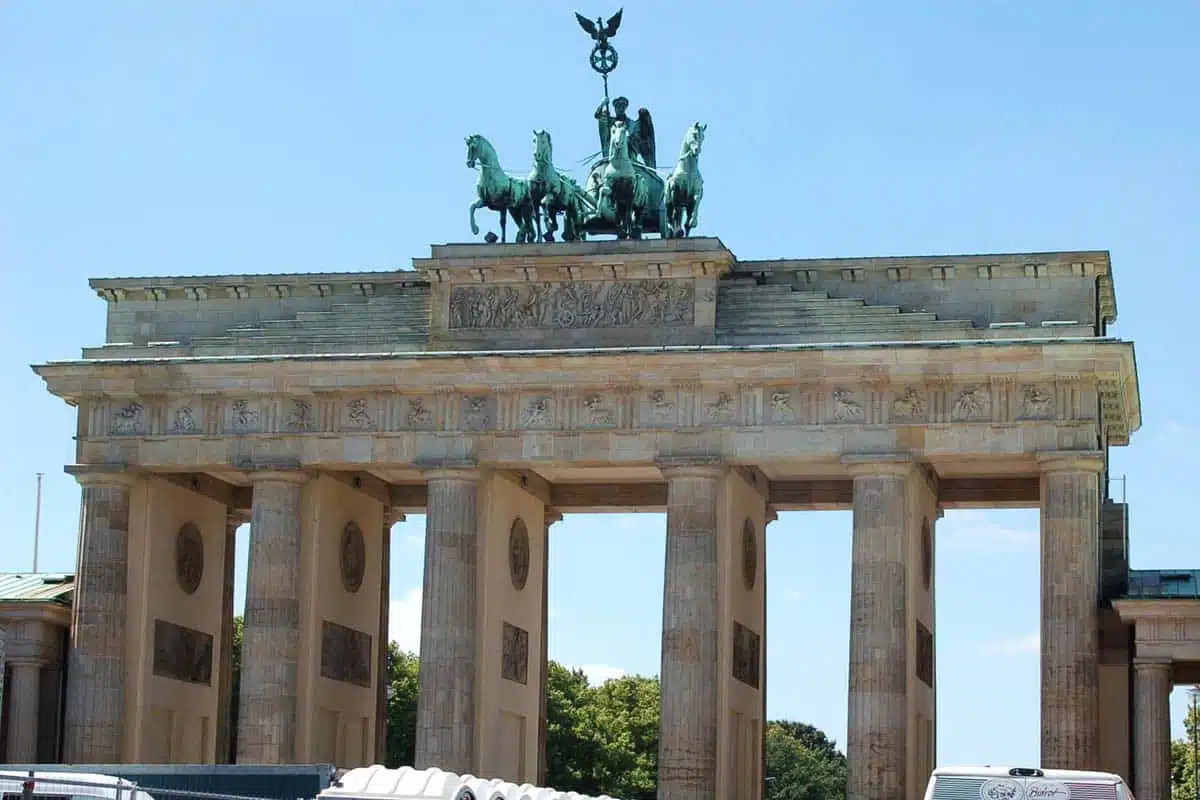
3 October is German Unity Day, a public holiday. In October the Festival of Lights projects light art onto landmarks such as the Brandenburg Gate, the TV Tower and Berlin Cathedral for ten nights. November is one of the quietest months until the first Christmas markets open late in the month. For the city’s most famous landmarks, see our Brandenburg Gate and Reichstag visitor guide.
Winter (December to February)

Winter is cold, damp and dark. January highs are around 3°C, nights are often just below freezing, and it gets dark at about 4pm in December. Snow falls on some days, but grey skies are more common. From late November to the end of December, dozens of Christmas markets open across the city, and some, like the one at Gendarmenmarkt, run until New Year’s Eve.
January and February are the quietest months, apart from the Berlinale film festival in February. It is a good time for museums: see our Museum Island visitor guide. Our Cold War Berlin guide covers the Wall sites and memorials, many with indoor exhibitions.
Festivals and events by month

- February: Berlinale, one of the world’s major film festivals, with many screenings open to the public.
- May or June: Karneval der Kulturen, a multicultural street festival and parade in Kreuzberg over the Whitsun weekend.
- June: Fête de la Musique, free concerts on streets and stages across the city on 21 June.
- July: CSD Berlin, the city’s Pride march, which draws hundreds of thousands of people.
- September: Berlin Marathon, a big city race through the centre on the last weekend of the month.
- October: Festival of Lights, ten free nights of light art on Berlin’s landmarks.
- Late November to December: Christmas markets, with mulled wine, food stalls and crafts all over the city.
- December: New Year’s Eve, with a big party at the Brandenburg Gate and fireworks across Berlin.
Tips for planning your trip
Book hotels early for July and August, the Berlinale, Marathon weekend, the Festival of Lights and weekends in December, and check whether a big trade fair is on during your dates, as these fill rooms too. The free visit to the Reichstag dome needs registration in advance, so book it as soon as your dates are fixed. Pack layers and a light waterproof at any time of year, and a warm coat, hat and gloves from December to February. Berlin is spread out, so plan your days by area and use the U-Bahn, S-Bahn and trams, which run all year. Spring to autumn is the best time for day trips to the palaces and gardens of Potsdam. If you are travelling from outside the EU, check your government’s current travel advice and entry rules before you book.
Questions about visiting Berlin
What is the cheapest month to visit Berlin?
January and February usually have the lowest demand for hotels, outside Berlinale week and big trade fairs. November, before the Christmas markets open, is also quiet.
Is Berlin worth visiting in winter?
Yes, if you plan around museums, cafés and the Christmas markets. Expect cold, grey days and early darkness, so dress warmly and start sightseeing early.
What is the rainiest month in Berlin?
July usually gets the most rain, often in short summer downpours, while April is normally the driest month. Rain is spread fairly evenly through the year, so a light waterproof is always useful.


