10 Most Beautiful Gardens in Europe to Visit
Europe’s great gardens were built to impress. Kings, archbishops and emperors used fountains, clipped hedges and long avenues to show their power, and many of these gardens are now public parks you can enter for free. This list covers palace gardens in France, Austria, Germany, Italy and Spain, plus a spring bulb park in the Netherlands and an artist’s cactus garden in the Canary Islands.
Our photographers visited most of these places, and you can see more in our free garden pictures. Here are 10 of the most beautiful gardens in Europe, with tips on visiting them.
1. Mirabell Gardens, Salzburg, Austria
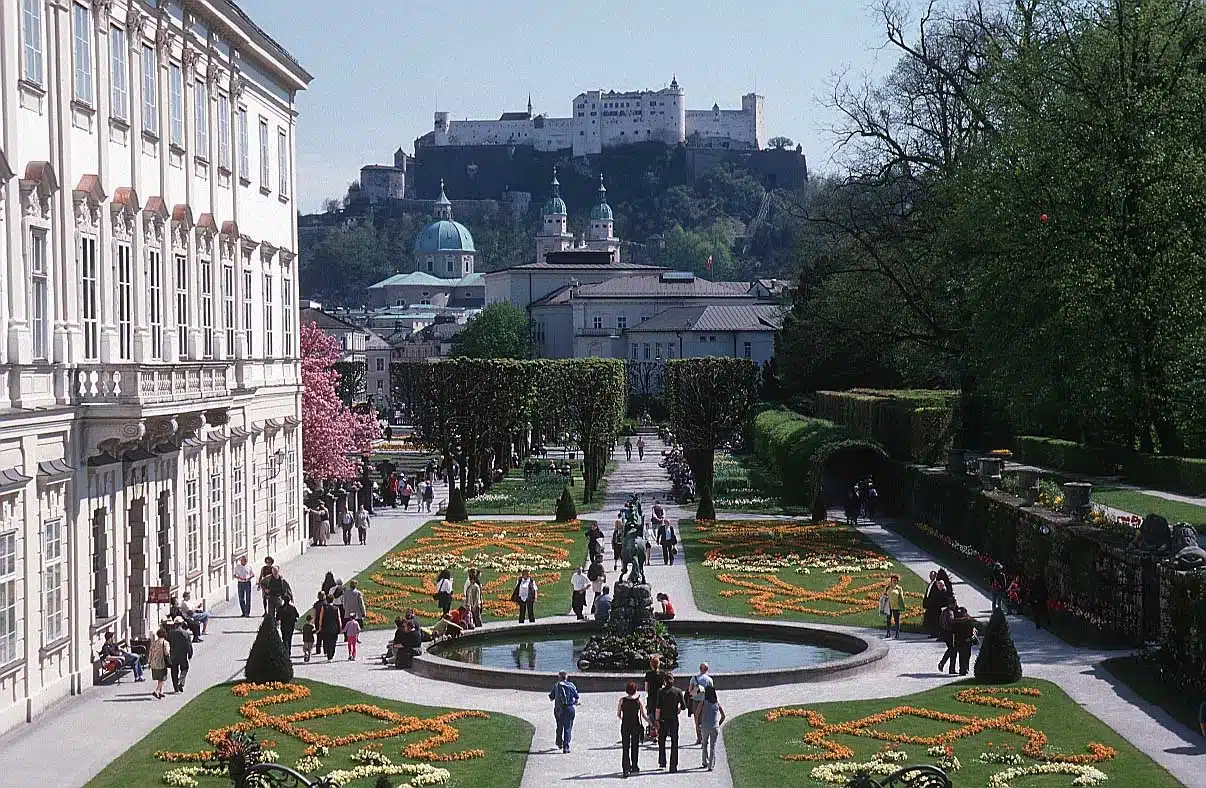
Mirabell Palace was built in the early 1600s, and its formal Baroque garden is part of the UNESCO-listed historic centre of Salzburg. Geometric flower beds, marble statues and the Pegasus Fountain line up with a view of Hohensalzburg Fortress across the river. Film fans will know the fountain and steps from the “Do-Re-Mi” scene in The Sound of Music. The gardens are free and right in the city centre. Come early in the morning in summer, before tour groups arrive, to get the classic fortress view without crowds.
2. Gardens of Versailles, France

André Le Nôtre designed these gardens for Louis XIV, and they set the model for formal gardens across Europe. Walk from the Water Parterre, with its long pools and bronze statues, down to the Grand Canal, and see the Orangerie, where orange trees in boxes stand outside in summer. The palace and gardens are a UNESCO World Heritage Site. Entry to the gardens is free on most days, but a ticket is needed on days with the musical fountain shows, which run in the warmer season. The RER C train runs from central Paris.
3. Tuileries Garden, Paris, France

The Tuileries Garden stretches from the Louvre to Place de la Concorde. It was first laid out in the 16th century for Catherine de’ Medici, and Le Nôtre later gave it its formal French shape. Today it is a free public park with gravel paths, round ponds, green metal chairs and many statues, framed by gilded gates. The Musée de l’Orangerie, home to Monet’s Water Lilies, stands inside the garden. Pair a walk here with a Louvre visit, and use the Tuileries or Concorde metro stations.
4. Schönbrunn Palace Gardens, Vienna, Austria

Schönbrunn was the summer home of the Habsburgs, and its palace and gardens are on the UNESCO World Heritage list. The large park is free to enter. From the palace, a wide parterre leads to the Neptune Fountain, and a path climbs the hill to the Gloriette, a long colonnade with a café and one of the best views over Vienna. Some parts, such as the Privy Garden, the maze, the Palm House and the zoo, need tickets. The U4 underground line stops at Schönbrunn and Hietzing stations.
5. Nymphenburg Palace Park, Munich, Germany
Nymphenburg was the summer palace of the Bavarian rulers, the Wittelsbachs. Its park mixes a formal garden near the palace with a large English-style landscape of woods, lakes and a long canal that runs on the main axis. Hidden among the trees are small park palaces such as the Amalienburg hunting lodge and the Pagodenburg. The park itself is free, while the palace and pavilions need a ticket, and the pavilions usually close in winter. Trams run from central Munich to the palace.
6. English Garden, Munich, Germany

Laid out from 1789, the English Garden is one of the largest city parks in the world. It follows the English landscape style, with meadows, streams and woods instead of straight lines. Climb the small hill to the Monopteros, a round Greek-style temple with a view of Munich’s towers, then walk to the Chinese Tower and its large beer garden. The park is free and open all year. It is a short walk from the city centre and the university area.
7. Jardín de Cactus, Lanzarote, Spain

The Lanzarote artist César Manrique turned an old quarry near the village of Guatiza into a terraced garden that opened in 1990. Thousands of cacti from around the world grow in black volcanic soil, set among stone walls, sculptures and a restored windmill. A large metal cactus sculpture marks the entrance. Tickets are needed, and opening times can change, so check the official site of Lanzarote’s art and nature centres. A car is the easiest way to get there, and you can combine it with Jameos del Agua nearby.
8. Keukenhof, Lisse, Netherlands
Keukenhof is a spring flower park between Amsterdam and Leiden, famous for millions of tulips, daffodils and hyacinths planted in designs that change every year. It opens for only about eight weeks each spring, and the dates change every year. Tickets should be bought online in advance. Weekdays and early mornings are calmer than weekends. In season, buses run from Schiphol Airport and Leiden, and you can rent a bike to see the striped bulb fields around the park.
9. Generalife, Alhambra, Granada, Spain
The Generalife was the summer palace and garden of the Nasrid rulers of Granada, set on a hill next to the Alhambra. Its most famous corner is the Patio de la Acequia, a long pool with arching fountains and flower beds between two pavilions. Cypress walks, water stairs and terraces look across to the Alhambra and the old Albaicín quarter. The site is a UNESCO World Heritage Site. Tickets often sell out weeks ahead, so book early on the official Alhambra website and bring the ID used when booking.
10. Boboli Gardens, Florence, Italy
The Boboli Gardens rise behind Pitti Palace and were created for the Medici family from the 16th century. They are one of the early models of the Italian Renaissance garden, with terraces, an amphitheatre, long cypress avenues, fountains and the Buontalenti Grotto, decorated with shells and sculpture. The gardens belong to the Uffizi Galleries, and a ticket is needed. Climb to the top terraces for a view of the city and the countryside. Wear good shoes, as the paths are steep.
Tips for visiting
Spring and early summer are the best seasons, when flower beds are full and fountains run; in winter many fountains are switched off. Arrive early or late in the day for softer light and fewer people. Wear comfortable shoes, as parks like Versailles and Nymphenburg mean long walks on gravel. Free gardens often have paid areas inside, so check official websites for tickets and seasonal opening times, and book ahead for the Alhambra and Keukenhof. Before you travel, check your government’s current travel advice.
Questions about Europe’s most beautiful gardens
Which palace gardens in Europe are free to visit?
The Mirabell Gardens, the Tuileries, the Schönbrunn park, Nymphenburg Palace Park and the English Garden are free. Versailles gardens are free on most days, but charge on musical fountain show days.
When is the best time to visit European gardens?
Late April to June is best for flowers and running fountains. Keukenhof only opens in spring, so plan around its dates.
Do I need to book garden tickets in advance?
For the Alhambra and Generalife, yes, as tickets often sell out. Buy Keukenhof tickets online too; free city parks need no booking.


