Doi Suthep: A Visitor Guide to Chiang Mai’s Golden Hilltop Temple

Wat Phra That Doi Suthep is the golden hilltop temple that watches over Chiang Mai in northern Thailand. It sits at about 1,060 metres on the slopes of Doi Suthep, roughly 15 km northwest of the Old City, and it is the most sacred temple in the north. Pilgrims have come here for centuries to honour a relic of the Buddha kept inside its golden chedi.
The temple is said to date from 1383, and the legend of the white elephant that chose the site is told everywhere you look. A visit combines Lanna temple art, cool mountain air and wide views, as our free photos of Chiang Mai’s temples show. Doi Suthep is also part of the “Chiang Mai, Capital of Lanna” nomination for UNESCO World Heritage status. Here are the 10 best things to do at Doi Suthep, with tips on when to go and how to plan your trip.
1. Climb the Naga staircase
The classic way in is the long stairway from the car park. It has about 300 steps, and two giant naga serpents run beside it, their scaly bodies forming the handrails. It is one of the most photographed sights in northern Thailand. The climb is steep but short. If the steps are too much, an enclosed cable car runs up beside them for a separate small fare. Many visitors ride up and walk down.
2. See the golden chedi
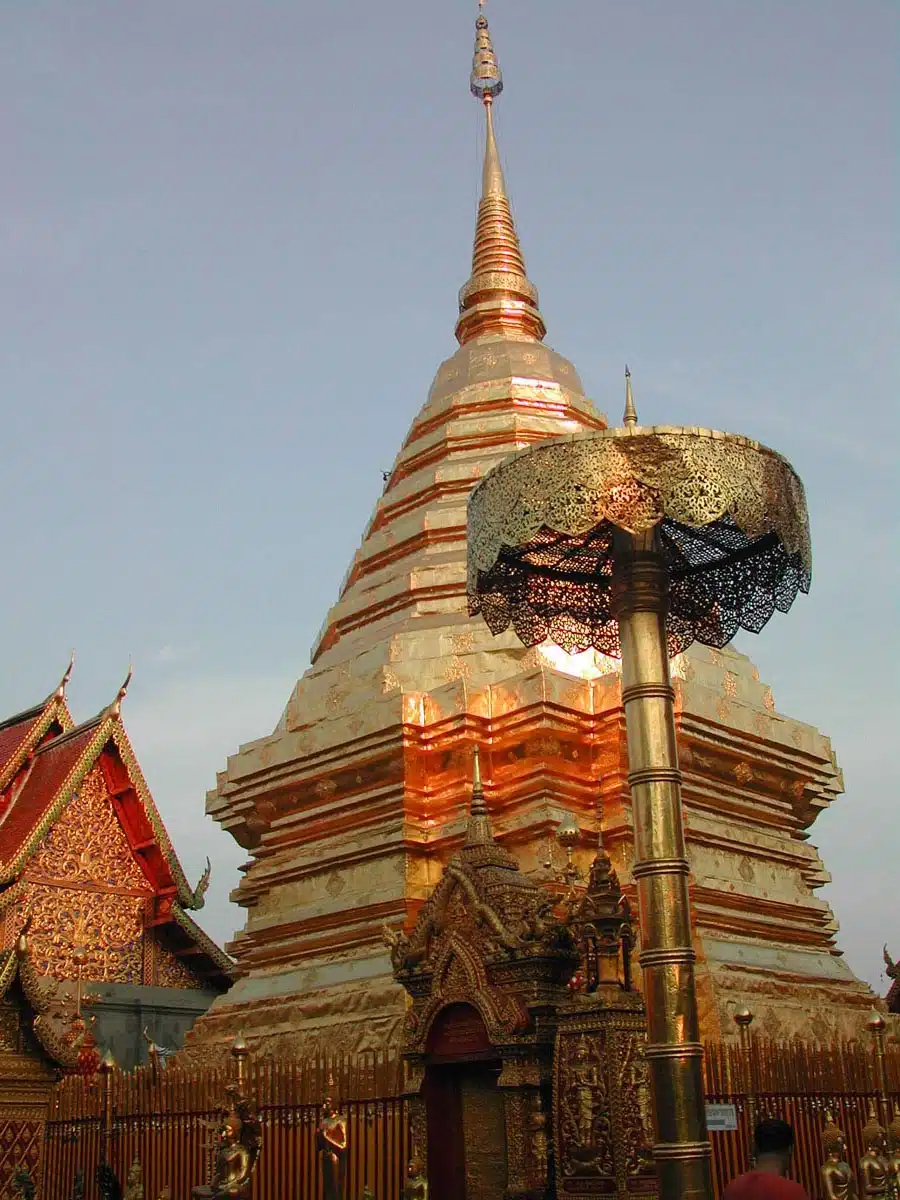
At the heart of the upper terrace stands the gilded chedi that holds the relic, said to be a piece of the Buddha’s shoulder bone. Golden parasols stand around it. Thai visitors walk around it clockwise holding lotus buds, candles and incense, often three times. You are welcome to join in quietly. Remove your shoes before stepping onto the marble courtyard, and take a moment to watch the steady flow of worshippers.
3. Find the white elephant shrine

The story goes that King Kuena of Lanna placed the relic on the back of a white elephant and let it go into the forest. The elephant climbed the mountain, trumpeted three times and died on this spot, which the king took as a sign to build the temple. A statue of the elephant carrying the relic marks the legend. Locals leave flowers and offerings here, so step around them with care.
4. Look inside the temple halls

Around the chedi are prayer halls and covered cloisters lined with Buddha images and painted murals. The red lacquer, gold leaf and carved gables are typical of Lanna temple style, and the mix of Buddhist and Hindu figures is worth a slow look. Monks may be leading prayers. Sit lower than any monk, keep your feet pointing away from Buddha images and ask before taking photos of people at prayer.
5. Ring the temple bells

Long rows of bells hang along the edges of the terrace. Visitors strike them gently, one after another, as a way of making merit and wishing for good luck. The soft ringing carries across the whole temple. Use a light touch and avoid ringing them while monks are chanting nearby. Between the bells you will find small shrines and statues that most visitors walk straight past.
6. Take in the view over Chiang Mai
The viewing terrace looks straight down onto Chiang Mai. On a clear day you can pick out the square moat of the Old City and the flat Ping River valley beyond. Early morning often gives the cleanest air, while late afternoon light warms the gold of the chedi behind you. In the smoky months the view can disappear in haze, so go after rain if you can.
7. Stop at the Kruba Srivichai Monument
At the foot of the mountain road, near Chiang Mai Zoo, a shrine honours Kruba Srivichai, the revered monk whose followers built the first road up to the temple. Before that, reaching Doi Suthep meant a long walk through the forest. Locals stop here to pay respect before driving up, and it is the starting point for the big night pilgrimage on Visakha Bucha Day. It takes only a few minutes to visit.
8. Hike the Monk’s Trail to Wat Pha Lat
Fit walkers can follow the old pilgrim path from the end of Suthep Road, near Chiang Mai University. The trail is steep but shaded, with orange markers on the trees, and most people reach Wat Pha Lat in under an hour. This quiet forest temple, built beside a rocky stream, was once a resting place for pilgrims. You can continue uphill to Doi Suthep or return the same way. Bring water and good shoes.
9. Visit the gardens of Bhubing Palace
A few kilometres beyond the temple, Bhubing Palace is the royal winter residence, built in 1961. The palace buildings are not open, but visitors can walk through the landscaped grounds and flower gardens in the cool mountain air. The grounds close when the royal family is in residence, usually in the early months of the year, and at other times for royal events. Dress as you would for the temple and check it is open before you go.
10. Explore Doi Suthep-Pui National Park
The temple stands inside Doi Suthep-Pui National Park, which protects the forested peaks of Doi Suthep, Doi Buak Ha and Doi Pui, the highest point. The road continues past the palace to viewpoints, waterfalls, nature trails and the Hmong village of Doi Pui, known for its market stalls. A hired songthaew or scooter lets you combine several stops in a day. Take a layer, as it can feel cool at the top.
When to visit Doi Suthep
The cool, dry season from about November to February is the most comfortable time, with clearer skies. The late dry season, roughly February to April, is hot and often brings thick smoke haze from seasonal burning, which can hide the view and affect air quality. The rainy season, about May to October, turns the forest green and brings fewer crowds. On the eve of Visakha Bucha Day, usually in May or early June, thousands of people walk up the mountain by night. Arrive early on any day to beat the tour groups and the heat.
Tips for planning your trip
Shared red songthaews leave for the temple from near Chiang Mai Zoo and Chiang Mai University, and also from Chang Phuak Gate in the Old City. They leave when full, and you can agree a return trip with the driver. Ride-hailing cars and day tours are other options. If you ride a scooter, expect a steep, winding road for 30 to 40 minutes. Allow two to three hours for the temple, or a full day with the palace and Doi Pui. Foreign visitors pay a small entrance fee, and the cable car is ticketed separately. Cover your shoulders and knees; wraps are available at the entrance. Before you travel, check your government’s current travel advice for Thailand. Heading on to Laos? Our guide to things to do in Luang Prabang covers another temple town, and for beaches see our tips for photographing Phuket island.
Questions about Doi Suthep
How many steps are there at Doi Suthep?
The Naga staircase has about 300 steps; sources give either 306 or 309. A cable car beside the stairs is an easy alternative.
What should I wear to Doi Suthep temple?
Cover your shoulders and knees, and wear shoes that are easy to slip off for the upper terrace. Wraps are available at the entrance.
Can you walk to Doi Suthep from Chiang Mai?
Yes. The Monk’s Trail starts near Chiang Mai University and climbs through forest to Wat Pha Lat and then on to Doi Suthep. Allow several hours for the full walk up and back.


