Wadi Rum Visitor Guide: 10 Best Things to Do in Jordan’s Red Desert

Wadi Rum is a protected desert of red sand, sandstone mountains and narrow canyons in southern Jordan. It is about an hour’s drive northeast of Aqaba and close to the Saudi border. It became a UNESCO World Heritage Site in 2011 for its landscape and for its rock art and inscriptions, which record around 12,000 years of human life in the valley. Local Bedouin families run most tours and camps.
Most people come for a jeep tour, a camel ride and a night under the stars. You can also hike to rock bridges, read ancient carvings or float over the valley in a balloon. Before you go, browse our free photos of Jordan and Wadi Rum. Here are the 10 best things to do in Wadi Rum, with tips on when to go and how to plan your trip.
1. Start at the Visitor Centre and the Seven Pillars of Wisdom
Every visit begins at the Wadi Rum Visitor Centre, a few kilometres before Rum village. Here you register, buy your entry ticket or show your Jordan Pass, and meet your guide if you have booked one. From the terrace you can see the Seven Pillars of Wisdom, a huge rock face named after T.E. Lawrence’s book. In Rum village itself, look for the remains of a small Nabataean temple before you head into the sand.
2. Take a jeep tour with a Bedouin guide

The protected area covers more than 700 square kilometres, so a 4×4 is the usual way to see it. Local Bedouin drivers run tours from two hours to a full day, often in open pickups with benches in the back. A half day covers the main sights near the village, while a full day reaches the rock bridges further south. Ask what is included, and bring a scarf against dust and sun.
3. Visit Lawrence’s Spring and Lawrence’s House
Most jeep tours stop at Lawrence’s Spring, a small spring on a rocky slope. It is linked to T.E. Lawrence and the Arab Revolt of 1916 to 1918. A short climb takes you up to the water and a fig tree, with wide views over the valley and its red sand. Many tours also stop at Lawrence’s House, a ruined stone building whose history is much older than its name.
4. See the inscriptions in Khazali Canyon
Khazali Canyon is a deep, narrow crack in Jebel Khazali, less than 100 metres long. Its walls carry Thamudic, Nabataean and early Islamic inscriptions. You can also see rock drawings of people, camels, goats and footprints. These carvings are part of the reason UNESCO listed Wadi Rum. Please do not touch the carvings or add your own marks.
5. Climb the red sand dunes
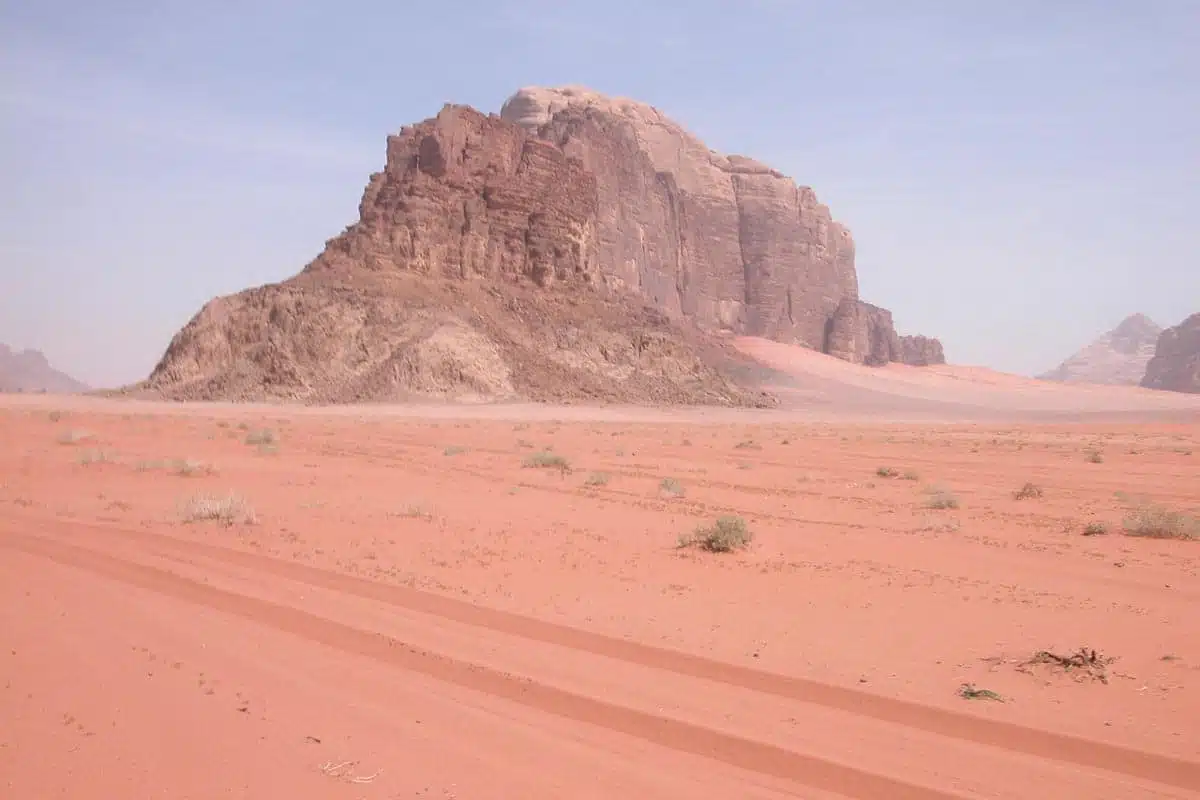
The famous red dunes are piled up against the slopes of the mountains, and the best known are near Jebel Umm Ulaydiyya. Climbing them barefoot is hard work but short, and the top gives a fine view over the desert floor and its rock towers. Running back down is the fun part. In the warmer months the sand can get very hot by midday, so plan this stop for the morning or late afternoon.
6. Walk over the rock bridges
Wind and water have cut several natural arches in Wadi Rum. Little Bridge is a low arch that most people can climb onto with care. Umm Fruth Rock Bridge is taller and a popular photo stop, reached by a short scramble up smooth sandstone. Nearby you will probably pass Mushroom Rock, a single boulder on a thin stem. Wear shoes with good grip, as sand on the rock can make it slippery.
7. Hike to Burdah Rock Bridge
For a real challenge, book a guided hike to Burdah Rock Bridge, the highest arch in Wadi Rum. It sits high on Jebel Burdah in the southeast of the protected area. The usual route is a hike and scramble of about two kilometres that takes around three hours, over steep slabs and some exposed ridges. It is not for people who dislike heights. Keen hikers can also climb Jebel Umm ad Dami, Jordan’s highest mountain at 1,854 metres, near the Saudi border.
8. Ride a camel across the sand

Camels are still part of daily life for many Bedouin families, and a ride is a slow, quiet way to see the desert. Most camps and tour operators offer short rides of an hour or two, often at sunset. Some also run longer treks with a night in the desert. Ask your camp to arrange it in advance.
9. See the desert from a hot air balloon
Balloon flights over Wadi Rum take off at sunrise, when the winds are calm and the light on the cliffs is soft. You drift over sandstone mountains, canyons and red plains for about an hour, depending on the wind. You need to book flights ahead, and most include a pickup from your camp. Flights can be cancelled at short notice if the weather is not right.
10. Spend a night in a Bedouin camp

Staying overnight lets you see the desert at its best. At sunset the rock walls turn deep red, and after dark the sky fills with stars far from city lights. Camps range from simple goat hair tents with shared bathrooms to dome tents with large windows and private showers. Dinner is often zarb, meat and vegetables slowly cooked in an oven buried in the sand. Bring warm layers, as nights get cold for much of the year.
When to visit Wadi Rum
The most pleasant months are March to May and late September to November, when days are warm and nights are cool. These are also the busiest times, so book camps early. Winter is quieter, with mild sunny days but cold nights, and a few days of rain or even snow on the high ground. Summer days are very hot, so if you go then, do jeep tours early and late and rest at midday.
Tips for planning your trip
Wadi Rum is about one hour by road from Aqaba, two hours from Petra and four hours from Amman. Most visitors drive or take a taxi. Some buses run from Aqaba and Wadi Musa, but there are not many, so check times locally. You cannot drive your own car into the desert, so park in Rum village and continue with your guide. Stay at least one night, or two if you want to hike. Many people visit Petra on the same trip; see our pictures of Petra for ideas. Carry cash, water, sun cream and a torch. The area is near the Saudi border, so check your government’s current travel advice for Jordan before you go.
Questions about Wadi Rum
Do I need a guide in Wadi Rum?
Yes, for almost all visitors. The desert has no signed roads, and local Bedouin guides run the tours, camps and hikes.
Is Wadi Rum included in the Jordan Pass?
Yes, entry to the protected area is included, but you still need to stop at the Visitor Centre to register and show your pass. You pay separately for jeep tours, camps and activities.
Can I visit Wadi Rum as a day trip?
Yes, you can come from Aqaba or Petra, and a half day jeep tour covers the main sights. A night in a camp is worth it, though, because sunset and the night sky are the best parts of a visit.


