Lama Temple Beijing: A Visitor Guide to Yonghe Gong
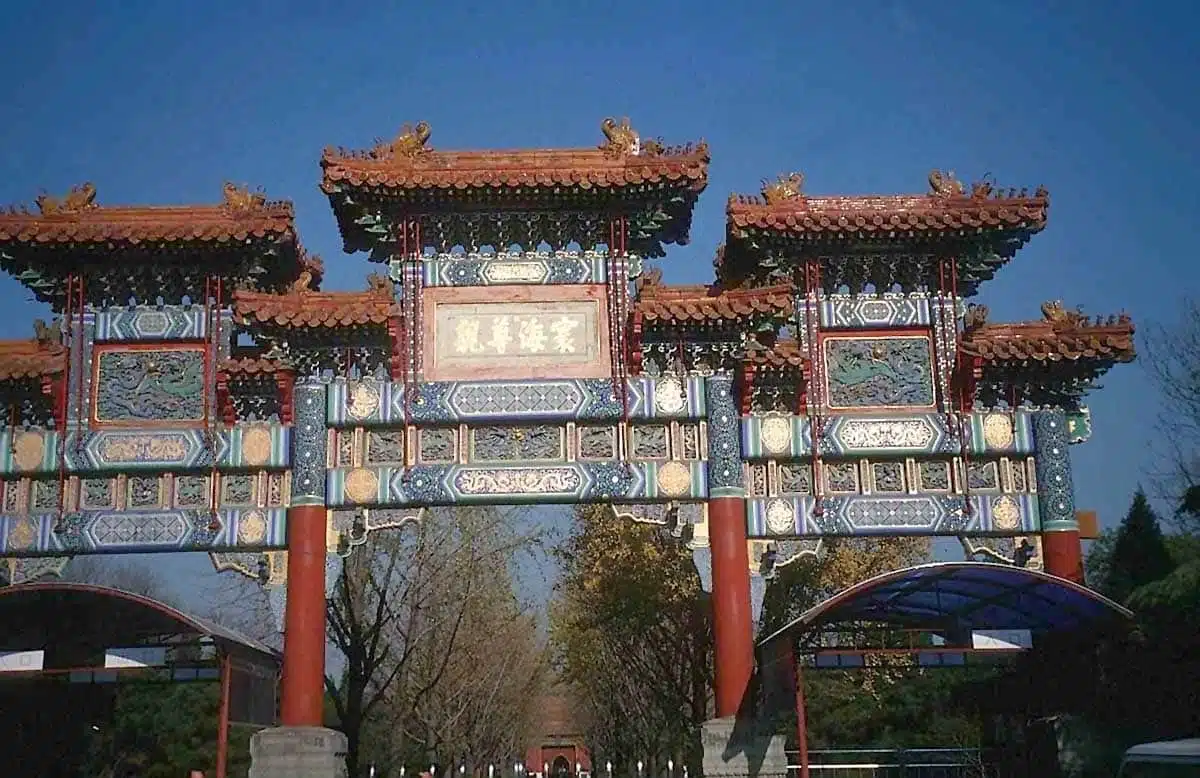
The Lama Temple, or Yonghe Gong, is a working Tibetan Buddhist monastery in Dongcheng District, in the northeast of central Beijing. It was built in 1694 as the home of Prince Yong, who later became the Yongzheng Emperor, and in 1744 his son, the Qianlong Emperor, turned it into a lamasery. Today it is the largest and best-known Tibetan Buddhist temple in the city, with smoky courtyards, yellow-tiled roofs and a giant Buddha carved from a single sandalwood tree.
It is close to a metro station and fits well into a half day with the Confucius Temple and the old lanes nearby. Before you go, browse our free photos of Beijing to get a feel for the halls and courtyards. Here are the 10 best things to do at the Lama Temple, with tips on when to go and how to plan your trip.
1. Walk through the painted archways
Your visit starts at the south end, where painted wooden archways lead to a long, tree-lined walkway towards the first gate. Look closely at the archways: the blue, green and gold patterns are typical of Qing imperial buildings. Then follow the central axis north. The halls get larger and more important as you go, so it pays to walk them in order rather than jumping ahead.
2. Meet the Four Heavenly Kings at the Gate of Harmony and Peace
The first main building is the Gate of Harmony and Peace (Yonghe Men), which serves as the Hall of the Heavenly Kings. A smiling Maitreya Buddha sits in the centre, and large statues of the Four Heavenly Kings stand guard on either side, each protecting one direction of the world. Behind Maitreya stands Weituo, guardian of the Buddhist teaching. As in every hall here, photography is not allowed inside.
3. Offer incense in the courtyards

Incense smoke is a big part of the Lama Temple experience. Your ticket comes with a free bundle of incense, and you will see worshippers bowing before placing sticks in the large burners. Burn incense only in the open courtyards, never inside the halls, and three sticks are enough. Look for the ornate bronze burner dating from 1747 and the stele pavilion nearby, whose inscription by the Qianlong Emperor is carved in Chinese, Manchu, Mongolian and Tibetan.
4. Step into the Hall of Harmony and Peace

The Hall of Harmony and Peace is the main hall and gave the whole temple its name. Inside are three Buddhas representing the past, present and future, with figures of arhats, the enlightened followers of the Buddha, along the sides. Before 1744 this was part of Prince Yong’s mansion, and the hall still has the proportions of a palace building.
5. Visit the Hall of Everlasting Protection
Behind the main hall is the Hall of Everlasting Protection (Yongyou Dian), which is smaller and often a little calmer. It holds Buddhas linked with long life and healing. As you move north, the mood changes, with fewer tour groups and more people praying. History adds weight here too: after the Yongzheng Emperor died in 1735, his coffin was placed in the temple before burial.
6. See Tsongkhapa and the Five Hundred Arhat Hill
The Hall of the Wheel of Dharma (Falun Dian) is the most Tibetan in feeling. This cross-shaped hall holds racks of cloth-wrapped scriptures and a bronze statue of Tsongkhapa, about six metres high. He founded the Gelug, or Yellow Hat, school to which the temple belongs. Behind him is the Five Hundred Arhat Hill, a carved wooden mountain with tiny figures made of gold, silver, copper, iron and tin. If Himalayan Buddhism interests you, compare it with the temples and dzongs of Thimphu in Bhutan.
7. Stand before the sandalwood Buddha in the Wanfu Pavilion
The last and tallest building is the Wanfu Pavilion (Wanfu Ge), the Pavilion of Ten Thousand Happinesses. Inside stands a Maitreya Buddha about 18 metres high, with roughly another eight metres said to be below ground. It was carved from a single trunk of white sandalwood, sent from Tibet as a gift from the Seventh Dalai Lama to the Qianlong Emperor, and holds a Guinness World Record.
8. Look up at the roofs and details

Because it was once an imperial residence, the temple has yellow glazed roof tiles like the Forbidden City, with rows of small figures on the eaves. The buildings mix Han Chinese, Manchu, Mongolian and Tibetan styles, and the painted beams, carved corners and bronze lions reward a slow walk. Photography is allowed out here in the courtyards.
9. Visit the Confucius Temple and Imperial College
A short walk west along Guozijian Street brings you to two sights that make a calm contrast. At the Confucius Temple, emperors of the Yuan, Ming and Qing dynasties paid homage to Confucius, and rows of stone tablets carry the names of scholars who passed the imperial exams. Next door, the Imperial College (Guozijian), founded in 1306, was the country’s highest seat of learning. Both are quieter than the Lama Temple and need separate tickets.
10. Walk the hutongs and Ditan Park
Finish with a walk in the streets around the temple. Guozijian Street is shaded by old trees and lined with courtyard houses and small shops. Nearby Wudaoying Hutong has cafés, bars and independent boutiques, good for lunch or a coffee break. Just north across the Second Ring Road is Ditan Park, home of the Temple of Earth, where emperors made sacrifices to the earth. Locals come here to walk, dance and practise tai chi.
When to visit the Lama Temple
Spring (April and May) and autumn (September and October) bring Beijing’s most comfortable weather. Summer is hot and humid, while winter is cold and dry but often clear, with fewer visitors. The temple is at its busiest around Chinese New Year, when huge crowds come to pray for good fortune, and during national holidays in early May and early October. Weekday mornings are calmest. Opening times change between the summer and winter seasons, and last entry is before closing time.
Tips for planning your trip
The Lama Temple is at 12 Yonghegong Street in Dongcheng District. The easiest way to get there is by metro: Lines 2 and 5 stop at Yonghegong Lama Temple station, a short walk from the entrance. Entry uses real-name booking, so reserve your ticket online in advance with your passport details and bring the same passport on the day, as there are security checks. Allow one and a half to two hours for the temple, or half a day with the Confucius Temple and hutongs. Dress modestly, keep your voice low and step over the raised door thresholds rather than on them. Before travelling, check your government’s current travel advice on visas and entry rules for China. If you are heading on to Sichuan, see our guide to Chengdu, a historic and modern city.
Questions about the Lama Temple
Do I need to book tickets for the Lama Temple?
Yes. Entry uses real-name booking, so reserve online before your visit with your passport details and carry your passport with you.
Can you take photos at the Lama Temple?
You can take photos in the courtyards and of the buildings from outside. Photography and filming are not allowed inside the halls.
How long do you need at the Lama Temple?
Most visitors spend one and a half to two hours. Add another hour or two for the Confucius Temple and the nearby hutongs.


