10 Most Beautiful Lakes in Europe to Visit

Lakes come in many forms across Europe. This list includes small alpine lakes below glaciers, chains of turquoise pools joined by waterfalls, and large lakes where ferries link old villages. Every lake here is easy to reach by train, bus or boat, and you can see most of them on a day trip from a city.
We start with the lakes our own photographers visited in Switzerland, Bavaria and Croatia, which you can find in our free lake pictures. After those come five famous lakes that are worth planning a whole trip around. Here are 10 of the most beautiful lakes in Europe, with tips on visiting them.
1. Lake Zug, Switzerland
Lake Zug lies between Zurich and Lucerne. The old town of Zug sits on its northern shore, and the Rigi rises at the southern end. The lake is known for calm evenings and long sunsets over the water. Zugersee Schifffahrt runs boat trips on the lake. A classic day out is a cruise towards Arth followed by the cogwheel railway from Arth-Goldau to the top of the Rigi. Zug is a short train ride away, so it fits easily into a stay in Zurich.
2. Lake Ägeri, Switzerland

Lake Ägeri is a smaller, quieter lake in the hills above Zug, at about 720 metres. Woods and meadows run down to its clear water, and the villages of Unterägeri and Oberägeri sit at the northern end. The southern end is near Morgarten, where a well-known Swiss battle was fought in 1315. In summer, people swim from the lidos and paddleboard on the lake. An electric boat offers round trips. Buses run up from Zug station, so you can see both lakes in one day.
3. Trübsee, Switzerland

Trübsee is an alpine lake on the slopes of Mount Titlis, high above the village of Engelberg. The TITLIS Xpress cable car takes you from Engelberg to Trübsee, and an easy path that works with pushchairs loops around the lake. On the far shore, the Jochpass chair lift climbs higher towards Engstlenalp. In winter the lake freezes and a marked winter walking trail goes around it. Trains run to Engelberg from Lucerne. Lifts close for maintenance at certain times of year, so check the timetable before you go.
4. Schwansee, Germany

The Schwansee, or Swan Lake, is a small lake in Schwangau near Füssen, just below Hohenschwangau Castle. King Ludwig II grew up in this castle, and Neuschwanstein stands on the hill opposite. The castles draw big crowds, but the Schwansee stays calm. A flat path runs along the shore, and swimming is allowed in summer, although the water is cold. The larger Alpsee is a short walk away. If you want to tour the castles too, book tickets in advance because they often sell out.
5. Plitvice Lakes, Croatia
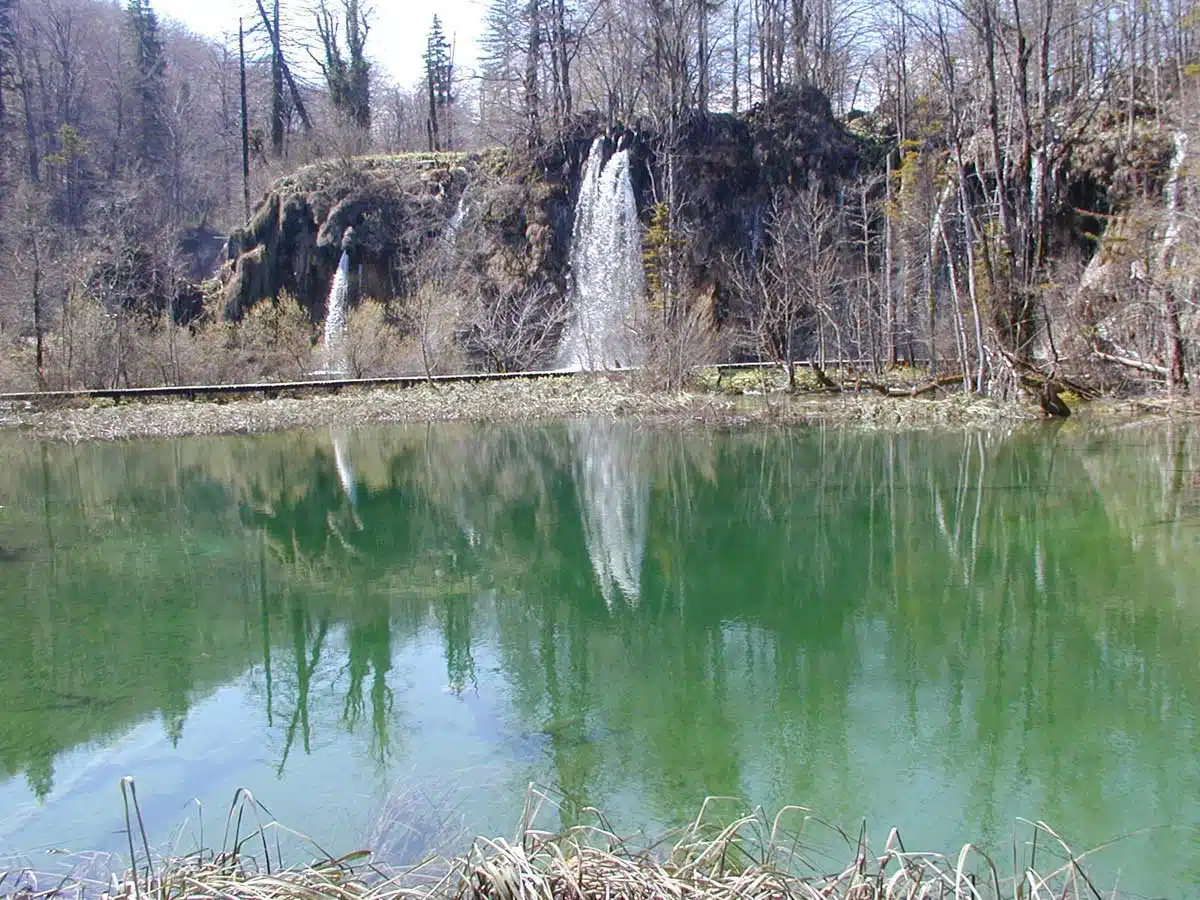
Plitvice Lakes National Park is Croatia’s oldest national park and a UNESCO World Heritage Site. Sixteen terraced lakes are joined by waterfalls, and wooden boardwalks lead right across the water. The colour of the water changes from green to turquoise with the minerals and the light. Buy tickets online in advance. Each ticket is tied to an entry time slot, and summer days sell out. Swimming is not allowed. If you drive from Zagreb, our Rastoke and Karlovac guide covers a good stop on the way.
6. Lake Bled, Slovenia
Lake Bled lies in the Julian Alps in north-west Slovenia. A small island in the middle holds a pilgrimage church, and a medieval castle stands on a cliff above the shore. Traditional wooden boats called pletna take visitors to the island. You can still hire a rowing boat, but you may no longer land on the island in it. A path of about 6 kilometres goes all the way round the lake. For the classic view, climb the short trail to the Ojstrica viewpoint early in the morning.
7. Königssee, Germany
Königssee is a long, narrow lake in Berchtesgaden National Park, below the steep east face of the Watzmann. Quiet electric boats run to St. Bartholomä, a pilgrimage church with red onion domes. On the way, the crew plays a horn so you can hear the echo off the cliffs. Boats go on to Salet, where a short walk leads to the smaller Obersee. On holidays and sunny weekends the queues for boats can be long, so arrive before mid-morning.
8. Hallstätter See, Austria
Hallstätter See is part of the Hallstatt-Dachstein/Salzkammergut UNESCO cultural landscape in Upper Austria. Hallstatt village sits on a narrow strip of land between the lake and the mountain, and salt has been mined here for thousands of years. About 750 people live in the village, but more than a million visitors come every year, and tour coaches must book a time slot. The train is a good way to arrive: Hallstatt station is on the other side of the lake, and a small ferry takes you across to the village. Stay the night if you want to see the village when it is quiet.
9. Lake Como, Italy
Lake Como in Lombardy is shaped like an upside-down Y. Mountains rise straight out of the water, and old villas line the shore. The best stretch is in the middle, where Bellagio, Varenna and Menaggio face each other across the water. Navigazione Laghi ferries connect these villages with short crossings, and car ferries run only on this middle section. Leave the car at home if you can. Trains run from Milan to Varenna, and you can take the ferry from there. Spring and early autumn are much calmer than August.
10. Lake Ohrid, North Macedonia and Albania
Lake Ohrid is one of the oldest lakes in Europe and is shared by North Macedonia and Albania. UNESCO lists it for both its nature and its culture. Many plants and animals in the lake live nowhere else, and the town of Ohrid has old churches, a fortress and an ancient theatre. The classic view is the Church of St. John at Kaneo, on a rock above the water. Ohrid has its own airport, and buses run from Skopje. Check your government’s current travel advice before you cross borders in the region.
Tips for visiting
Plan your lake days around the weather. Low cloud can hide the mountains completely, so keep one day flexible if you can. Most of these lakes are busiest in July, August and on sunny weekends. Arrive early or stay overnight to see them quiet. Boats, cable cars and ferries often run less in winter, and some close for maintenance, so check timetables before you set off. Public transport works well: most lakes have train or bus links, and some boats are timed to meet them. Pack warm layers, because alpine lakes are cold even in summer. In national parks, stay on the marked paths.
Questions about lakes in Europe
When is the best time to visit lakes in Europe?
Late May, June and September usually bring mild weather, lifts and boats that are running, and fewer crowds than July and August. High alpine lakes such as Trübsee are often frozen in winter.
Can you swim in Plitvice Lakes?
No, swimming is not allowed anywhere in Plitvice Lakes National Park. For another Croatian park with lakes and waterfalls, see our Krka National Park guide.
Which European lakes can you visit without a car?
Most lakes on this list are easy to visit without a car. Lake Zug, Lake Como and Hallstätter See have train stations close by, and boats link the villages along the shore.


