11 Most Colourful Towns and Streets in Europe to Visit
This guide covers the most colourful towns and streets in Europe, from Scandinavian harbours to Italian fishing villages and painted blocks in the Balkans. Some got their colours from sailors and fishermen, others from Baroque builders or a mayor with a paint brush.
Each entry has one practical tip, and the photos come from our free house pictures. Here are 11 of the most colourful towns and streets in Europe, with tips on visiting them.
1. Nyhavn, Copenhagen, Denmark
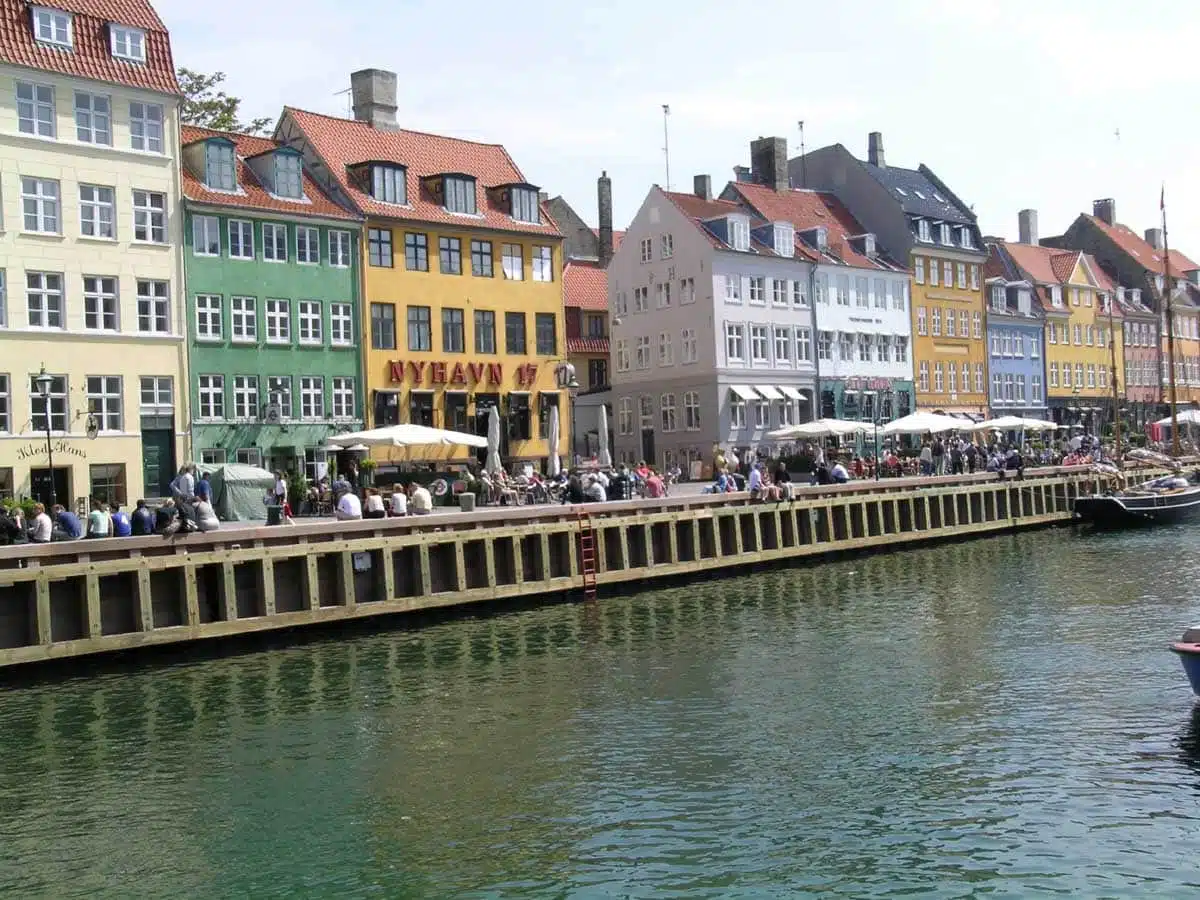
Nyhavn is a 17th-century canal and harbour in central Copenhagen. Its row of townhouses is painted in ochre, red, blue and yellow, and old wooden ships are moored in the water. Hans Christian Andersen lived here for 18 years, in three different houses along the quay. Come early in the morning for empty quays and soft light, then take a canal tour from the harbour. For more ideas, see our list of top tourist attractions in Denmark.
2. Graz, Austria

The historic centre of Graz is a UNESCO World Heritage Site, together with Schloss Eggenberg. Its streets are lined with pastel façades in pink, yellow and green, and the red tiled roofs form one of the best preserved roofscapes in Central Europe. Look for the Painted House at Herrengasse 3. The Baroque painter Johann Mayer covered its whole front with frescoes of gods in 1742. For the best view of the colours, climb the Schlossberg hill on foot or take the funicular or lift.
3. Passau, Germany

Passau in Bavaria sits where three rivers meet: the Danube, the Inn and the Ilz. Its Old Town is full of Baroque buildings with an Italian feel, painted in pink, cream and pastel green. St Stephen’s Cathedral holds the largest cathedral organ in the world. Do not miss the Höllgasse, the artists’ lane, where studios and galleries fill old houses with colourful plasterwork. For a view over the rooftops and rivers, walk up to the Veste Oberhaus fortress across the Danube.
4. Tirana, Albania

Albania’s capital is the most surprising city on this list. After Edi Rama, an artist, became mayor in 2000, many grey blocks from the communist years were painted in bold colours and patterns. The best known is the so-called Rainbow Building near Woodrow Wilson Square, beside the Blloku district. Skanderbeg Square, the main square, is a short walk away. Walk through Blloku in the evening, when its cafés and bars are busy, and look up as you go.
5. Rab Town, Croatia

The old town of Rab sits on a narrow walled peninsula, with four Romanesque bell towers rising above its roofs. Between the stone churches and Baroque palaces you find houses in warm yellow and cream, with small balconies and flower pots. Most visitors arrive on the short car ferry from Stinica on the mainland to Mišnjak, so expect queues on summer weekends. Read our guide to things to do on Rab for beaches and walks.
6. Zadar, Croatia

Zadar’s old town fills a small peninsula on the Dalmatian coast. Red and ochre houses, painted shutters and flower boxes brighten its pale stone lanes. Roman ruins and the round Church of St Donatus stand in the middle. At the tip of the peninsula, the Sea Organ plays music with the waves and the Greeting to the Sun glows in colour after dark. Both were designed by architect Nikola Bašić. Come at sunset. See also our guide to the most beautiful places in Dalmatia.
7. Burano, Italy
Burano is a small fishing island in the Venetian lagoon, famous for houses painted in almost every colour, from lemon to violet. It is also known for its needle lace and its leaning bell tower. The island is about 45 minutes from Venice by vaporetto line 12 from Fondamente Nove. Burano is not covered by the Venice access fee. If you also spend the day in the historic centre of Venice on a fee day, you will need to register. Arrive in the morning, before the tour groups.
8. Manarola, Cinque Terre, Italy
Manarola is one of the five villages of the Cinque Terre on the Ligurian coast. The area is a national park and a UNESCO World Heritage Site. Manarola’s tall houses in red, pink and yellow are stacked on a rock above a tiny harbour, with vineyards on the slopes behind. The villages are best reached by train from La Spezia, not by car. The Via dell’Amore path from Riomaggiore to Manarola reopened in 2024. It is one way only, and you need to book ahead with a special Cinque Terre Card.
9. Colmar, France
Colmar in Alsace is known for its half-timbered houses painted in blue, green, pink and yellow. The Petite Venise quarter follows the small Lauch river, where flower boxes hang over the water and short boat trips leave from the banks. Colmar is on the Alsace wine route and is a short train ride from Strasbourg. In December the Christmas markets are very popular, so book rooms early.
10. Ribeira, Porto, Portugal
The Ribeira district runs along the Douro river in the heart of Porto. Narrow, tall houses in orange, yellow and blue climb the hill, many with tiled fronts and iron balconies. The area is part of the Historic Centre of Oporto, a UNESCO World Heritage Site. For the classic view, cross the upper or lower deck of the Luís I Bridge to Vila Nova de Gaia, home of the port wine cellars. Wear good shoes, as the streets are steep and cobbled.
11. Bryggen, Bergen, Norway
Bryggen is the old Hanseatic wharf in Bergen, a row of wooden buildings with gables in red, yellow, white and ochre. It is a UNESCO World Heritage Site, and its trading houses recall the German merchants of the Hanseatic League. Walk into the narrow wooden passages behind the façades to see workshops and small shops. Bergen gets a lot of rain, so bring a waterproof jacket. For a view over the harbour, take the Fløibanen funicular up Mount Fløyen.
Tips for visiting
Colourful streets look best in soft light, so plan your walks for early morning or the hour before sunset, when crowds are smaller too. Many of these places are busy in July and August, and spring or early autumn is calmer and cooler. Remember that people live in most of these houses. Keep doorways clear, do not enter private courtyards, and check local rules before flying a drone. Old towns often have cobbles and steps, so pack comfortable shoes. Before you travel, check your government’s current travel advice and entry rules for each country.
Questions about colourful towns in Europe
What is the most colourful town in Europe?
Burano in the Venetian lagoon is often called the most colourful, as almost every house is painted a different bright shade.
Do I need to pay the Venice access fee to visit Burano?
No, the lagoon islands such as Burano are not included. You only need to register and pay if you also visit the historic centre of Venice on a day when the fee applies.
When is the best time to photograph colourful houses?
Early morning and late afternoon give soft, warm light and fewer people. Light cloud also works well.


