Best Roman Ruins in Europe: 11 Places to Visit
Roman ruins are some of the most rewarding sights in Europe. This list covers the best places to see them, from the Colosseum and the Roman Forum in Rome to the amphitheatres of Verona and Pula and the Roman towns of Split and Zadar on the Croatian coast. Many are still used as theatres, squares or homes.
We have added a few famous sites in Italy and France that fit the same trip. For more images, browse our free ancient ruins pictures, taken by our own photographers. Here are 11 of the best Roman ruins in Europe, with tips on visiting them.
1. Colosseum, Rome, Italy
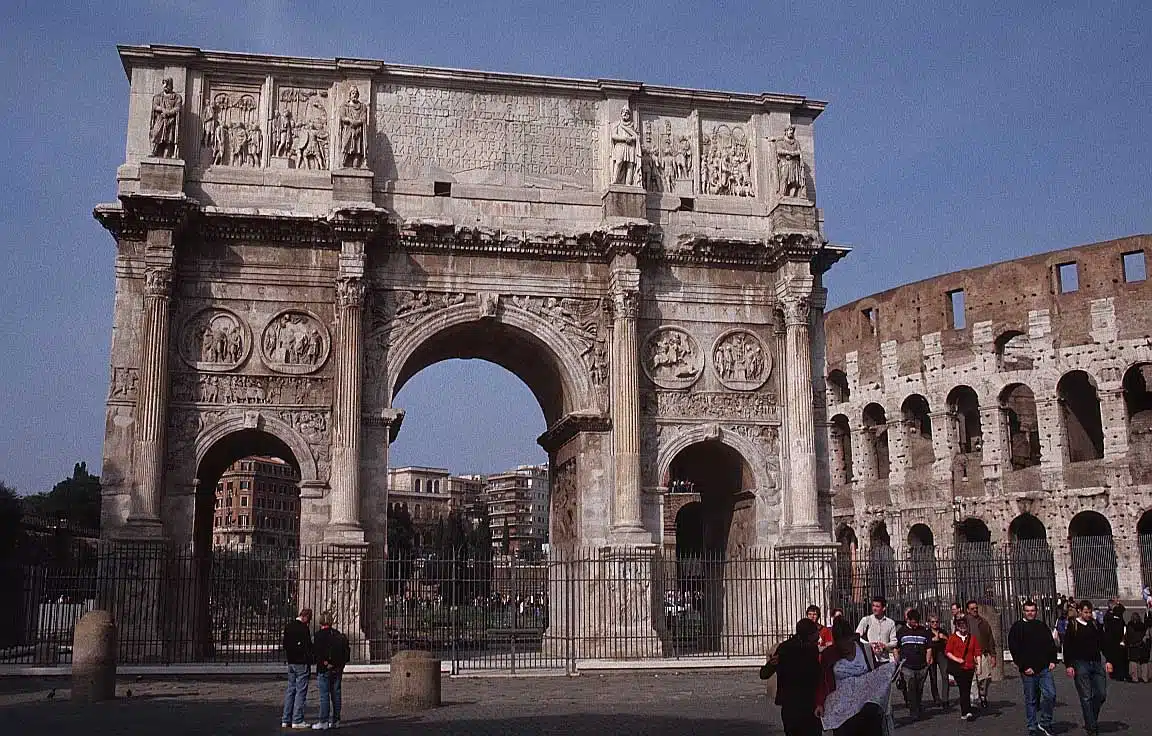
The Colosseum is the largest amphitheatre the Romans built. It opened in AD 80 for gladiator fights and public shows. Beside it stands the Arch of Constantine, the largest surviving Roman triumphal arch. Tickets are nominative, so carry ID that matches the name on yours. To stand on the arena floor or see the underground passages, book a Full Experience ticket early on the official Parco archeologico del Colosseo website, as these sell out fast.
2. Roman Forum and Palatine Hill, Rome, Italy
The Roman Forum was the centre of public life in ancient Rome, with temples, law courts and the Senate house. Walk the Via Sacra past the Arch of Titus and the Arch of Septimius Severus, then climb the Palatine Hill, where emperors built palaces such as the Domus Augustana. The Palatine gives the best views over the Forum. The combined Colosseum ticket is valid for 24 hours with one entry here, so plan your route. Shade is scarce, so bring water.
3. Baths of Caracalla, Rome, Italy

Built between AD 212 and 216, the Baths of Caracalla were among the largest public baths in Rome, where people came to bathe, exercise and meet. The tall brick walls still stand, and parts of the floor mosaics survive. It is much quieter than the Colosseum and a short walk from Circo Massimo metro station. In summer, the Rome Opera House holds the Caracalla Festival here, with opera, ballet and concerts in the open air. Buy festival tickets early.
4. Verona Arena, Italy

Verona’s Arena dates from the 1st century AD. An earthquake in 1117 brought down most of the outer ring, leaving four arches, but the inner seating is almost complete. It is still a working stage: the Arena di Verona Opera Festival runs every summer, and in February 2026 it hosted the closing ceremony of the Milano Cortina Winter Olympics. Visiting hours can be shorter on show days. Read our guide to Verona, Italy’s most romantic city for more to see.
5. Pula Arena, Croatia
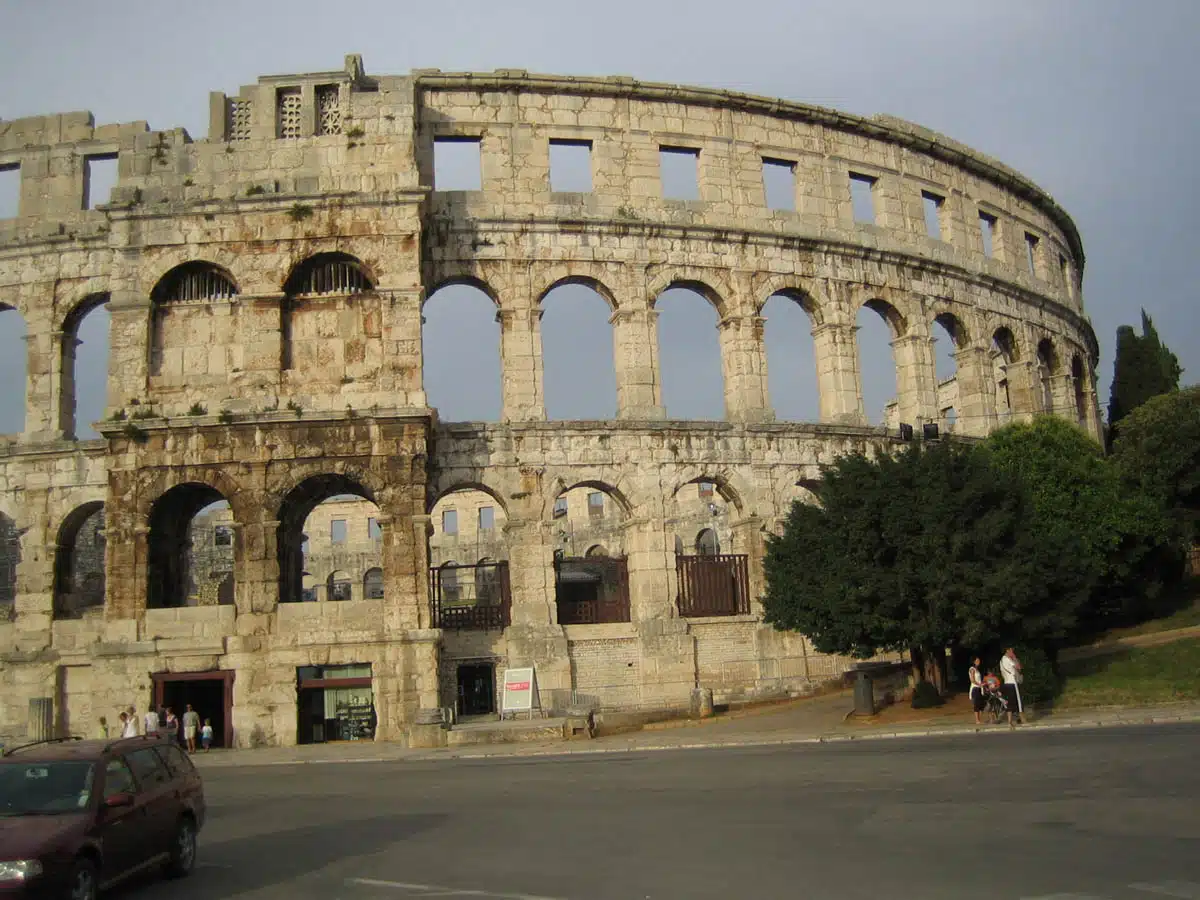
Pula’s Arena was built in the 1st century AD and is one of the six largest Roman amphitheatres still standing. Its outer wall is almost complete, and all four side towers survive. You can also visit the underground area beneath the arena floor. In July and August it hosts concerts and film screenings, so check for closures. Then walk to the Arch of the Sergii and the Temple of Augustus. See our list of things to do in Pula.
6. Diocletian’s Palace, Split, Croatia
Emperor Diocletian built this huge seaside palace around AD 300 for his retirement. Unlike most Roman ruins, it never emptied: local people built their town inside its walls, and Split’s historic core has been on the UNESCO World Heritage List since 1979. Stand in the Peristyle, the old ceremonial square, and visit the cathedral, which began as Diocletian’s mausoleum. The cellars below, called the substructures, are remarkably well preserved and need a ticket. Come early in summer, before the lanes fill up.
7. Salona, Solin, Croatia
Salona, in Solin a few kilometres from Split, was the capital of the Roman province of Dalmatia. It is now a large open site with city walls, a theatre, early Christian basilicas and the remains of an amphitheatre, managed by the Archaeological Museum in Split. It gets far fewer visitors than the palace. Allow about two hours to walk round. Local buses run from Split to Solin, and a hat helps, as shade is limited.
8. Roman Forum, Zadar, Croatia

Built between the 1st century BC and the 3rd century AD, Zadar’s forum is the largest Roman forum on the eastern Adriatic coast. Today it is an open square in the old town, free to walk round. Look for the Roman column used as a pillar of shame in the Middle Ages, and for Roman stones built into the round 9th century Church of St Donatus. End the day at the Sea Organ on the waterfront at sunset.
9. Pompeii, Italy
The eruption of Mount Vesuvius in AD 79 buried Pompeii, and the ash preserved a whole Roman town: streets, houses, bakeries, baths and painted walls. Allow most of a day. Tickets are nominative and there is a daily limit of 20,000 visitors, with timed slots in the busy season, so book ahead on the official website. Trains run from Naples to Pompei Scavi station near the entrance. Wear sturdy shoes for the uneven stone streets.
10. Pont du Gard, France
The Pont du Gard is a three-level Roman aqueduct bridge over the Gardon river in southern France. Built in the 1st century AD to carry water to Nîmes, it is the tallest Roman aqueduct bridge that survives and a UNESCO World Heritage site. There is a museum, and in summer you can swim in the river below the arches. Driving is easiest, and half a day is a good amount of time.
11. Nîmes, France
Nîmes has two of the best preserved Roman buildings anywhere. The Arena, built around the end of the 1st century AD, still hosts concerts and festivals. A short walk away, the Maison Carrée is a Roman temple that has kept its columns and roof, and it joined the UNESCO World Heritage List in 2023. Nîmes is easy to reach by high-speed train, and it makes a good base for a half-day trip to the Pont du Gard.
Tips for visiting
Book the busiest sites, such as the Colosseum and Pompeii, as early as you can, and keep your ID with you, as names on tickets can be checked. Buy only from official websites or ticket offices. Arrive at opening time or late in the day to avoid heat and crowds in July and August. Wear shoes with good grip, as old stone is uneven and slippery, and carry water and a hat. The arenas in Verona, Pula and Nîmes still host shows, so check for event closures. Before you travel, check your government’s current travel advice and entry rules.
Questions about Roman ruins in Europe
Which is the best preserved Roman amphitheatre in Europe?
Pula, Nîmes and Verona are among the best preserved. Pula keeps almost all of its outer wall, while Verona and Nîmes keep most of their seating and still host shows.
Do I need to book the Colosseum in advance?
Yes, booking ahead is strongly advised. Tickets are nominative and limited, and the arena floor and underground tickets sell out quickly.
How many days do I need for the Roman sites in Rome?
Two days is a good minimum. Spend one on the Colosseum, Forum and Palatine, which share a 24-hour ticket, and one on the Baths of Caracalla and sights such as the Pantheon.


