10 Most Beautiful Old Towns in Croatia to Visit

Croatia’s coast and islands are full of small walled towns where Venetian bell towers, stone lanes and harbours have survived for centuries. This list runs from Dubrovnik and Ston in the south to Rab and the towns of Istria. Each is small enough to explore on foot in a few hours.
You can link many of them on one trip by car, bus or ferry. The photos come from our free medieval town pictures. Here are 10 of the most beautiful old towns in Croatia, with tips on visiting them.
1. Dubrovnik, Croatia
Dubrovnik’s old town sits inside about 2 km of stone walls, with towers, forts and the sea on three sides. Walking the full circuit gives you views over red roofs, narrow lanes and Lokrum island, and of Fort Lovrijenac on its own rock outside the walls. The old town is a UNESCO World Heritage Site. Tip: you need a ticket for the walls, sold at the entrances, on the official website or as part of the Dubrovnik Pass. Opening times change by season, so go at opening time to beat the heat and the cruise crowds.
2. Ston, Croatia
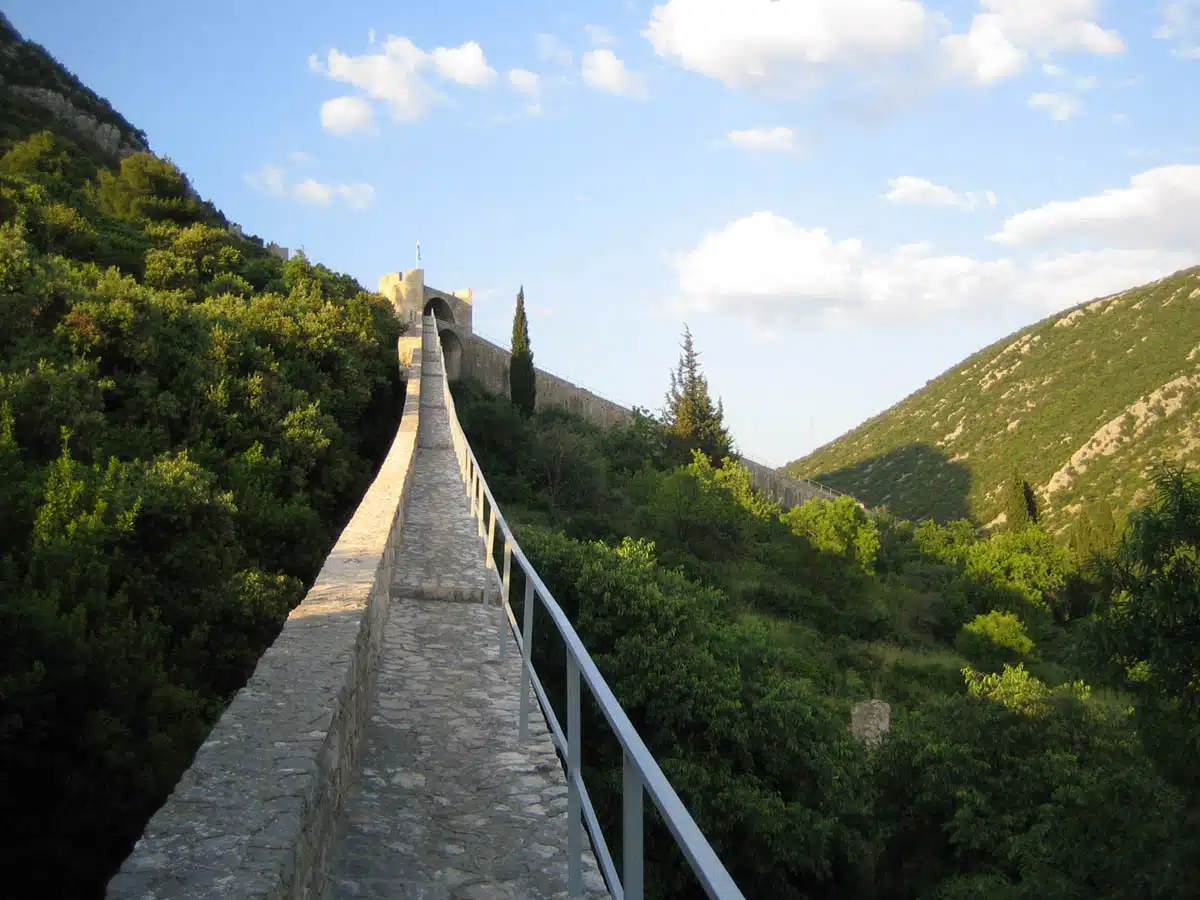
Ston guards the start of the Pelješac peninsula, about an hour’s drive from Dubrovnik. The Republic of Dubrovnik built its walls here to protect the valuable salt pans, which are still worked today. About 5.5 km of wall survive, climbing from the Kaštio fortress in Ston over the hill to Mali Ston, a village known for its oysters. Tip: you need a ticket to walk the walls. Start early in summer, as there is very little shade. Our guide to the Walls of Ston explains the routes.
3. Korčula, Croatia

Korčula town fills a small peninsula on the island of the same name. Walls and round towers, like the Revelin Tower above the Land Gate, protect a grid of lanes laid out in a herringbone pattern to let air flow but keep out strong winds. St Mark’s Cathedral stands at the top of the town. Korčula also claims to be Marco Polo’s birthplace, though this is disputed. Tip: car ferries cross from Orebić on Pelješac, and catamarans link the town with Split and Dubrovnik. See our things to do in Korčula for more.
4. Hvar, Croatia

Hvar town wraps around a harbour below the Fortica, also called the Spanish Fortress, which is tied to the town by old walls. St Stephen’s Cathedral closes the long main square, and beside the square stands the Arsenal. A theatre opened on its upper floor in 1612, making it one of the oldest public theatres in Europe. Tip: catamarans from Split arrive in Hvar town, while car ferries land at Stari Grad. Walk up to the fortress early in the morning or near sunset.
5. Rab, Croatia
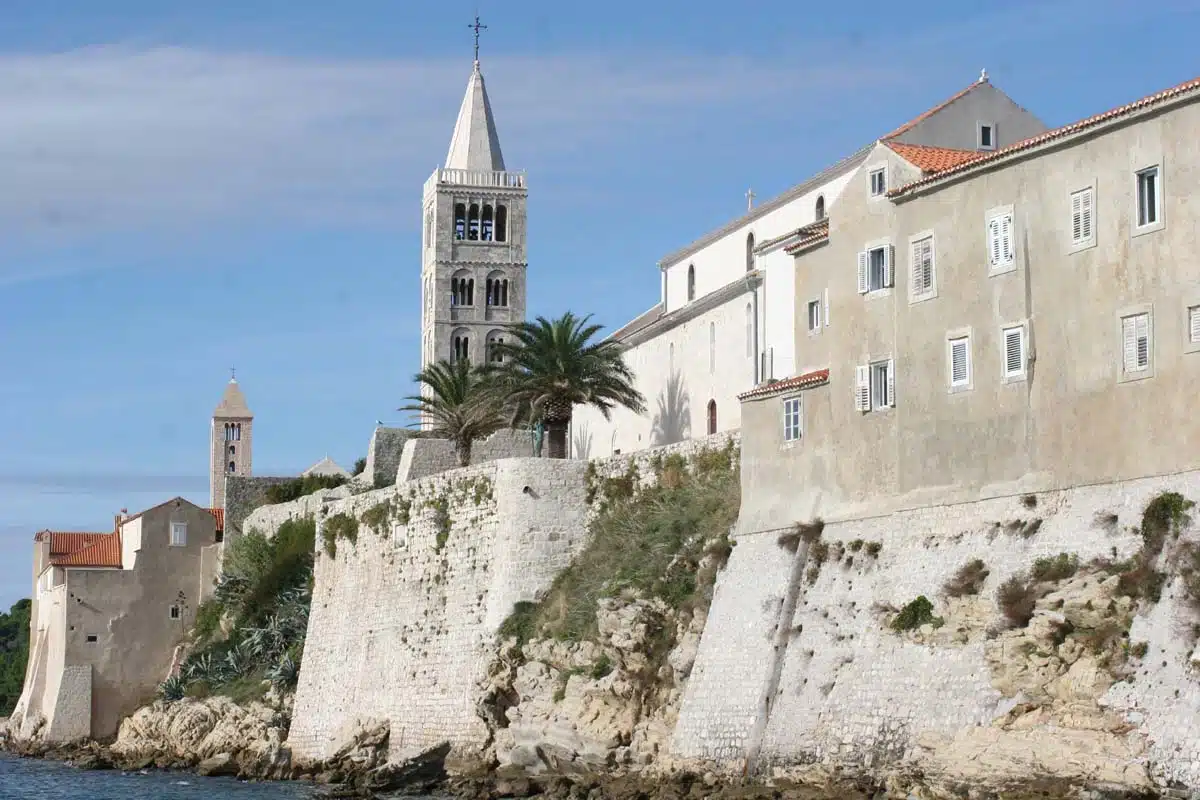
Rab town lies on a narrow ridge between the harbour and a bay in the Kvarner Gulf. Four Romanesque bell towers rise above its walls and stone houses, which is why the town is often compared to a ship at anchor. Three long streets run along the ridge, linked by steep lanes. Tip: car ferries cross to the island from Stinica on the mainland. Come from 25 to 27 July for the Rabska Fjera, a medieval festival with knights’ games, old crafts and traditional food.
6. Trogir, Croatia
Trogir’s old town sits on a small island between the mainland and the island of Čiovo, joined to both by bridges. It has been a UNESCO World Heritage Site since 1997. The highlight is the Cathedral of St Lawrence, whose main portal was carved by Master Radovan in 1240. At the end of the waterfront stands the Kamerlengo fortress. Tip: Trogir is close to Split airport, and local buses run from Split. Read our guide to Trogir for more ideas.
7. Zadar, Croatia
Zadar’s old town fills a peninsula behind Venetian walls and gates. Inside are the ruins of the Roman Forum and the round ninth-century Church of St Donatus, built partly from Roman stone. At the tip of the peninsula, architect Nikola Bašić’s Sea Organ plays notes as the waves push air through pipes under the stone steps. Next to it, the Greeting to the Sun collects sunlight during the day and puts on a light show after dark. Tip: both are free and open to everyone, so come for the sunset.
8. Šibenik, Croatia
Šibenik climbs a hillside above the mouth of the Krka river, with steep lanes, stairways and small squares. The Cathedral of St James, built entirely of stone, is a UNESCO World Heritage Site. Look for the row of carved stone heads that runs around its outer walls. Above the town, St Michael’s Fortress gives wide views over the roofs and islands and hosts summer concerts. Tip: Šibenik makes a good base for a day at Krka National Park. Wear shoes with good grip, as the old stone steps are polished smooth.
9. Rovinj, Croatia
Rovinj’s old town was once an island and now fills a small hill on the west coast of Istria. Lanes of tall, coloured houses climb to the Church of St Euphemia, whose bell tower, about 60 m high, is modelled on St Mark’s in Venice. Tip: you can climb the tower on steep wooden stairs for a view over the roofs and islands, but you need a ticket and a head for heights. The old town is for walking only, so use the car parks outside the centre.
10. Motovun, Croatia
Motovun sits on a hilltop above the Mirna valley in inland Istria. The old town is ringed by two sets of walls, and you can walk along the inner walls around the top of the town for views over vineyards and the oak forest below, where truffles are found. A stone gate, a Venetian loggia and a tall bell tower stand around the small main square. Tip: cars must park below the old town, and the final walk up is steep. Combine Motovun with nearby Grožnjan, a small hill town known for its artists’ galleries.
Tips for visiting
July and August bring heat, crowds and the highest prices, so May, June and September are the best months for walking walls and lanes. Wear shoes with grip and carry water. Many sights, such as city walls, fortresses and bell towers, need tickets, and opening times change by season, so check the official websites before you go. Ferry and catamaran sailings are more frequent in summer, and car ferries can fill up, so book or arrive early in peak season. Entry rules for some visitors are changing, so check your government’s current travel advice before you travel.
Questions about old towns in Croatia
Which is the most beautiful old town in Croatia?
Dubrovnik is the most famous, with its complete ring of walls above the sea. For fewer crowds, try Korčula, Trogir or Rab.
Can you visit Ston on a day trip from Dubrovnik?
Yes. It is about an hour’s drive, and half a day is enough to walk part of the walls and try oysters in Mali Ston.
Do you need a car to see the old towns of Croatia?
Not along the coast, where buses, ferries and catamarans link most towns. A car is useful in Istria, especially for hill towns such as Motovun and Grožnjan.


