Moscow Landmarks: 12 Best Places and Things to Do
Moscow is the capital of Russia and one of the largest cities in Europe. It has a thousand years of history, from medieval walls and onion domes to Soviet-era monuments and busy modern parks. Its main landmarks are close to the centre, so many of them are easy to combine in a single day.
The city is far too big to see in one short visit, so it helps to choose carefully. Some of the best sights are above ground, but a few are deep below it. Here are the 12 best things to do in Moscow, with tips on when to go and how to plan your trip.
1. Red Square
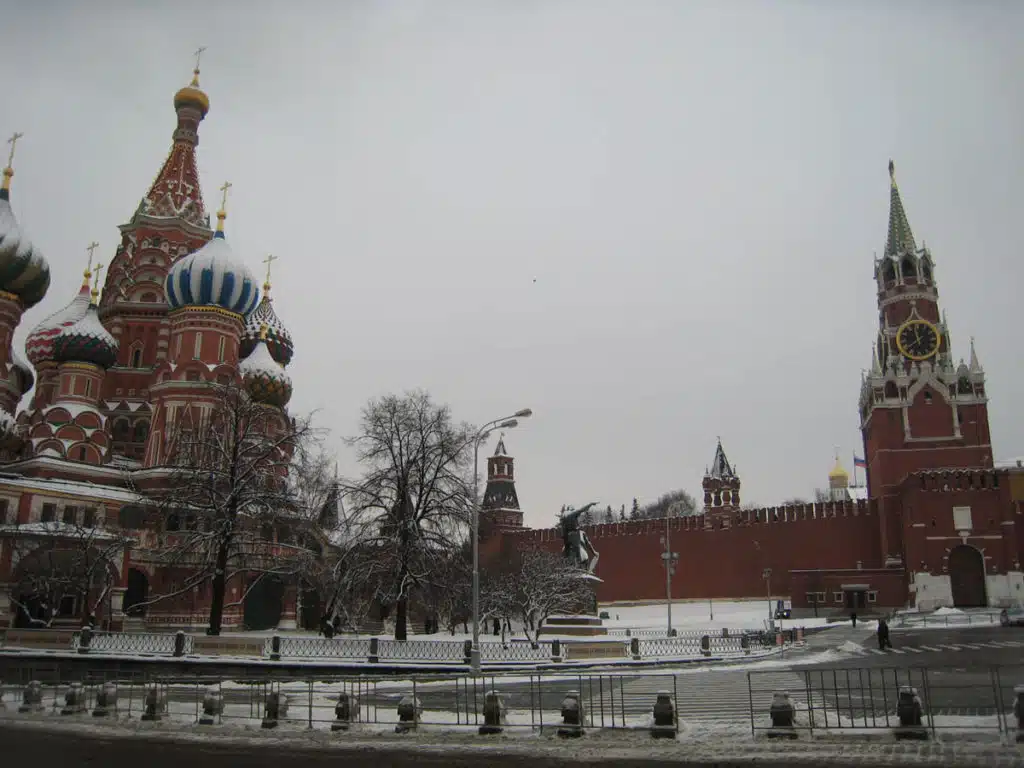
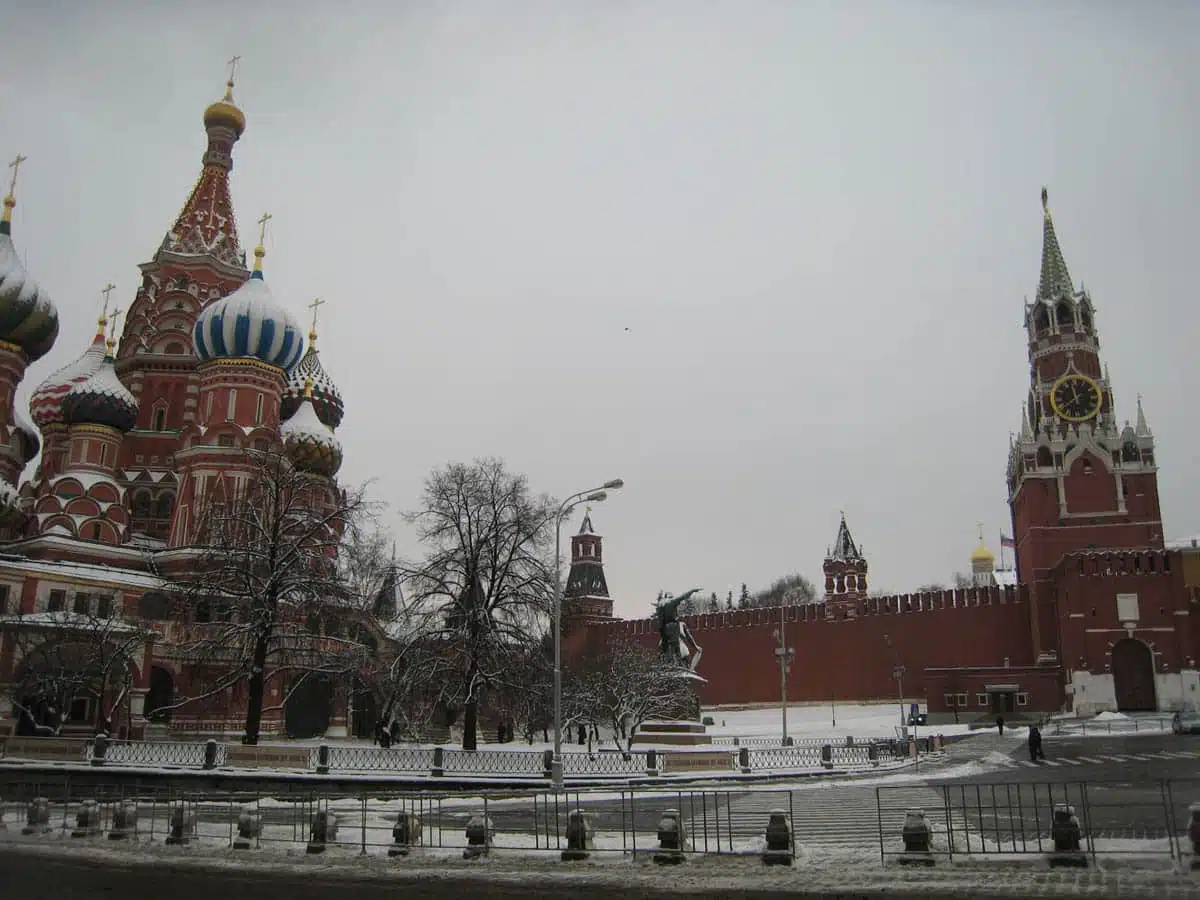
Red Square is the best known square in Russia and the natural starting point. It lies right next to the Kremlin and dates back to the late 15th century. Its name has nothing to do with the colour red or with communism. The old Russian word krasnyi once meant beautiful. Here you will find St Basil’s Cathedral, the State Historical Museum, GUM and Lenin’s Mausoleum.
2. The Kremlin
In Russian, a kremlin is a fortified complex, and many old cities had one. Moscow’s is the most famous. It is still the official residence of the Russian president and holds palaces and cathedrals inside its walls. It has twenty towers, and five carry ruby stars that replaced the old double-headed eagles in the 1930s. The Kremlin and Red Square became a UNESCO World Heritage Site in 1990.
3. St Basil’s Cathedral
With its colourful onion domes, St Basil’s is the image most people have of Moscow. Ivan the Terrible had it built in the 16th century, and it is really a group of chapels around a central tower. Inside, the narrow passages and painted walls feel more like a maze than a grand church. Today it is run as a museum.
4. The Moscow Metro
The Metro is a sight in its own right. The first thirteen stations opened on 15 May 1935. Many stations look like underground palaces, with marble, mosaics, chandeliers and statues. Dozens of them are protected as cultural heritage. During the Second World War, the stations also served as air raid shelters. Ride a few lines just to look at the stations, and keep an eye on your bags in the rush hour.
5. The Tretyakov Gallery
The Tretyakov Gallery holds the finest collection of Russian art in the country. It was started by the brothers Pavel and Sergey Tretyakov. Sergey later turned to French art and left the Russian collection to Pavel. In 1892 Pavel gave the collection and his house on Lavrushinsky Lane to the city. Allow at least two or three hours, and more if you love icons and 19th-century painting.
6. Bunker 42
Bunker 42 is a Cold War shelter about 65 metres underground in the Tagansky district. It was built in the 1950s to protect the Soviet leadership from a nuclear attack, and it was kept secret for decades. It was never used as intended, but it served as a command post until the 1980s. Today it is a museum, and visits are by guided tour. Book ahead if you can.
7. GUM Department Store
GUM faces Red Square and has been open since 1893. Its long arcades under a glass roof, with bridges and fountains, look more like a palace than a shop. Many of the shops are expensive, but you can simply walk through and enjoy the architecture. It is also a good place for a coffee or an ice cream after the walk across the square.
8. Cathedral of Christ the Saviour
This huge white cathedral stands on the Moskva River, a short walk from the Kremlin. The original church was built in the 19th century and demolished in 1931. The new one was rebuilt in the 1990s and consecrated in 2000. It is among the tallest Orthodox churches in the world. Inside, the painted walls and golden domes are impressive, and the area around it is good for a stroll.
9. The Bolshoi Theatre
The Bolshoi is one of the world’s most famous homes of ballet and opera. The company dates back to 1776, and the present building, with its columns and statue of Apollo on top, goes back to the 19th century. If you can get tickets, an evening performance is a memorable way to spend a night in Moscow. If not, the exterior is worth a photo.
10. Novodevichy Convent
This walled convent on the Moskva River was founded in 1524 and is a UNESCO World Heritage Site. Its white walls, towers and golden domes are well preserved, and the ponds give good views. Next to it is the Novodevichy Cemetery, where many well-known Russians are buried, including the writers Gogol and Chekhov. Plan about two hours for both.
11. Gorky Park
Gorky Park opened in 1928 and is now a relaxed place to see how Moscow lives. In summer, people cycle, rent boats and sit by the river. In winter, parts of the park turn into an ice rink. It is a good break after a day of museums and churches, and you can stay for the cafés and open-air events.
12. VDNKh
VDNKh is a large exhibition park in the north of the city. It opened in 1939 as an agricultural show and still has dozens of themed pavilions, fountains and wide avenues. Highlights include the Friendship of Nations fountain and the space-themed pavilion. It is easy to reach by Metro and is best explored slowly, with a picnic or a stop at one of the cafés.
When to visit Moscow
Late May to September is the warmest and easiest time, with long days and plenty of outdoor events. Winters are cold and snowy, but the city looks beautiful under snow, and the Metro, museums and cafés keep you warm. Orthodox Christmas is on 7 January. Spring and autumn can be wet, so pack an umbrella.
Tips for planning your trip
Moscow has several international airports, and fast trains link some of them to the centre. Most visitors need a visa, and rules change, so check them well before you travel. Please also check your government’s current travel advice before booking. Once in the city, the Metro is the quickest way to get around, and station signs usually show names in Latin letters too. Wear comfortable shoes, as the distances between sights are long.
Questions about Moscow
How many days do you need in Moscow?
Three days is enough for the main landmarks, with a little time left for a park or a show. With one day, focus on Red Square, the Kremlin, St Basil’s and the Metro.
Is the Moscow Metro worth a visit?
Yes. Many stations are decorated like palaces, and it is also the quickest way to travel around the city. You only pay for the ride, so you can look at several stations in one trip.
Why is it called Red Square?
The name does not come from the colour red or from communism. The old Russian word krasnyi originally meant beautiful, and its meaning later shifted to red.