Makhtesh Ramon and the Negev: A Desert Road Trip Guide
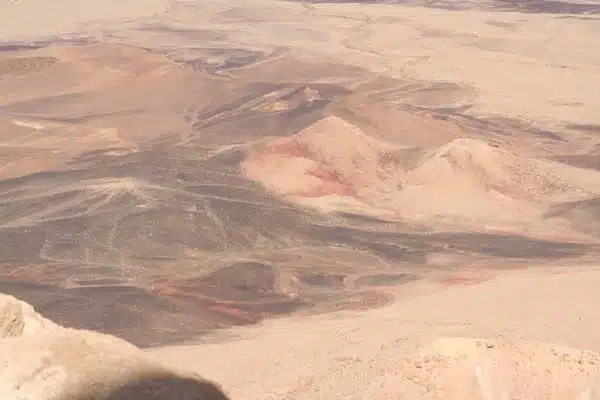
Makhtesh Ramon is a vast erosion crater in the Negev highlands of southern Israel, about 40 km long, up to 10 km wide and around 500 m deep. The small town of Mitzpe Ramon sits right on its northern rim, on Road 40 between Be’er Sheva and Eilat. With the Zin valley, the Nabataean town of Avdat and Sde Boker close by, it makes one of the best road trips in the country.
The Negev covers more than half of Israel, and its central highlands are the most varied part of the desert in southern Israel, with coloured rock, white chalk canyons and wild ibex. Browse our free photos of Israel before you go. Here are the 11 best things to do on a Negev road trip around Makhtesh Ramon, with tips on when to go and how to plan your trip.
1. Look into Makhtesh Ramon from the rim
Start at the edge of town, where a walking path follows the cliff above the crater. A makhtesh is not a volcano or a meteor crater. It formed when water slowly washed out soft rock under a hard top layer, leaving a closed valley with steep walls. From the rim you see dark hills, coloured slopes and Road 40 winding down. Come at sunrise or late afternoon, when the low light shows the layers best.
2. Visit the Ramon Visitors Center
The visitors center stands on the rim at the entrance to Mitzpe Ramon and is run by the Israel Nature and Parks Authority. It explains how the makhtesh formed, and part of the center remembers Ilan Ramon, Israel’s first astronaut, who died in the Columbia shuttle accident in 2003. Entry is by reservation only, so book a time slot online before you arrive.
3. Watch Nubian ibex in Mitzpe Ramon

Nubian ibex are wild mountain goats, and in Mitzpe Ramon they often wander through the streets and rest on the walls by the lookouts. Males have long, curved horns. Early morning and evening are the best times to see them. Keep a few metres away and never feed them, as human food makes them sick and teaches them to depend on people.
4. Drive Road 40 down into the crater
Road 40 drops from Mitzpe Ramon to the crater floor in a series of bends, then crosses the makhtesh towards Eilat. On the way down and across the floor you pass layers of red, purple, yellow and white rock and dark volcanic hills. Pull in at the marked stops for photos and short walks. Fill the tank and carry water before you leave town, as services are few.
5. See the Ammonite Wall and the Carpentry
Two easy stops show the geology of the crater. The Ammonite Wall is a rock face full of fossil ammonites, spiral sea creatures from the time when this area lay under the sea. The Carpentry, HaMinsara in Hebrew, is a small hill covered in dark, prism-shaped stones that look like pieces of cut timber. A short path and boardwalk lead round it.
6. Walk to Ein Saharonim and the Nabataean khan
Ein Saharonim is a small spring in the eastern part of the crater. Next to it are the remains of a Nabataean caravanserai, a roadside inn where traders on the Incense Route rested with their camels. The route carried frankincense and myrrh from Arabia to the Mediterranean. The site is reached by a dirt road, so ask at the visitors center about road conditions and whether an ordinary car is suitable.
7. Go stargazing at night
Mitzpe Ramon is small and far from big cities, so its skies are very dark. On a clear night you can see the Milky Way with the naked eye. Local guides run night tours with telescopes and explain the constellations. Bring a warm layer, as nights get cold, and avoid the nights around a full moon if you can.
8. Explore the Nabataean town of Avdat
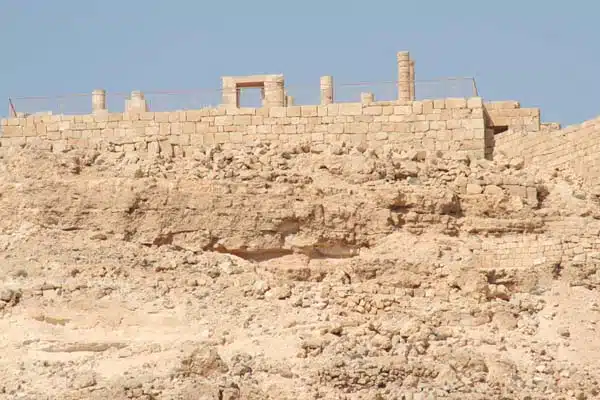
Avdat sits on a hill above Road 40, north of Mitzpe Ramon. The Nabataeans, the same people who built the city of Petra, founded it as a stop on the Incense Route. Later came Roman and Byzantine builders, who left churches, a wine press, houses and burial caves. Avdat is a national park with tickets. It is part of the UNESCO World Heritage Site of the Incense Route desert cities, with Mamshit, Shivta and Haluza.
9. Hike Ein Avdat in the Zin valley

The Zin valley cuts through white chalk hills between Avdat and Sde Boker. At Ein Avdat, a spring feeds pools and poplar trees in a narrow canyon with tall pale walls, and ibex and birds of prey are common. The walk is short but includes steep steps and ladders. Ein Avdat is a national park with tickets; check with the park which trail sections are open, and note that swimming in the pools is not allowed.
10. Visit Ben-Gurion’s grave at Sde Boker
David Ben-Gurion, Israel’s first prime minister, believed the future of the country lay in the Negev. He lived his last years at Kibbutz Sde Boker and is buried with his wife Paula at Midreshet Ben-Gurion, on the edge of the Zin valley. The grave has one of the best views of the canyon. His simple desert home on the kibbutz is also open to visitors.
11. Spend a night at a Bedouin camp

The Bedouin are the Arab people of the Negev, and their tradition of desert hospitality is famous. Several camps in the Negev highlands offer a night in a large tent, a shared meal on low cushions, sweet tea and coffee, and often a short camel ride. Some are run by Bedouin families and others are tourist camps in a Bedouin style, so read the description before you book. Facilities are simple.
When to visit the Negev
The best months are from October to April, with spring the most popular time. Days are warm and good for hiking, but winter nights in Mitzpe Ramon, high on the plateau, are cold. Summer is very hot, so walk only in the early morning and late afternoon. Winter rain is rare but can cause sudden flash floods in canyons and dry riverbeds, so stay out of them when rain is forecast.
Tips for planning your trip
Mitzpe Ramon is about 80 km south of Be’er Sheva on Road 40, and roughly a two to three hour drive from Tel Aviv or Jerusalem. Buses run from Be’er Sheva, but most do not run from Friday afternoon to Saturday evening, and a car makes it much easier to reach Avdat, Ein Avdat and the crater stops. Plan two or three nights. Carry plenty of water, a hat and sun cream, start hikes early, and stick to marked trails, as some areas are military zones. Check your government’s current travel advice before you travel.
Questions about Makhtesh Ramon and the Negev
Is Makhtesh Ramon a meteor crater?
No. It was formed by erosion, when water slowly removed soft rock under a harder top layer, leaving a deep closed valley.
Do I need to book the Ramon Visitors Center?
Yes. Entry is by reservation only, so book a slot online before your visit.
Can I see Makhtesh Ramon, Avdat and Ein Avdat in one day?
Yes, by car you can see the crater rim, Avdat and Ein Avdat in a long day. Staying a night in Mitzpe Ramon lets you add sunrise, the crater floor and stargazing.


