Things to Do in Jerusalem: 12 Best Sights and Experiences
Jerusalem sits high in the Judaean hills, between the Mediterranean coast and the Dead Sea. Its walled Old City, a UNESCO World Heritage Site, holds places sacred to Jews, Christians and Muslims within less than one square kilometre, so a short walk covers thousands of years of history.
Most visitors spend their days in the Old City, then walk out to the Mount of Olives and Mount Zion and take the light rail west to Yad Vashem. Before you go, browse our free photos of Jerusalem and Israel. Here are the 12 best things to do in Jerusalem, with tips on when to go and how to plan your trip.
1. Visit the Western Wall
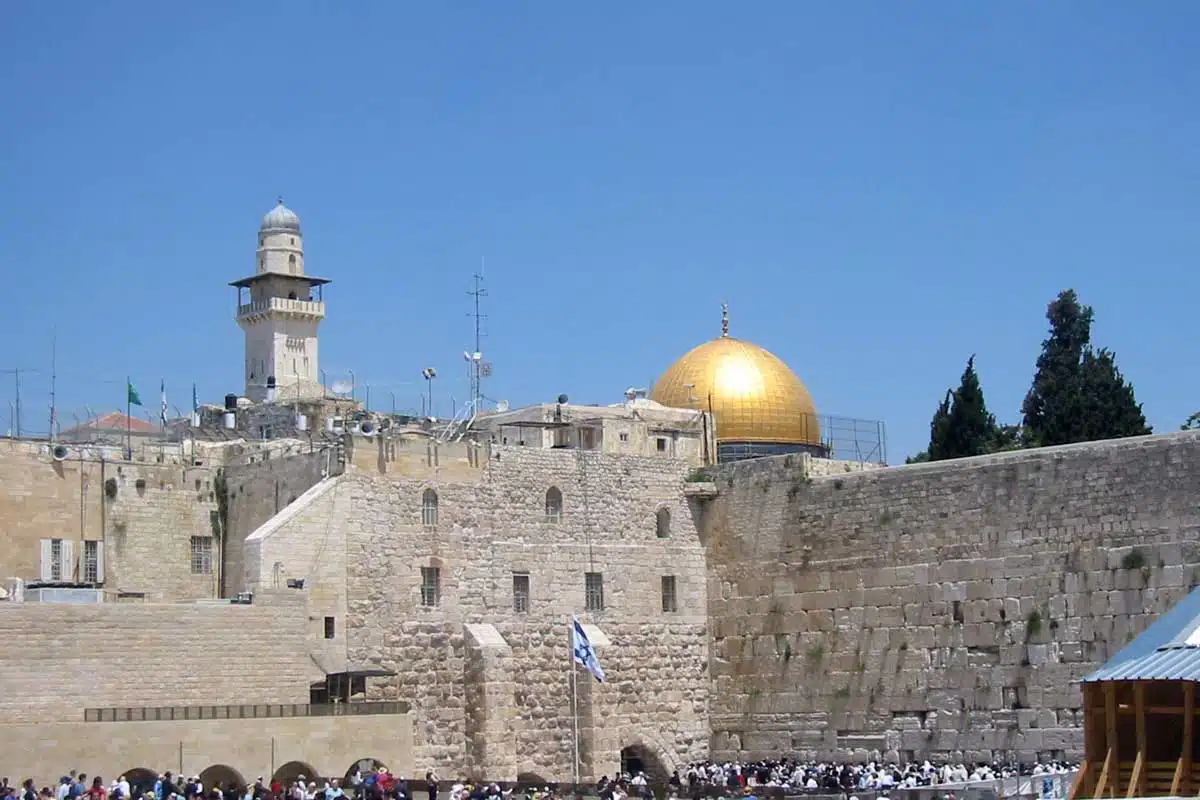
The Western Wall, or Kotel, is part of the retaining wall Herod the Great built around the Temple Mount and the holiest place where Jews pray today. The plaza is open day and night, with separate sections for men and women. Dress modestly and expect security checks. Photography is not allowed on Shabbat. Tours of the Western Wall Tunnels must be booked ahead.
2. See the Temple Mount (Haram al-Sharif)
Above the wall lies the platform Jews call the Temple Mount and Muslims call Haram al-Sharif, with the Dome of the Rock and Al-Aqsa Mosque. Non-Muslims can enter only at limited times, over the wooden bridge beside the Western Wall plaza, and cannot go inside either building. The site can close at short notice, so check on the day, queue early and cover shoulders and knees.
3. Walk the Via Dolorosa

The Via Dolorosa follows the route Christians believe Jesus walked to his crucifixion. It starts near the Lions’ Gate and winds through busy market lanes, with 14 Stations of the Cross marked by numbered plaques and small chapels. The last five are inside the Church of the Holy Sepulchre. Franciscan friars lead a procession on Friday afternoons that anyone can join.
4. Enter the Church of the Holy Sepulchre
Christianity’s holiest church stands over the place where tradition says Jesus was crucified, buried and rose again. Several communities share it, including Greek Orthodox, Catholic and Armenian, which explains its maze of chapels. Climb the steep steps to Calvary, pause at the Stone of Anointing, then queue for the Edicule over the tomb. Entry is free. Mornings are calmer.
5. Shop in the Old City markets

The souq fills the covered lanes of the Muslim and Christian Quarters. David Street runs down from Jaffa Gate past ceramics, olive wood and spices, while Souq Khan al-Zeit leads in from Damascus Gate with bakeries, sweet shops and juice stalls. Try ka’ak, the long sesame bread rings sold from carts, and a plate of hummus. Bargaining is normal for souvenirs.
6. Explore the Jewish Quarter and the Cardo
The Jewish Quarter was largely rebuilt after 1967, but its stone lanes hide much older remains. Walk the Cardo, the colonnaded main street of Roman and Byzantine Jerusalem, now below today’s street level. Nearby, the white dome of the Hurva Synagogue rises over a busy square, and the Wohl Archaeological Museum shows the ruins of wealthy houses from the Second Temple period.
7. Tower of David Museum and the Ramparts Walk
Just inside Jaffa Gate, the citadel called the Tower of David holds the city’s history museum, which reopened after a major renovation. Then walk on the walls themselves: the Ramparts Walk follows long stretches of the Ottoman walls built under Suleiman the Magnificent, looking down into courtyards and gardens. Both need tickets.
8. Wade through Hezekiah’s Tunnel
South of the Dung Gate, the City of David site covers the ridge where Jerusalem began. Paths lead past excavated walls to the Gihon Spring, where Hezekiah’s Tunnel, cut through the rock about 2,700 years ago, carried water into the city. You can walk through it in water up to your knees, so bring water shoes and a torch. Tickets are needed.
9. Take in the view from the Mount of Olives

The ridge east of the Old City gives the classic view of Jerusalem, best in the morning with the sun behind you. Take a taxi to the top and walk down the steep lane past the large Jewish cemetery, the teardrop-shaped Dominus Flevit church and the onion domes of the Russian Church of Mary Magdalene, to the Garden of Gethsemane and the Church of All Nations.
10. Discover Mount Zion

Just outside Zion Gate, several sacred sites stand close together. The Dormition Abbey, with its round tower, marks the place where tradition says Mary fell into her final sleep. Nearby, one old building holds the Room of the Last Supper upstairs, a Gothic hall from Crusader times, and the site honoured as King David’s Tomb below. Oskar Schindler is buried in the Catholic cemetery down the slope.
11. Reflect at Yad Vashem
Israel’s World Holocaust Remembrance Center stands on the Mount of Remembrance in west Jerusalem. The Holocaust History Museum, a long concrete prism by Moshe Safdie, ends on a terrace facing the hills, and the grounds hold the Children’s Memorial and the Garden of the Righteous Among the Nations. Entry is free, but all visits must be booked online in advance. The museum admits ages 10 and up.
12. Eat your way through Mahane Yehuda
Mahane Yehuda is West Jerusalem’s main food market, just off Jaffa Road. By day it sells fruit, halva, pastries and fresh bread. In the evening many stalls close and small bars and restaurants take over, with painted portraits on the metal shutters. Thursday and Friday mornings are the busiest, and the market shuts from Friday afternoon until Saturday night.
When to visit Jerusalem
Spring (March to May) and autumn (September to November) are mild and best for walking. Summer is hot and dry, though the city’s height gives cooler evenings than the coast. Winter is cool and wet, with the odd snowfall. Easter, Christmas, Passover and Sukkot bring big crowds and higher hotel prices. From Friday sunset to Saturday night, Shabbat closes much of West Jerusalem.
Tips for planning your trip
Most visitors fly into Ben Gurion Airport, then take the fast train to Jerusalem Yitzhak Navon station. The light rail runs along Jaffa Road past the Old City and on to Mount Herzl for Yad Vashem. Inside the walls you walk on steep, slippery stone, so wear good shoes. Three days covers the main sights; add a fourth for the Israel Museum or a trip to the Dead Sea. Most public transport stops on Shabbat. The security situation can change quickly, so check your government’s current travel advice before you go. With more time, head north to the Crusader port of Akko, or continue to Jordan for the rock-cut city of Petra.
Questions about Jerusalem
How many days do you need in Jerusalem?
Two full days cover the Old City, the Mount of Olives and Mount Zion. Add a day or two for Yad Vashem and a day trip.
What should I wear to the holy sites?
Cover your shoulders and knees at churches, mosques and the Western Wall. Men are offered a kippah at the Western Wall.
Is Jerusalem open on Shabbat?
Most Jewish-run shops, restaurants and public transport close from Friday afternoon to Saturday night. Churches and many shops in the Old City’s Muslim and Christian Quarters stay open.


