Things to Do in Vukovar: 11 Best Sights and Memorials
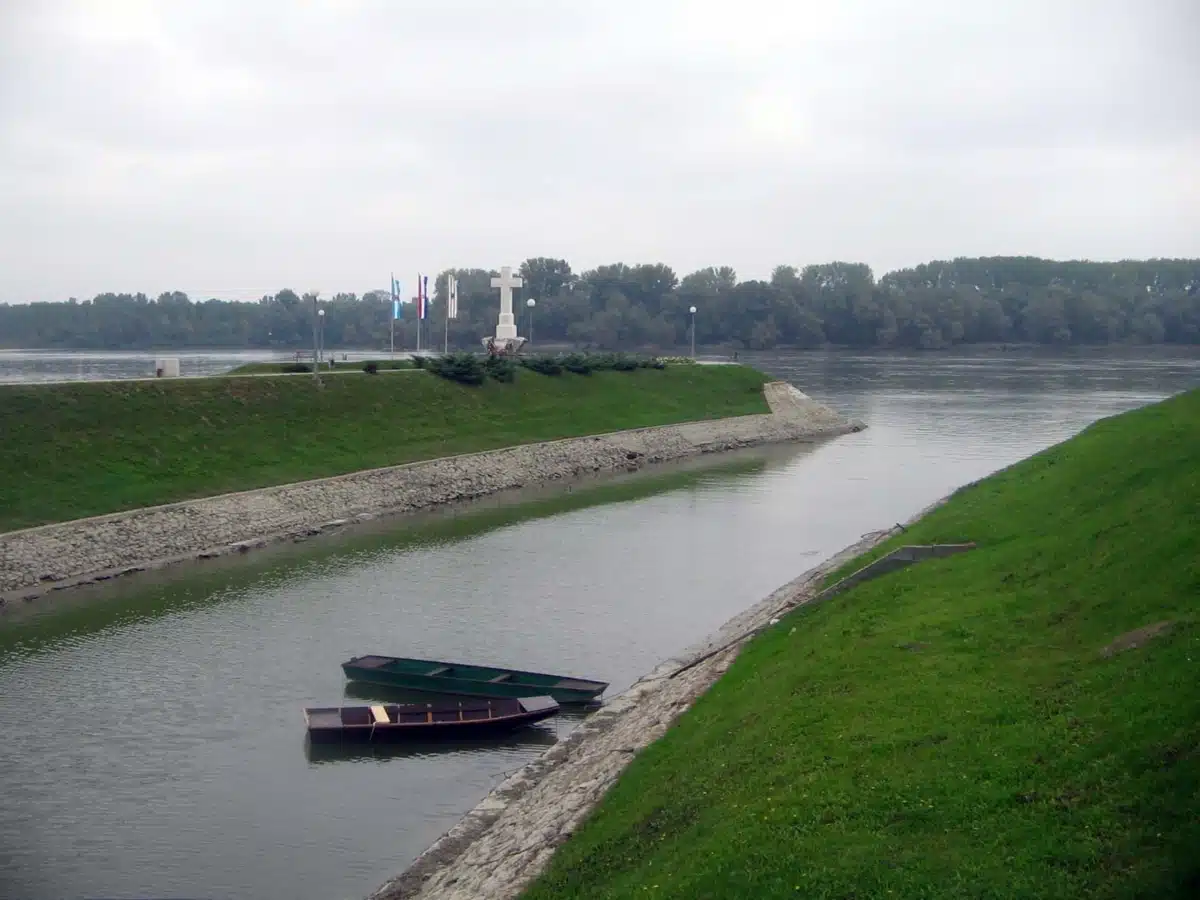
Vukovar is a Croatian river town where the Vuka flows into the Danube, at the country’s eastern edge facing Serbia. It has baroque streets, a restored castle and a quiet riverfront. It is also the place where the 1991 siege is remembered most strongly. Visiting means seeing both of these sides, and most people leave having learnt something important.
Many buildings have been rebuilt, but some still show the damage from the war. This is a town that rewards a slow pace and a respectful approach. Browse our free photos of Vukovar to get a feel for the place before you go. Here are the 11 best things to do in Vukovar, with tips on when to go and how to plan your trip.
1. Walk the Danube and Vuka riverfront
Start where the town began, at the meeting point of the small Vuka and the wide Danube. A promenade follows the water past cafés, benches and the mooring point for river cruise ships, which often stop here on Danube itineraries. At the mouth of the Vuka a stone memorial cross looks out over the river. Come in the early evening, when locals walk along the bank and the light falls on the Serbian shore opposite.
2. Explore the baroque old town and its arcades
The old centre has a long main street lined with 18th and 19th century houses. Many have ground-floor arcades that once sheltered shops and market stalls. Most of the facades were rebuilt after 1991 in their original pastel colours. A few nearby houses still carry bullet holes and shell damage, though, and this contrast is part of what makes a walk here so striking. Take your time and look up at the arched windows and small decorative details.
3. Visit Eltz Castle and the City Museum

This long baroque manor near the Vuka was the seat of the Eltz family, who owned the Vukovar estate from the 18th century. It was badly damaged in 1991. After a careful restoration it reopened as the home of the Vukovar City Museum. Its exhibitions trace the area’s story from prehistory and the Vučedol culture through the noble families to the war and recovery. A ticket is needed, and the gardens are pleasant for a short rest.
4. Climb to the Franciscan monastery
On a low hill above the Danube stands the Franciscan monastery with the Church of Saints Philip and James. This baroque complex has been a landmark of the town for centuries. It was almost completely destroyed during the siege and has since been rebuilt. Come for the view over the rooftops and the river, and step inside the church if a service is not taking place. Dress modestly and keep your voice low.
5. Go up the Vukovar water tower

The 50 metre water tower was hit by hundreds of shells in 1991 but never fell. It became a national symbol of resistance. The tower was restored while keeping its scarred shell, and it now holds a memorial space and a viewing area near the top. From there you look out over the town, the Danube and the flat Slavonian plain. Tickets are needed, and opening times change by season.
6. See the Place of Memory at Vukovar Hospital
During the siege the town hospital kept working while under constant attack, with patients moved into basements and shelters. Part of those underground spaces is now a memorial museum called Place of Memory: Vukovar Hospital 1991. Rooms are set up as they were, with beds, equipment and sound, and the effect is powerful. The hospital is still in use, so check visiting times in advance and be quiet in the corridors.
7. Pay your respects at the Memorial Cemetery

The Memorial Cemetery of Homeland War Victims lies on the edge of town. Hundreds of identical white crosses stand in long rows on a wide lawn, marking people killed during the siege, many of whom were first buried in a mass grave here. An eternal flame burns at the centre, and visitors leave candles and flowers. Entry is free. It is a place for quiet reflection, so plan a calm visit.
8. Visit the Ovčara memorial

A few kilometres south-east of town, the former farm at Ovčara is where around 200 people taken from Vukovar Hospital were killed after the town fell in November 1991. The hangar where prisoners were held is now a memorial centre with a dark room showing photographs of the victims. A separate memorial among the fields marks the mass grave. Bring something to light a candle if you wish, and allow time afterwards to sit with what you have seen.
9. Tour the Memorial Centre of the Homeland War
This large centre explains the 1991 to 1995 war through exhibitions, film and an outdoor display of military vehicles and equipment. Croatian school groups visit often. For foreign visitors, it gives useful context that helps the memorial sites make sense. Plan at least an hour, and check opening times before you go.
10. Discover the Vučedol Culture Museum
Just downstream of Vukovar, on the Danube bank, this modern museum is built into the slope and has a grass-covered roof. It tells the story of the Vučedol culture, which thrived here around 3000 BC and is known for its fine pottery and early metalworking. Its best-known find is the Vučedol Dove, a ceramic vessel that has become a symbol of the region. It makes a welcome change of mood from the war sites, and the riverside setting is lovely. A ticket is needed.
11. Take a day trip to Ilok and its wine cellars
About an hour east along the Danube, Ilok is Croatia’s easternmost town. It sits on a ridge above the river, with medieval walls, the restored Odescalchi castle and old wine cellars. The slopes of Srijem are known for Graševina and Traminac, and several wineries offer tastings, usually booked ahead. If you want to combine Vukovar with more vineyards, our guide to planning a wine trip in the Balkans has ideas.
When to visit Vukovar
Late spring and early autumn are the best times to visit. The weather is mild, the riverfront is pleasant and the countryside is green or golden. Summers in eastern Slavonia can be very hot, and winters are cold, grey and sometimes foggy by the Danube. The town is at its busiest around 18 November, the national Remembrance Day, when large crowds walk the Column of Remembrance from the hospital to the Memorial Cemetery. It is a moving time to be here, but book accommodation early and expect some sites to be crowded.
Tips for planning your trip
Vukovar is in the far east of Croatia, about three hours’ drive from Zagreb, and much closer to Osijek, whose small airport is the nearest. Buses run from Zagreb, Osijek and Vinkovci, and local trains link Vukovar with Vinkovci on the main rail line. The old town, riverfront, castle, monastery and water tower are all within walking distance of each other. For Ovčara, the Memorial Cemetery and Vučedol, a car, taxi or guided tour is easiest. One full day covers the main sights, but two days give you time for the museums and Ilok. If you are touring continental Croatia, Varaždin in the north pairs well with this region. To continue east, see our places to visit in Belgrade, a few hours away across the Serbian border, where passport checks apply. In rural areas, stay on roads and marked paths and respect any warning signs. Check your government’s current travel advice before you go.
Questions about Vukovar
Is Vukovar worth visiting?
Yes, if you want to understand modern Croatia. The Danube setting and baroque centre are attractive, and the memorial sites are among the most important in the country.
How long do you need in Vukovar?
One full day is enough for the town centre, the water tower and the main memorials. Stay two days if you also want to see the Vučedol Culture Museum and visit Ilok.
Can I reach Ovčara without a car?
Public transport to Ovčara is very limited, so most visitors without a car take a taxi from town or join a guided tour. Some tours also include the Memorial Cemetery and Vučedol.


