St Mark’s Square, Venice: A Visitor Guide to the Basilica, Campanile and Doge’s Palace
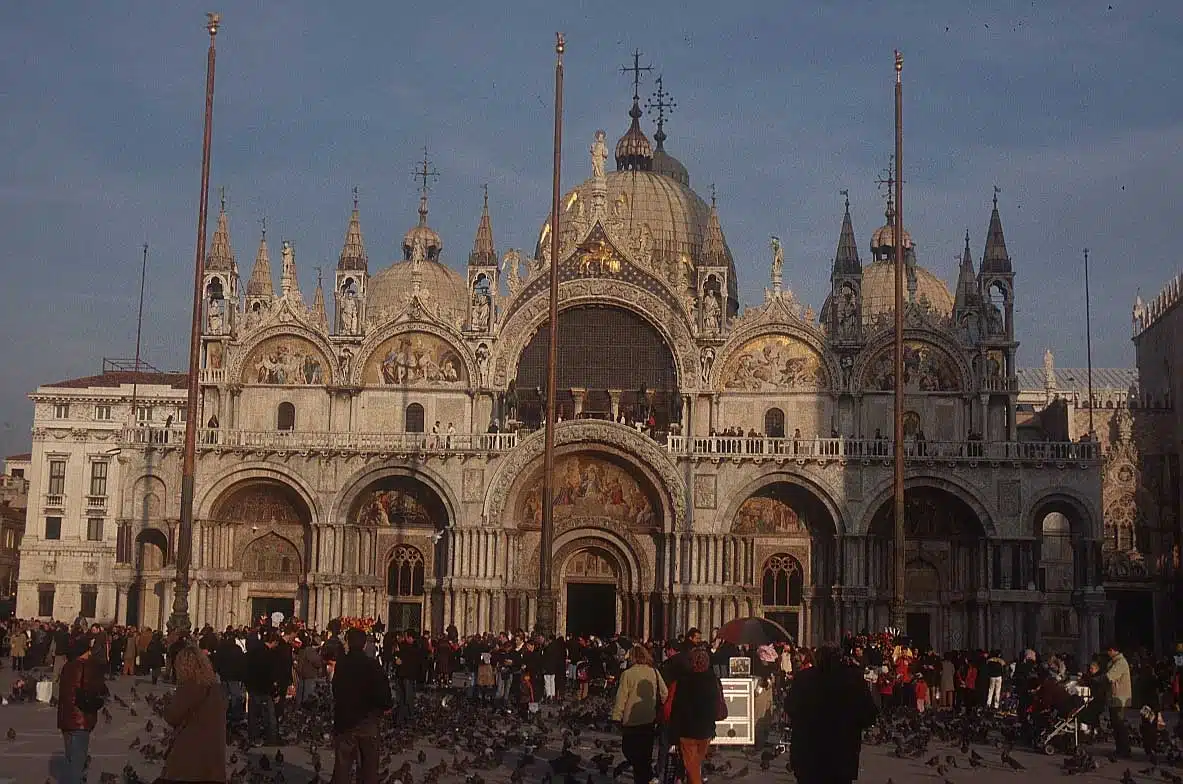
St Mark’s Square, or Piazza San Marco, is the main square of Venice and the only one in the city called a piazza. It sits at the end of the Grand Canal, framed by St Mark’s Basilica, the Campanile, the Doge’s Palace and long arcaded buildings. For centuries it was the heart of the Venetian Republic, and many of the city’s best-known sights stand here.
It gets busy, and some sights need tickets booked ahead, so a little planning helps. Browse our free photos of Venice to get a feel for the place first. Here are the 10 best things to do in St Mark’s Square, with tips on when to go and how to plan your trip.
1. St Mark’s Basilica
The basilica was built to hold the relics of St Mark, which Venetian merchants brought from Alexandria in the 9th century. Today’s church dates mostly from the 11th century. Inside, the walls and domes are covered in gold mosaics. Entry is by timed ticket, booked online in advance. Shoulders and knees must be covered, and large backpacks are not allowed inside, so travel light.
2. The Pala d’Oro and the bronze horses
Two parts of the basilica need an add-on ticket. The Pala d’Oro is a gold altarpiece behind the high altar, set with enamels and hundreds of gems. Upstairs, the museum holds the four original bronze horses, taken from Constantinople in 1204. The ones on the facade are copies. From the museum you can step out onto the Loggia dei Cavalli, the terrace above the main doors, for a close view over the square.
3. The Campanile of St Mark’s

The brick bell tower is the tallest building in Venice, at close to 99 metres. The original tower collapsed suddenly in 1902 and was rebuilt as it had been, reopening in 1912. A lift takes you up to the belfry, so there are no long stairs. From the top you see the city’s roofs and the lagoon islands. It needs a separate ticket from the basilica, and queues build up quickly by late morning.
4. The Doge’s Palace
The pink and white Gothic palace on the waterfront was the home of the Doge and the seat of the Venetian government. A visit takes you up the Golden Staircase and through council rooms painted by Tintoretto and Veronese. The biggest is the Hall of the Great Council, with Tintoretto’s huge “Paradise” on the end wall. The ticket also covers the other museums on the square.
5. The Bridge of Sighs and the prisons

This enclosed white stone bridge, built around 1600, links the Doge’s Palace with the New Prisons across the canal. The name comes from the romantic idea that prisoners sighed at their last view of Venice through its small windows. For the classic photo, stand on the Ponte della Paglia on the waterfront. To walk across it, visit the Doge’s Palace: the standard route goes over the bridge and through the old cells on the other side.
6. The Secret Itineraries tour
If you want to see more of the Doge’s Palace, book the Secret Itineraries guided tour. It takes small groups through hidden offices and archives that the normal route skips. It includes the Piombi, the cells under the lead roof where Giacomo Casanova was held before his famous escape in 1756. Places are limited, so reserve early.
7. The Piazzetta and its two columns
The Piazzetta is the smaller square that runs from the Campanile to the water. Two tall granite columns stand at the waterfront end. One carries the winged lion of St Mark, the symbol of Venice. The other carries St Theodore, the city’s first patron saint. Public executions once took place between them, and some Venetians still avoid walking through the gap.
8. The Clock Tower

The Torre dell’Orologio, from the late 15th century, stands on the north side of the square above the arch into the Mercerie shopping street. Its blue and gold clock face shows the hours, the phases of the moon and the signs of the zodiac. On the roof, two bronze figures known as the Moors strike the bell every hour. You can only go inside on a guided tour, booked ahead, which climbs narrow stairs past the clockwork to the roof terrace.
9. The Procuratie and the historic cafés
Long arcades line three sides of the square. They housed the Procurators, senior officials of the Republic. The Procuratie Vecchie on the north side reopened after restoration in 2022 and now hosts The Human Safety Net, a foundation with an interactive exhibition on its upper floor. Under the arcades are the old cafés, including Caffè Florian, open since 1720, and Gran Caffè Quadri. Prices are high and an extra charge applies when the café orchestras play.
10. Museo Correr and the Biblioteca Marciana
At the far end of the square, the museum entrance in the Napoleonic Wing leads to the Museo Correr, which covers the history and art of Venice, with rooms of sculpture by Canova. The route continues into the monumental rooms of the Biblioteca Marciana, the library designed by Jacopo Sansovino facing the Doge’s Palace. Entry is included in the Doge’s Palace ticket, and these rooms are usually quiet.
When to visit St Mark’s Square

Time of day matters more than the season. Come early in the morning or in the evening, when the day trippers and cruise groups have gone. Spring and autumn are milder than the hot, crowded summer months. From autumn to early spring, high tides called acqua alta can flood the square, which is one of the lowest points in the city. The MOSE flood barriers now protect Venice from the highest tides, but smaller floods still reach the square. Check the tide forecast and pack waterproof boots in winter.
Tips for planning your trip
Trains arrive at Venezia Santa Lucia station, and buses and boats link the airport with the city. From the station, walk to St Mark’s in about 45 minutes by following the yellow “Per San Marco” signs, or take a vaporetto (water bus) along the Grand Canal to the San Marco or San Zaccaria stops. Allow a full day for the sights on the square. Book the basilica, Doge’s Palace and any guided tours online before you go. On certain busy days in spring and summer, day visitors must pay the city’s access fee, so check the official city website for dates. City rules ban feeding the pigeons, sitting on the steps and arcades of the square, and picnicking there, and you can be fined. Please check your government’s current travel advice before you travel. If you have extra time, Venice pairs well with a day in Verona, an easy train trip away.
Questions about St Mark’s Square
Do I need to book tickets for St Mark’s Basilica?
Yes. Entry is by timed ticket booked online in advance, and the Pala d’Oro, museum and Campanile need separate tickets.
Can you walk across the Bridge of Sighs?
Yes. The usual visitor route through the Doge’s Palace crosses the bridge to the prisons and back.
Is it free to walk around St Mark’s Square?
Walking around the square is free. On certain dates, however, day visitors to Venice must pay the city’s access fee, so check before you go.


