Things to Do in Palma de Mallorca: 11 Best Sights and Experiences
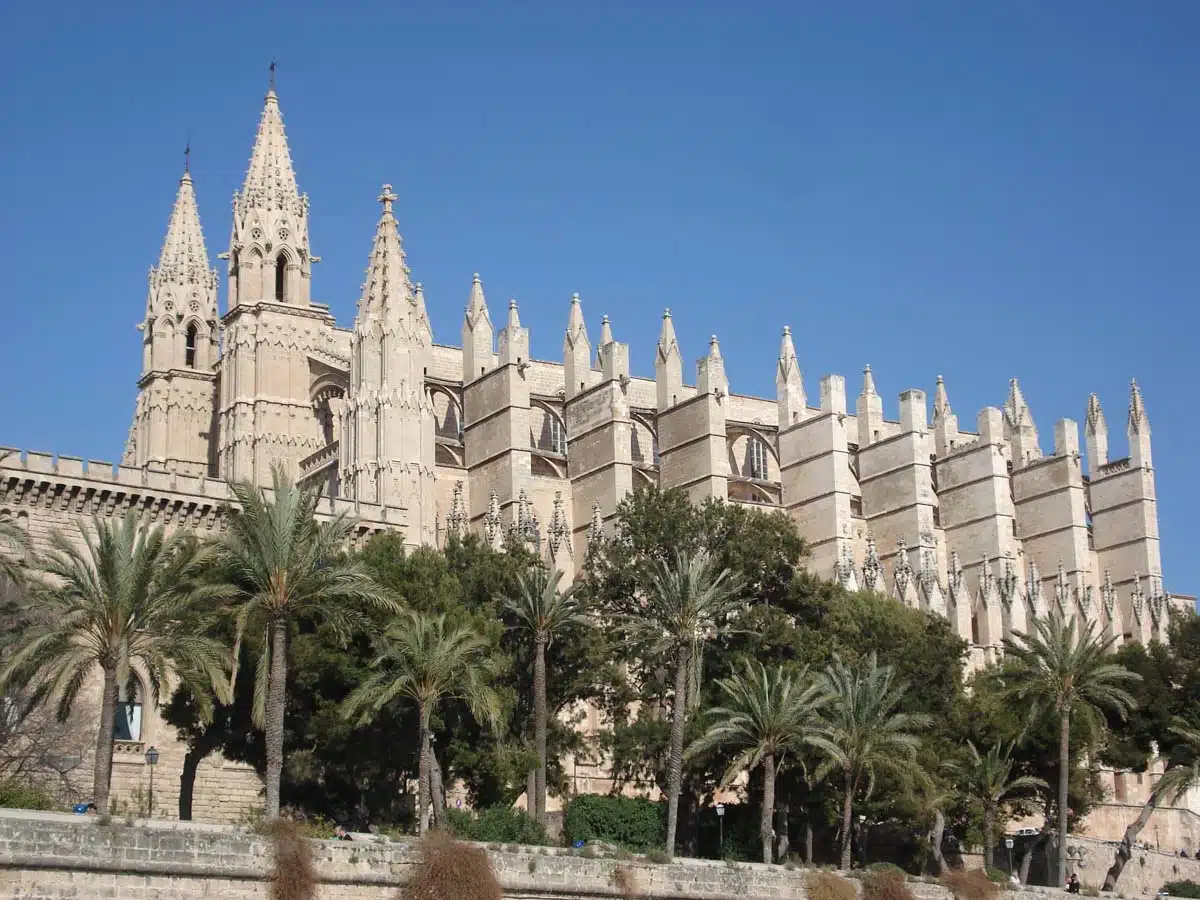
Palma is the capital of Mallorca and of the Balearic Islands, on a wide bay on the island’s south-west coast. Its Gothic cathedral rises straight above the old sea walls. Behind it lies a compact old town of stone lanes, shady courtyards and busy squares, with the marina and the beach close by.
The city rewards a few slow days on foot, and you can get a feel for it in our free photos of Palma and Mallorca. Here are the 11 best things to do in Palma de Mallorca, with tips on when to go and how to plan your trip.
1. Visit La Seu, Palma Cathedral
Work on this huge Gothic cathedral began after the Christian conquest of Mallorca in 1229 and took centuries. Inside, look for the great rose window, the canopy above the altar designed by Antoni Gaudí, and the ceramic chapel by the Mallorcan artist Miquel Barceló. Tourist visits need a ticket, and guided visits to the roof terraces are booked separately. Sightseeing stops during services, so check visiting times before you go.
2. Tour the Royal Palace of La Almudaina

Facing the cathedral, the Almudaina began as the fortress of the island’s Muslim rulers and was rebuilt as a palace for the kings of Mallorca. Run by Patrimonio Nacional, it is still used by the Spanish royal family for official events. Visitors see Gothic halls, royal rooms with tapestries and the Chapel of Santa Anna. Entry is by ticket. The floodlit walls are a fine sight at night.
3. Walk the city walls and Parc de la Mar

Long stretches of Palma’s Renaissance sea walls still stand between the old town and the bay. Start at Parc de la Mar, the park and lake below the cathedral, where a large ceramic mural by Joan Miró faces the water. Then follow the walls and the seafront west towards Es Baluard. The walk is flat and free, and best early in the morning or at sunset.
4. See art and views at Es Baluard
Es Baluard Museu d’Art Contemporani sits inside the Sant Pere bastion, part of the Renaissance walls at the western edge of the old town. It shows modern and contemporary art linked to the Balearic Islands, plus changing exhibitions. Even if you skip the galleries, walk around the open bastion for wide views over the marina and the bay. Below the walls, the Sa Riera stream runs along the old fortifications to the sea.
5. Admire La Llotja and the Sa Llotja quarter

La Llotja is the old merchants’ exchange, built in the 15th century by the Mallorcan architect Guillem Sagrera. Outside, look for the corner turrets, carved figures and Gothic doorways. Inside, slim spiral columns rise like palm trees to the vaulted ceiling, but the hall usually opens only for temporary exhibitions. The surrounding streets, known as Sa Llotja, are full of tapas bars and get lively in the evening.
6. Explore the old town lanes and the Arab Baths
Wander the narrow lanes east of the cathedral. Many stone mansions have open courtyards, called patis, and the Gothic Basílica de Sant Francesc holds the tomb of the medieval writer Ramon Llull. The same area holds the Banys Àrabs, one of the few remains of the Islamic city of Madina Mayurqa. It is a small domed room with horseshoe arches, set in a quiet garden. A ticket is needed, and the visit takes about half an hour.
7. Stroll Plaça de Cort, Plaça Major and the Born
Plaça de Cort is home to the City Hall, with its baroque façade and carved wooden eaves, and to an ancient olive tree with a twisted trunk. Shopping streets lead up to Plaça Major, an arcaded square with cafés and street musicians. Then head to the Passeig des Born, a tree-lined avenue of shops and mansions. Look out for modernist buildings such as the former Gran Hotel, now the CaixaForum cultural centre.
8. Walk along the marina and the fishing port

Palma is one of the main yachting centres of the Mediterranean. Walk along the Passeig Marítim to see large motor yachts, classic wooden sailing boats and the small fishing boats moored near La Llotja. A promenade and cycle path also runs east along the bay to Portixol, an old fishing district with seafood restaurants. Bike hire is easy to find, and the ride is flat all the way.
9. Climb up to Bellver Castle
Bellver Castle stands on a wooded hill about 3 km west of the old town. Built in the early 14th century for King Jaume II, it is one of the few round Gothic castles in Europe, with a circular courtyard and a tall tower. It now holds the city history museum, and the roof looks out over the bay and the cathedral. Walk up through the pine woods or take a taxi.
10. Taste local food at Mercat de l’Olivar and Santa Catalina
Mercat de l’Olivar, near Plaça d’Espanya, is Palma’s main food market. Come in the morning to see the fish and fruit stalls, then eat at one of the tapas counters inside. Try sobrassada, a soft spiced sausage, and an ensaïmada, the spiral pastry dusted with sugar. West of the old town, the Santa Catalina district has its own covered market and plenty of small restaurants and bars.
11. Take the vintage train to Sóller
The Ferrocarril de Sóller has run since 1912 between Plaça d’Espanya in Palma and the town of Sóller. Its wooden carriages climb through tunnels into the Serra de Tramuntana, a UNESCO World Heritage cultural landscape. The trip takes about an hour and makes an easy day out. In Sóller, wander the main square and the orange groves. Book ahead in summer, as trains fill up fast.
When to visit Palma de Mallorca
Spring and autumn are best for sightseeing. From April to June and in September and October the weather is warm, the sea is often good for swimming and the streets are calmer. July and August are hot and very busy, with cruise passengers adding to the old town crowds. Winter is mild and quiet, good for museums and walks. Almond trees blossom across the island in late January and February.
Tips for planning your trip
Palma de Mallorca Airport is about 8 km east of the centre. The EMT bus A1 and taxis link it to the city. Ferries sail to Palma from mainland Spain, including Barcelona and Valencia, and from the other Balearic Islands. The old town is compact and best seen on foot, and city buses serve the beaches and outer districts. Allow two days for the city, or four or five with day trips. Hotels and holiday rentals add the Balearic tourist tax per night. For more ideas, read our beginner’s guide to Mediterranean islands and the best places to visit in Spain. Check your government’s current travel advice for entry rules before you go.
Questions about Palma de Mallorca
How many days do you need in Palma?
Two full days are enough for the cathedral, the Almudaina, the old town and Bellver Castle. Add two or three more for day trips to Sóller and the beaches.
Can you visit Palma Cathedral for free?
You can attend services without paying, but sightseeing is not allowed during mass. A tourist visit, with access to the chapels and the museum, needs a ticket.
Is Palma a good base for exploring Mallorca?
Yes. Buses, the Sóller train and the main roads all start from Palma, so the mountains and many beaches are easy day trips. A hire car gives more freedom for remote coves.


