10 Famous Catholic Pilgrimage Sites in Europe to Visit

This list covers ten famous Catholic pilgrimage sites in Europe, from Marian shrines in France and Portugal to the tombs of saints in Rome, Assisi and Santiago. Each still draws pilgrims in large numbers, but you do not need to be religious to enjoy the art and the setting. You can see several of these churches in our free church pictures.
Some are big shrines with daily processions, others are quiet monasteries in the mountains. Most are free to enter, though some sights inside need tickets, and dress codes apply almost everywhere. Here are 10 famous Catholic pilgrimage sites in Europe, with tips on visiting them.
1. St Peter’s Basilica, Vatican City
St Peter’s is the largest church in the Catholic world and stands over the traditional tomb of St Peter. Inside you will find Michelangelo’s Pietà and Bernini’s bronze canopy over the main altar, with Michelangelo’s dome rising above. The Holy Door opened for the 2025 Jubilee was closed again in January 2026. Entry to the basilica is free, but everyone has to pass a security check, so arrive early. Shoulders and knees must be covered. Climbing the dome needs a separate ticket.
2. Lourdes, France

Lourdes grew up around the Grotto of Massabielle, where Bernadette Soubirous said the Virgin Mary appeared to her in 1858. Millions come each year to pray at the grotto and drink its spring water. The Upper Basilica sits on the rock above the grotto, with the Rosary Basilica below it. From April to October a torchlight procession sets off from the grotto every evening. In winter it is replaced by a torchlight rosary in front of the grotto. See our guide to things to do in Lourdes.
3. Santiago de Compostela, Spain
The cathedral in Santiago holds what are venerated as the relics of St James, and it is the end point of every Camino de Santiago route. Pilgrims who walk at least the last 100 km, or cycle the last 200 km, can collect the Compostela certificate at the Pilgrim’s Office. They need to bring a stamped pilgrim passport. The giant incense burner, the Botafumeiro, does not swing at every Mass. 2027 is a Holy Year because St James’s Day, 25 July, falls on a Sunday, so expect bigger crowds.
4. Fátima, Portugal

In 1917 three shepherd children, Lúcia, Francisco and Jacinta, reported apparitions of the Virgin Mary at Fátima in central Portugal. A vast square links the small Chapel of the Apparitions with the Basilica of Our Lady of the Rosary, where all three children are buried. The biggest pilgrimages fall on 12 and 13 May and on 12 and 13 October, with a candlelight procession on the night of the 12th. Book rooms early for those dates, or come midweek for a quieter visit. Regular buses run from Lisbon.
5. Assisi, Italy

The Basilica of San Francesco in Assisi is two churches stacked on top of each other, with the tomb of St Francis in the crypt below. The upper church is famous for its fresco cycle of the life of St Francis, linked to Giotto. The basilica and the town are a UNESCO World Heritage Site. Shoulders and knees must be covered, and you cannot take photos inside. Trains stop at Santa Maria degli Angeli below the town, and buses run up the hill. See our guide to things to do in Assisi.
6. Częstochowa, Poland
The Jasna Góra Monastery was founded in 1382 and is run by Pauline monks. It keeps the icon of the Black Madonna of Częstochowa, the most revered image in Poland. Millions of pilgrims visit each year, and many Poles walk here in large groups in summer, above all for the feast of the Assumption on 15 August. The icon is uncovered and covered again at set times each day, with a short ceremony and music, so check the times before you go. Trains run to Częstochowa from Kraków and Warsaw.
7. Lluc, Mallorca, Spain
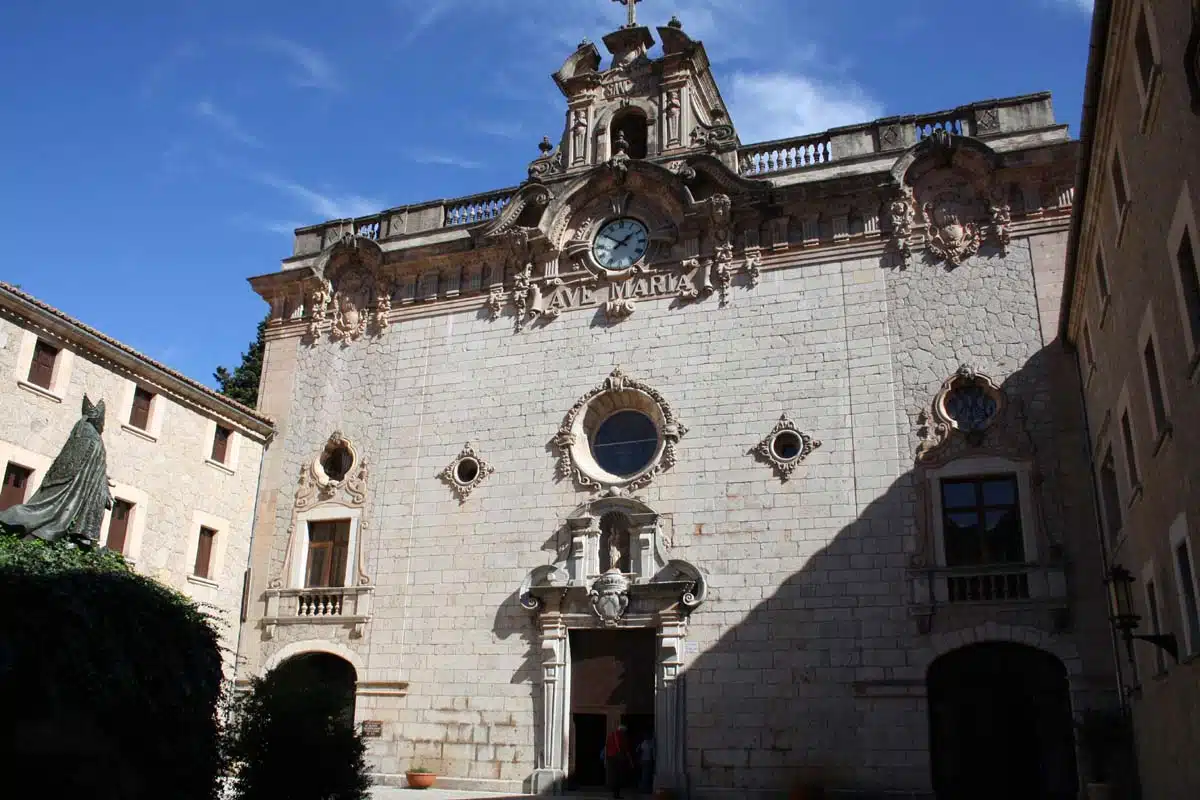
The Santuari de Lluc lies in a mountain basin about 525 metres up in the Serra de Tramuntana, in north-west Mallorca. Legend says a shepherd found a small statue of the Virgin here in the 13th century, and it is still the island’s most loved place of pilgrimage. The Blauets, boys from a choir school dating from the 16th century, sing in the basilica. You can get here by car on the mountain road or by bus. Think about staying a night in the pilgrim rooms to enjoy the quiet once the day visitors leave.
8. Montserrat, Spain
Montserrat is a Benedictine abbey high on a jagged mountain north-west of Barcelona. Pilgrims queue to see La Moreneta, a dark Romanesque statue of the Virgin and Child and the patron saint of Catalonia. The Escolania, one of the oldest boys’ choirs in Europe, sings in the basilica on most days, so check the times in advance. Take the train from Plaça d’Espanya in Barcelona, then the rack railway or the cable car up to the monastery. In summer, go early, as coach tours fill the site by late morning.
9. Knock, Ireland
On 21 August 1879, fifteen people in the village of Knock in County Mayo said they saw an apparition of Mary, St Joseph and St John at the gable wall of the parish church. That wall is now enclosed in the Apparition Chapel, a calm place for prayer. The nearby Basilica of Our Lady, Queen of Ireland, has a huge mosaic of the apparition scene. Pope John Paul II came in 1979 and Pope Francis in 2018. Ireland West Airport Knock is close by, which makes a short trip easy.
10. Mariazell, Austria
Mariazell, in the hills of Styria, has been Austria’s main place of pilgrimage since a monk brought a small wooden statue of Mary here in 1157. The basilica has a Gothic core with a rich Baroque interior, and the statue still stands in the Chapel of Grace at its centre. Many pilgrims still arrive on foot, mostly in summer. The narrow-gauge Mariazellerbahn from St. Pölten is a scenic way to arrive, or you can come by road from Vienna or Graz.
Tips for visiting
Check each shrine’s website before you travel, as Mass times and processions change by season. Entry to the churches is usually free, but domes, museums and treasuries may need tickets. Dress modestly, with shoulders and knees covered. Keep your voice down during services and follow the photo rules, as some churches ban photography inside. Big feast days such as 13 May in Fátima or 15 August across Catholic Europe bring huge crowds, so book rooms early or pick a quieter week. Wear comfortable shoes for long walks and queues. Check your government’s current travel advice before you go.
Questions about Catholic pilgrimage sites in Europe
Do I need to be Catholic to visit these sites?
No. All of these shrines welcome visitors of any faith or none, as long as you dress modestly and stay respectful during services.
Are pilgrimage sites free to visit?
Most churches and shrines are free to enter. Extras such as the dome of St Peter’s, museums or guided tours may need a ticket.
When is the best time to visit?
Spring and early autumn bring mild weather and smaller crowds. If you want to see a big procession, plan around the shrine’s main feast days and book well ahead.


