10 Most Beautiful Temples in Southeast Asia to Visit
This guide covers ten of the most beautiful temples in Southeast Asia, from the royal temples of Bangkok and the hill shrines of northern Thailand to Bali’s lake and sea temples, Angkor Wat and Borobudur. All are still places of worship, and together they show how Buddhist and Hindu builders worked in stone, brick and gold across the region.
Several of these temples appear in our free temple pictures, taken by our own photographers. A few need tickets booked ahead or good timing with tides and crowds. Here are 10 of the most beautiful temples in Southeast Asia, with tips on visiting them.
1. Wat Pho, Thailand
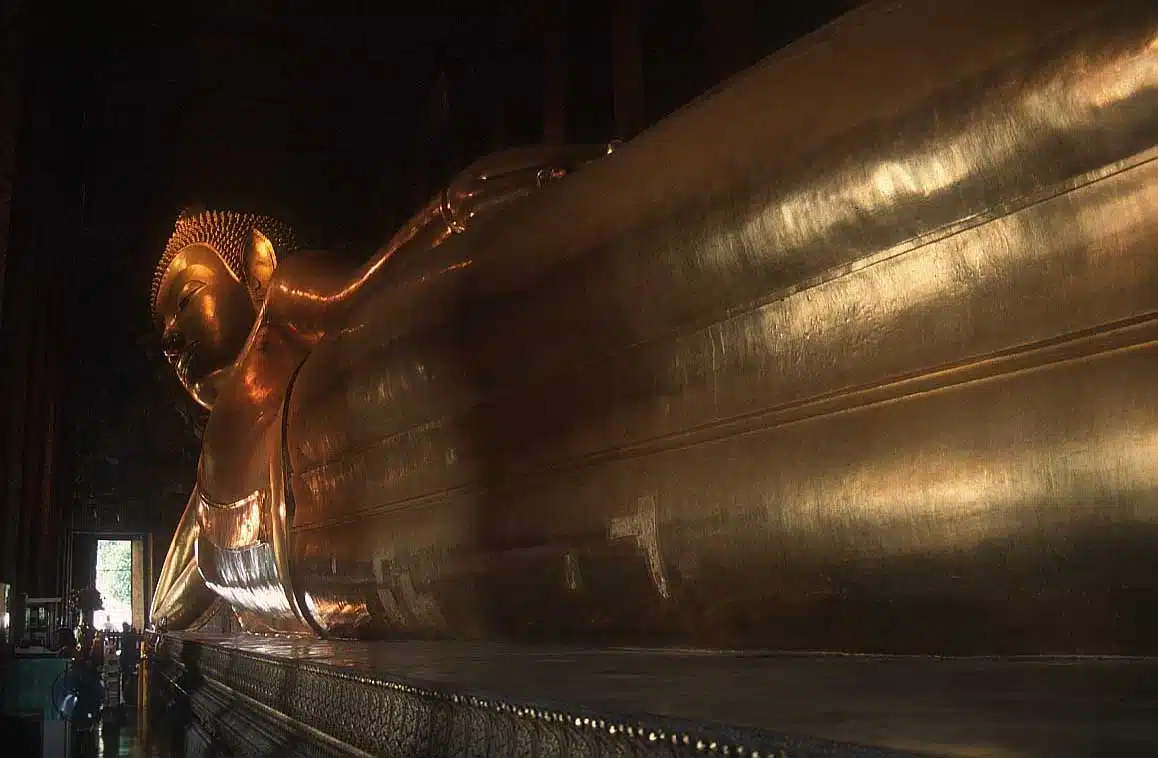
Wat Pho stands just south of the Grand Palace and is one of Bangkok’s oldest and largest temples. Its best-known treasure is the Reclining Buddha, about 46 metres long and covered in gold leaf, with mother-of-pearl inlay on the soles of the feet. The grounds also hold hundreds of Buddha images, tiled chedis and a famous school of Thai massage. Buy a ticket at the gate, cover your shoulders and knees, and arrive early, before the tour groups and the heat.
2. Wat Phra That Doi Suthep, Thailand

This hilltop temple looks down over Chiang Mai from the slopes of Doi Suthep mountain. Legend says a white elephant carrying a relic of the Buddha climbed the mountain and chose the site. A staircase of 306 steps lined with naga serpents leads to a terrace around a golden chedi. A funicular lift runs alongside for a separate fare. Shared red songthaew trucks and taxis go up from the city. Come early for clearer views.
3. Wat Chedi Luang, Thailand

In the middle of Chiang Mai’s old town stands the huge brick chedi of Wat Chedi Luang, begun in the 14th century. It was once the grandest monument of the Lanna kingdom, until an earthquake in 1545 brought down its top. For a time it held the Emerald Buddha, which was later taken to Luang Prabang and now rests in Bangkok. Even as a ruin, the chedi towers over the grounds, with naga stairways and stone elephants on its sides. Foreign visitors pay an entrance fee. Late afternoon light suits the brick best.
4. Pura Ulun Danu Bratan, Bali, Indonesia

This Hindu water temple sits on the shore of Lake Bratan, in the cool highlands near Bedugul, about 1,200 metres above sea level. Dating from the 17th century, it honours Dewi Danu, the goddess of the lake and its water. Its tiered meru shrines stand on small islands, so they seem to float on the lake. Cloud often rolls in during the day, so bring a light jacket and arrive early for the clearest views. Entry is by ticket.
5. Tanah Lot, Bali, Indonesia

Tanah Lot is a 16th-century sea temple on a rock off Bali’s southwest coast. At high tide the waves surround it. At low tide you can walk across to the base of the rock, where a freshwater spring provides holy water and priests may offer a blessing. Only worshippers may go up into the temple itself, and swimming is not allowed. Sunset draws big crowds, so check the tide times and consider a quieter morning visit. A ticket is needed.
6. Angkor Wat, Cambodia
Angkor Wat was built in the early 12th century under King Suryavarman II, first as a Hindu temple to Vishnu, and later became a Buddhist site. It is one of the largest religious monuments in the world and the best known part of the Angkor World Heritage Site near Siem Reap. Its five lotus-shaped towers, wide moat and carved galleries reward a slow walk. You need an Angkor Pass: buy it from the official Angkor Enterprise website or ticket office, and avoid copycat websites. Sunrise is lovely but busy.
7. Borobudur, Indonesia
Borobudur, in Central Java north-west of Yogyakarta, is a 9th-century monument and the largest Buddhist temple in the world. Pilgrims walk around its terraces past carved relief panels, rising to round upper terraces lined with bell-shaped stupas that hold Buddha statues. Climbing the monument needs a special Temple Structure ticket, which includes a local guide. Numbers are limited each day, and climbers must wear woven upanat sandals to protect the stone. Book online several days ahead. A separate ticket covers the grounds only.
8. Wat Arun, Thailand
Wat Arun, the Temple of Dawn, stands on the west bank of the Chao Phraya River in Bangkok, opposite Wat Pho. Its tall central prang is covered in pieces of coloured porcelain set in flower patterns, which glitter in the sun. It looks its best from the opposite bank at sunset. The easy way there is the short cross-river ferry from Tha Tien pier near Wat Pho, so the two pair well in one morning. The same dress rules apply, and you need a ticket.
9. Wat Xieng Thong, Laos
Wat Xieng Thong was built in 1559 and 1560 under King Setthathirath and is the most famous temple in Luang Prabang, a UNESCO World Heritage town. It stands near the tip of the peninsula where the Nam Khan meets the Mekong. The main hall has layered roofs that sweep almost to the ground, and its back wall is decorated with a glass mosaic of the tree of life. Go early, before the groups arrive. Our guide to things to do in Luang Prabang covers the rest of the town.
10. Shwedagon Pagoda, Myanmar
The gilded Shwedagon stupa rises from Singuttara Hill in Yangon and is the most sacred Buddhist site in Myanmar. Its marble terrace holds dozens of smaller shrines, including a Buddha image for each day of the week, where people pray according to the day they were born. It is most moving at sunset, when pilgrims light candles. Shoes come off at the foot of the hill, and foreign visitors pay an entry fee. Many governments advise against travel to Myanmar, so check your government’s current travel advice first.
Tips for visiting
Dress modestly at every temple: cover your shoulders and knees, and carry a light scarf or sarong. Wear shoes you can slip off quickly, as you remove them before entering halls. Never point your feet at a Buddha image, and women should not touch monks. Start early to beat heat and crowds, carry water, and remember that ceremonies can close parts of a temple without notice. The dry season differs across the region: on the mainland it runs roughly from November to April, while in Bali it falls roughly between April and October.
Questions about temples in Southeast Asia
What should I wear to visit temples in Southeast Asia?
Cover your shoulders and knees, and take off your shoes when you enter a temple hall. In Bali you will also need a sarong and sash, which you can usually borrow or rent at the gate.
Do I need to book temple tickets in advance?
Most temples sell tickets at the gate. The main exceptions are Borobudur, where climbing tickets are limited each day and best booked online ahead, and Angkor, where buying the pass on the official website saves time.
What is the best time of day to visit temples?
Early morning is cooler and quieter, and the light is softer for photos. At Tanah Lot, plan around the tide as well as the time of day.


