Most Beautiful Waterfalls in the World: 10 Places to See

Remove the last no-op replacement and rerun.Waterfalls are some of the easiest natural sights to love. You hear them before you see them, and they look different in every season. This list covers famous falls on five continents, from glacier rivers in Iceland to rainforest gorges in South America and Australia, and each one is worth planning a trip around.
Our own team photographed several of the places below, and you can browse more in our free waterfall pictures. Here are 10 of the most beautiful waterfalls in the world, with tips on visiting them.
1. Gullfoss, Iceland
Gullfoss, the “Golden Falls”, is where the Hvítá river drops in two steps into a deep, narrow canyon. The river is fed by the Langjökull glacier, so the falls are fullest and loudest in summer, while in winter much of the rock is coated in ice. It is a stop on the Golden Circle drive from Reykjavík, and entry is free. The upper viewpoint is open all year, but the path to the lower ledge is often closed in winter because of ice.
2. Skradinski buk, Croatia
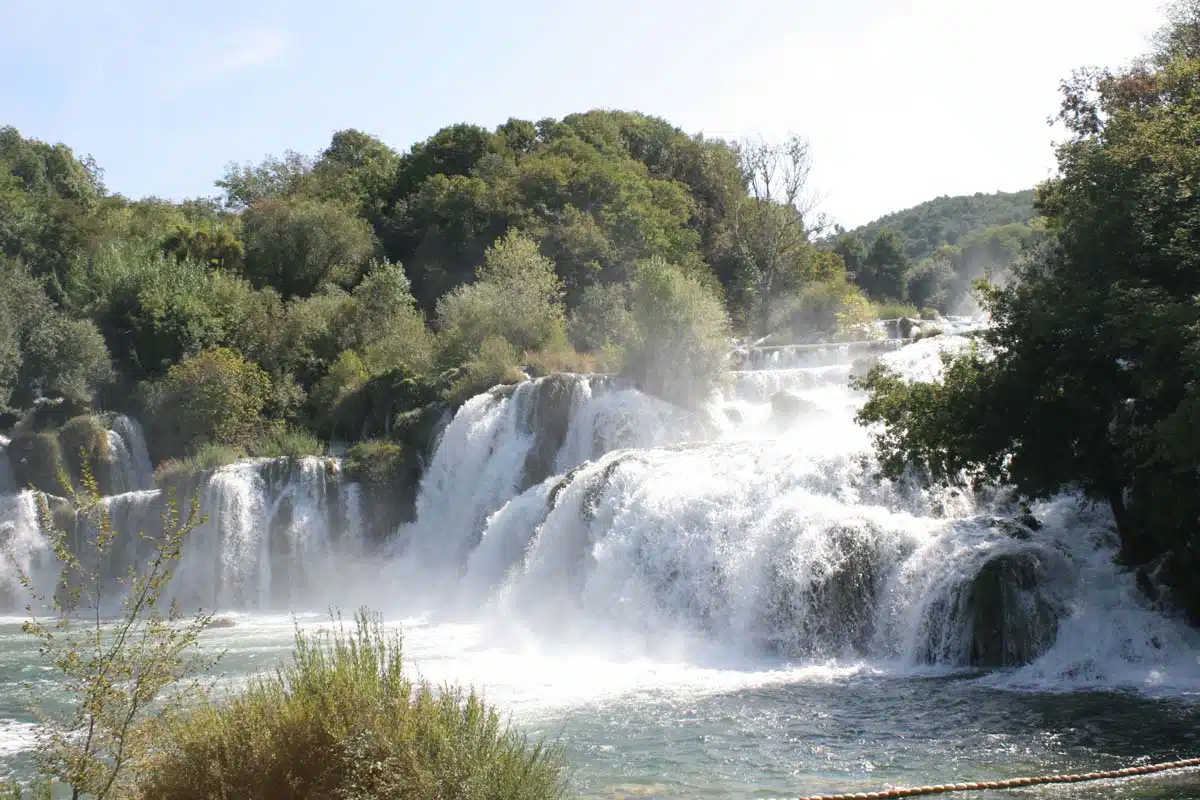
Skradinski buk is the largest and best-known waterfall in Krka National Park, near Šibenik. The Krka river spills over 17 travertine steps into a wide green pool, and wooden walkways take you across and around the cascades. Swimming here has been banned since 2021 to protect the fragile travertine. You can enter at Lozovac or come up the river by boat from Skradin. Buy tickets online in summer. Our Krka National Park guide has more on routes and boats.
3. Plitvice Lakes, Croatia
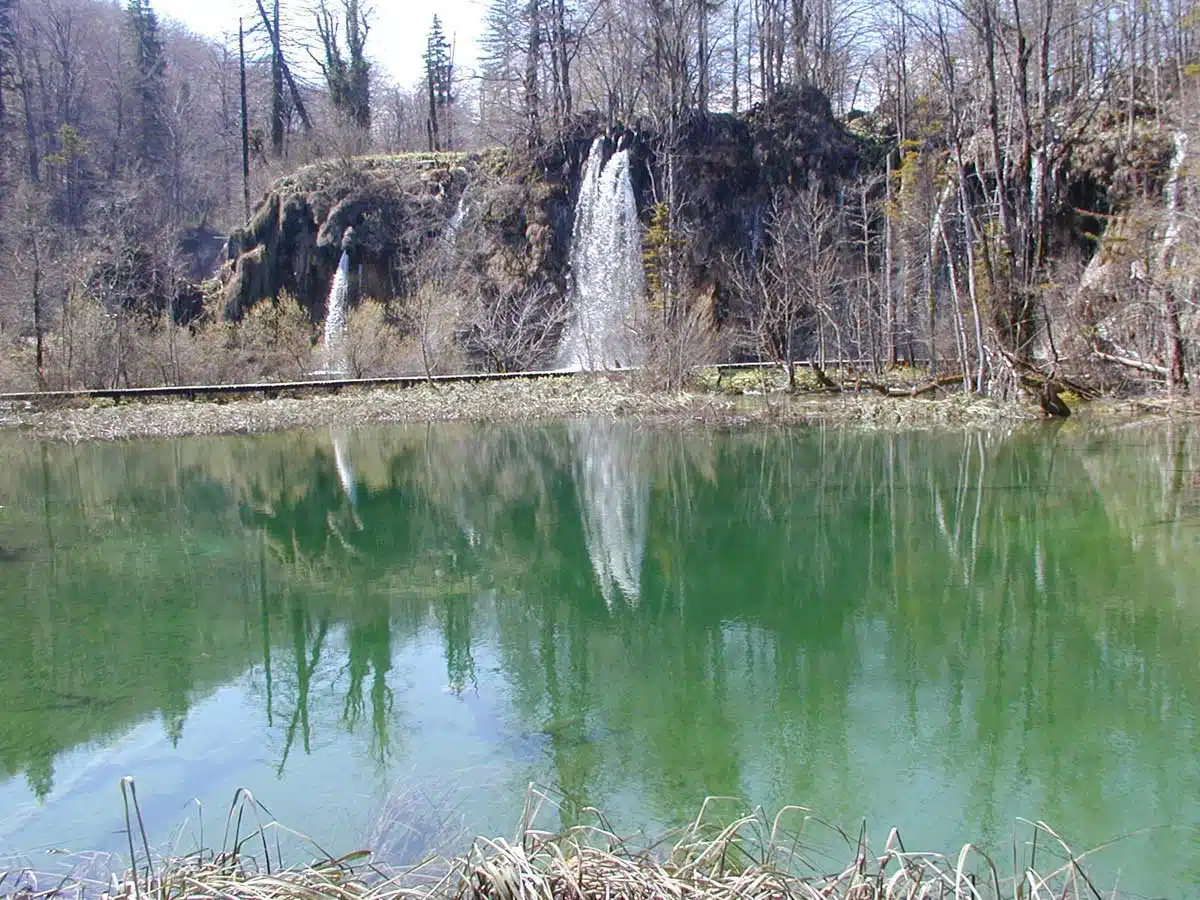
Plitvice Lakes National Park is a chain of 16 terraced lakes in central Croatia, linked by dozens of waterfalls and long wooden boardwalks. Natural travertine barriers keep growing and changing the lakes. The park has been on the UNESCO World Heritage list since 1979. The tallest drop is Veliki slap, the Great Waterfall, by the lower lakes. Tickets are tied to an entry time slot: you cannot go in early and may arrive no more than an hour late. Book online for summer, when capacity sells out.
4. Milford Sound, New Zealand

Milford Sound, or Piopiotahi, is a fiord in Fiordland National Park where steep cliffs rise straight out of the sea. Two permanent waterfalls, Lady Bowen Falls and Stirling Falls, pour down the rock walls, and cruise boats pass close enough for you to feel the spray. After heavy rain, which is common here, hundreds of short-lived falls appear across the cliffs. The only road in is the Milford Road from Te Anau. It can close for flooding or for avalanche control in winter, so check the road status before you drive.
5. Barron Falls, Australia

Barron Falls, also known as Din Din, drops down a wide rocky gorge in the rainforest above Cairns in tropical Queensland. You can see it from a short boardwalk near Kuranda, from a photo stop on the Kuranda Scenic Railway, or from the Skyrail cableway. The train also passes Stoney Creek Falls. The falls are at their fullest in the wet season, roughly December to April. The railway and Skyrail have both paused services for repairs and upgrades, so check before you book. Our Kuranda Skyrail guide explains the route.
6. Niagara Falls, Canada and USA
Niagara Falls is a group of three falls on the border between Ontario and New York State: Horseshoe Falls, the American Falls and Bridal Veil Falls. They are not especially tall, but the amount of water is huge. The best way to feel it is on a boat into the mist. Maid of the Mist leaves from the US side and Niagara City Cruises from the Canadian side, and both run seasonally, roughly spring to autumn. Bring a passport if you plan to cross the Rainbow Bridge. See why you should visit Niagara Falls.
7. Iguazú Falls, Argentina and Brazil
Iguazú Falls is a long curve of hundreds of separate falls on the Iguazú River, in subtropical rainforest on the border of Argentina and Brazil. About half of the river’s water plunges into the Devil’s Throat (Garganta del Diablo), a long, narrow chasm. The Argentine side has more trails and walkways right by the water, and a small rainforest train takes you towards the Devil’s Throat. The Brazilian side gives the wide panorama. Allow a day for each side and carry your passport, as you cross a border.
8. Victoria Falls, Zambia and Zimbabwe
Victoria Falls, known locally as Mosi-oa-Tunya, “the smoke that thunders”, is where the Zambezi River drops into a narrow basalt gorge on the border between Zambia and Zimbabwe. In the high-water months after the rains, the spray rises so high you can see it from far away. From about September to December the flow drops, and the Zambian side can be almost dry, while the Zimbabwe side keeps water all year. Visa rules differ for each country. Check them before you go, and check your government’s current travel advice.
9. Yosemite Falls, USA
Yosemite Falls in California drops about 739 metres in three sections, which makes it one of the tallest waterfalls in North America. It is visible from much of Yosemite Valley, and a short, easy loop leads to the foot of the lower fall. The falls are fed by melting snow, so they are strongest in May and June and often a trickle or dry by August. Yosemite charges an entrance fee. No entry reservation was needed in 2026, but the rules have changed from year to year, so check the park’s website before you go.
10. Seljalandsfoss, Iceland
Seljalandsfoss is a slim waterfall on Iceland’s south coast, just off the Ring Road. It falls about 60 metres over an old sea cliff, and a footpath runs behind the curtain of water, so you can see it from the back. Expect to get wet and wear shoes with good grip, as the rocks are slippery. The path behind the falls may be closed in winter when it is icy. A short walk away is Gljúfrabúi, a smaller fall hidden inside a narrow canyon.
Tips for visiting
Waterfalls change with the seasons, so check when each one runs fullest before you book. Spray makes paths wet and slippery, so wear shoes with good grip and pack a waterproof jacket and a dry bag for your camera. Stay behind barriers and never climb wet rocks for a photo. At busy places like Plitvice, Krka and Niagara, arrive early in the day. Where parks use timed tickets, book online as soon as your dates are fixed. Sunny mornings and late afternoons often bring rainbows in the spray.
Questions about waterfalls around the world
When is the best time of year to see waterfalls?
It depends on what feeds them: snowmelt falls peak in late spring, glacier falls in summer, and tropical falls during or just after the rainy season.
Can you swim at Krka or Plitvice?
Swimming is not allowed anywhere at Plitvice, and it has been banned at Skradinski buk since 2021. Krka has a few marked swimming areas elsewhere on the river, so ask the park which ones are open in your season.
Do I need a passport to see both sides of a border waterfall?
Yes. Niagara, Iguazú and Victoria Falls all sit on international borders, so you need a passport, and sometimes a visa, to cross between sides.


