Things to Do in Rome: 12 Best Sights and Experiences
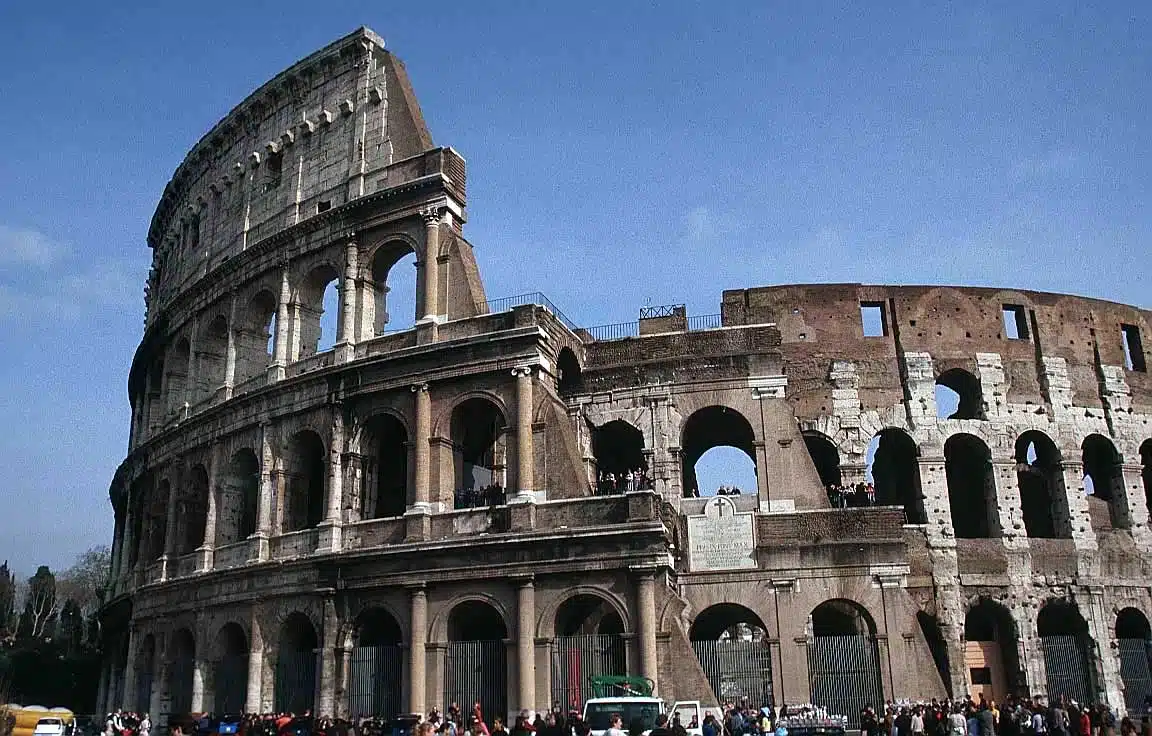
Rome, the capital of Italy, spreads over its famous hills on both banks of the River Tiber. Few cities let you walk from a 2,000-year-old arena to a Baroque fountain and on to the world’s smallest state in one afternoon, and much of the centre is free to explore on foot.
The main sights are busy, so a little planning saves a lot of queuing. Before you go, browse our free photos of Rome and Italy for ideas. Here are the 12 best things to do in Rome, with tips on when to go and how to plan your trip.
1. The Colosseum
Opened in AD 80, the Colosseum held tens of thousands of spectators for gladiator fights and animal hunts. Beside it stands the Arch of Constantine, built in the 4th century. One ticket covers the Colosseum, the Roman Forum and the Palatine Hill. Entry is by timed slot and tickets often sell out, so book ahead on the official site and carry ID. The underground and arena floor need special tickets or a guided tour.
2. The Roman Forum and Palatine Hill

The Forum was the heart of public life in ancient Rome, with temples, law courts and the Senate house. Walk the Via Sacra past the Arch of Septimius Severus, then climb the Palatine Hill, where emperors built their palaces. From the top you look down on the Circus Maximus. There is little shade and the paving is uneven, so wear good shoes, bring water and go early.
3. Trajan’s Column and the Imperial Forums
Along Via dei Fori Imperiali you can look down on the forums of Caesar, Augustus and Trajan from the pavement for free. Trajan’s Column, finished in AD 113, is wrapped in a spiral frieze that tells the story of the emperor’s wars in Dacia. A statue of St Peter has stood on top since the 16th century. The nearby Trajan’s Markets house the Museum of the Imperial Forums, which needs a ticket.
4. Capitoline Hill and its museums
Climb Michelangelo’s gentle ramp, the Cordonata, to Piazza del Campidoglio, the square he designed on the Capitoline Hill. The Capitoline Museums here are among the oldest public museums in the world. Inside you can see the original bronze statue of Marcus Aurelius on horseback and the Capitoline Wolf. Walk round the side of the town hall for a free view over the Roman Forum.
5. The Pantheon

The Pantheon was rebuilt under Emperor Hadrian in the 2nd century AD and is the best preserved building of ancient Rome. Its concrete dome, with an open oculus at the top, is still the largest unreinforced concrete dome in the world. It has been a church since the 7th century and holds the tomb of the painter Raphael. A ticket has been needed since 2023, so book online at busy times.
6. The Trevi Fountain
Completed in 1762 to a design by Nicola Salvi, the Trevi Fountain has the sea god Oceanus at its centre. Tradition says that if you throw a coin over your shoulder into the water, you will return to Rome. Since February 2026, visitors who are not Rome residents need a ticket to enter the area right by the basin. Viewing from the square is still free. Come early or late for fewer crowds.
7. Piazza Navona

This long oval square follows the shape of the Stadium of Domitian, built in the 1st century AD, and you can visit its remains below street level. In the middle is Bernini’s Fountain of the Four Rivers, topped by an obelisk, facing Borromini’s church of Sant’Agnese in Agone. Painters and street performers fill the square, and a market sets up in December.
8. The Spanish Steps and Piazza di Spagna
The Spanish Steps were built in the 1720s to link Piazza di Spagna with the church of Trinità dei Monti at the top. At the foot is the Barcaccia, a fountain shaped like a half-sunken boat. Sitting on the steps is not allowed and you can be fined. Beside the steps is the Keats-Shelley House, where the poet John Keats died in 1821.
9. Castel Sant’Angelo
Castel Sant’Angelo began as the tomb of Emperor Hadrian and later became a fortress and safe refuge for the popes, linked to the Vatican by a raised passage. Today it is a museum with frescoed papal rooms and a rooftop terrace with wide views over the Tiber. A ticket is needed. Cross the Ponte Sant’Angelo, lined with angel statues designed by Bernini, for the classic view of the castle.
10. St Peter’s Square and St Peter’s Basilica

Bernini’s curved colonnades wrap around St Peter’s Square like two arms, with an Egyptian obelisk in the centre. Entry to St Peter’s Basilica is free, but expect a security queue and cover your shoulders and knees. Inside is Michelangelo’s Pietà, and you can climb the dome for a view over the city with a ticket. Papal events can close the basilica or the square, so check the Vatican calendar before you go.
11. The Vatican Museums and Sistine Chapel
The Vatican Museums hold one of the world’s great art collections, from ancient statues to the Raphael Rooms. The route ends in the Sistine Chapel, with Michelangelo’s ceiling and his Last Judgement. Booking a timed ticket online is strongly advised, as queues can be very long. The museums close on most Sundays and on church holidays, so check the opening calendar when you plan.
12. Trastevere and the Janiculum Hill
Across the river, Trastevere is a district of narrow cobbled lanes, ivy-covered houses and family trattorias. Visit the church of Santa Maria in Trastevere for its golden medieval mosaics. From here, walk up the Janiculum Hill for one of the best free views over the domes and rooftops of Rome. A cannon is fired from the hill every day at noon.
When to visit Rome
Spring, from April to early June, and autumn, from September to October, bring warm days and pleasant evenings for walking. July and August are very hot and crowded, and some local shops and restaurants close around the mid-August holiday. Winter is mild and quieter, though some days are wet. Easter and other major church festivals draw very large crowds to the Vatican. In any season, visit the big sights early in the morning.
Tips for planning your trip
Most visitors fly into Fiumicino airport, which has a direct train to Roma Termini station, or Ciampino, which is linked to the centre by bus. Walk the historic centre, and use the metro for longer trips: line B for the Colosseum and line A for the Vatican. Allow three to five days. Book the big sights ahead, and watch for pickpockets on crowded buses and metro trains. For a day trip by train, consider the hill town of Assisi, or head north to Tuscany and Pisa, which has more than its leaning tower. Fans of ancient sites can compare Rome with the historic landmarks of Athens. Check your government’s current travel advice before you travel.
Questions about Rome
How many days do you need in Rome?
Three days covers the ancient sites, the Vatican and the historic centre. With four or five days you can add more museums and a day trip.
Do I need to book the Colosseum in advance?
Yes, it is wise. Timed tickets often sell out, especially in spring and summer, so book on the official site as soon as your dates are fixed.
Is the Trevi Fountain free to visit?
You can see the fountain from the square for free at any time. Since February 2026, non-residents need a ticket to step down into the area right beside the water.


