Best Time to Visit Varanasi: Seasons, Weather, Crowds and Festivals

Best time to visit Varanasi is October to March, when days are warm and dry, the river is calm and mornings on the ghats are cool. November and February are the best months of all: sunny days around 25 to 30°C, little rain, and none of the thick winter fog that can delay trains and flights in December and January.
This guide covers each season in turn, with the weather, crowds and river conditions you can expect. It then lists the main festivals by month, gives planning tips and answers common questions. To get a feel for the city before you go, browse our free photos of Varanasi.
Best time to visit Varanasi at a glance
- Best overall: November and February, with dry, sunny days and cool nights.
- Best for good weather: November to February, the driest and most comfortable part of the year.
- Best for fewer crowds and lower demand: March, after the winter peak and before the worst heat.
- Best for festivals: October and November, for Diwali, Chhath Puja and Dev Deepawali.
- Best for boat rides on the Ganges: November to March, when the river is calm and back within its banks.
- Time to avoid: May and June, when afternoons are often around 40°C.
Winter (December to February)
Winter is peak season. Days are mild, around 23°C in December and January, but nights drop to around 10°C and the river feels cold and damp at dawn. Mist on the Ganges makes the early mornings soft and quiet. Dense fog is common in late December and January. It can hide the far bank and delay trains and flights for hours. Indian holidaymakers arrive around Christmas and New Year, so rooms in the old city fill quickly. In January, Makar Sankranti brings bathers to the ghats and kites over the rooftops. February is warmer and clearer, and for many visitors it is the best month of all. For routes and timing on the water, see our guide to a sunrise boat ride in Varanasi.
Spring (March)
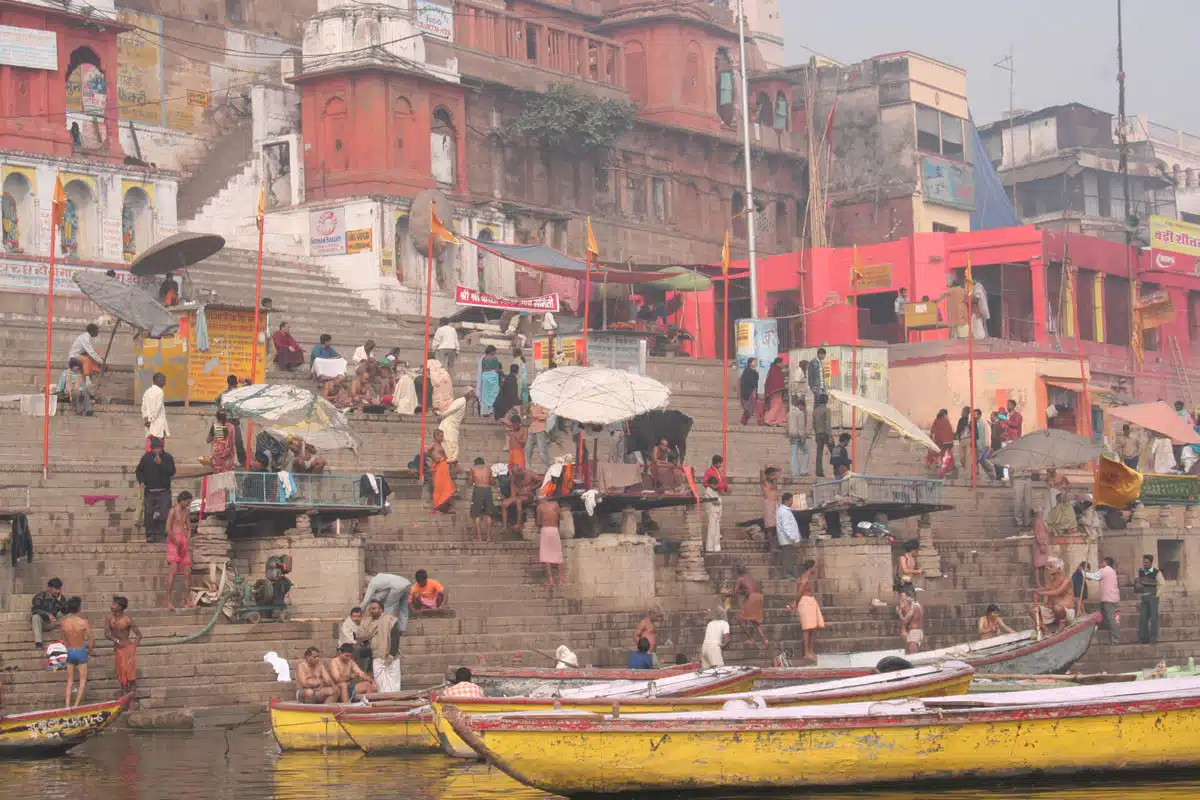
Spring is short but pleasant. The fog has gone, nights are mild and days warm up to around 33°C by the end of the month. Crowds thin after the winter peak, so this is a good time to walk the ghats from Assi to Manikarnika and take a side trip to Sarnath. Holi usually falls in March, and Varanasi celebrates it loudly with coloured powder, music and big crowds on the ghats and in the lanes. It is fun but intense: wear old clothes, protect your phone and camera, and stay with people you know. Maha Shivaratri sometimes falls in early March, and on that day the queues at Kashi Vishwanath Temple are very long.
Summer (April to June)

From April the heat builds fast. May is the hottest month, with afternoons around 40°C and warm nights. June stays very hot until the monsoon arrives, usually in the second half of the month, and then it turns humid. Few foreign visitors come at this time, so hotels are quieter. Indian school holidays in May and June still bring families and pilgrims, though. Do your sightseeing at dawn and in the evening: a boat ride at sunrise, the evening Ganga aarti, and rest indoors through the afternoon. Drink plenty of water and wear loose cotton. April brings the Sankat Mochan music festival, and Buddha Purnima at nearby Sarnath falls in April or May.
Monsoon (July to September)

Most of the year’s rain falls in the monsoon, and July and August are the wettest months. Afternoons stay around 33°C and the air is very humid. Rain often comes in heavy bursts rather than all day, but the lanes of the old city turn muddy and slippery. The Ganges rises sharply, and in many years the lower steps are under water from August into September. When the river is high, boat services are often suspended, you cannot walk from ghat to ghat, and the evening aarti moves to higher ground. Rooms are easy to find, except during the holy month of Shravan in July and August, when pilgrims pack Kashi Vishwanath Temple, especially on Mondays. If a boat ride matters to you, choose another season.
Autumn (October and November)

After the rains the river drops back, although some lower steps can stay muddy into October. Daytime temperatures fall from around 32°C in October to around 29°C in November, and November is one of the driest months of the year. This is festival season. The Ramnagar Ramlila, a month-long staging of the Ramayana, runs around Dussehra in September and October. Diwali and Chhath Puja follow in October or November. Then comes Dev Deepawali, on the full moon of the Hindu month of Kartik, usually in November, when clay lamps light the whole riverfront. These weeks bring the biggest crowds of the year, so book rooms with river views and boats for the evening months ahead.
Festivals and events by month
- January: Makar Sankranti, a holy dip in the Ganges and kites flying over the rooftops.
- February or March: Maha Shivaratri, a night of prayer to Shiva, with huge queues at Kashi Vishwanath Temple.
- February or March: Dhrupad Mela, several nights of classical dhrupad music by the river at Tulsi Ghat.
- March: Holi, the festival of colours, celebrated in the streets and on the ghats.
- April: Sankat Mochan Sangeet Samaroh, a classical music and dance festival at the Sankat Mochan Hanuman Temple.
- September to October: Ramnagar Ramlila, the Ramayana performed over about a month across open-air sets in Ramnagar.
- October or November: Diwali and Chhath Puja, with lamps and fireworks, then offerings to the sun at the ghats at dusk and dawn.
- November: Dev Deepawali, the full moon festival when the ghats glow with clay lamps.
Tips for planning your trip
Book well ahead for Diwali, Dev Deepawali, Christmas and New Year, when rooms near the river and boats for the evening sell out first. Kashi Vishwanath Temple has been much busier since its new corridor to the ghats opened in December 2021, so expect long queues on festival days and Mondays. Pack layers and a warm shawl for winter mornings on the water. Bring light cotton clothes and a hat from April to June, and a rain jacket and sandals that grip in the monsoon. From December to January, leave spare time between trains and flights in case of fog. Do not photograph cremations at Manikarnika Ghat, and avoid swallowing river water. Before you travel, check your government’s current travel advice for India.
Questions about visiting Varanasi
What is the cheapest month to visit Varanasi?
Rooms are usually cheapest and easiest to find from July to September and in the hot months of May and June. Avoid festival dates and Shravan Mondays if you want quiet.
Is Varanasi worth visiting in winter?
Yes, winter is the main season, with mild sunny days and misty mornings on the river. Pack warm layers for cold dawns, and allow for fog delays in late December and January.
What is the rainiest month in Varanasi?
July and August are the wettest months, and heavy downpours are common. The river is often highest in August and September, when boat rides may stop.


