Varanasi Sunrise Boat Ride: A Guide to the Ghats on the Ganges
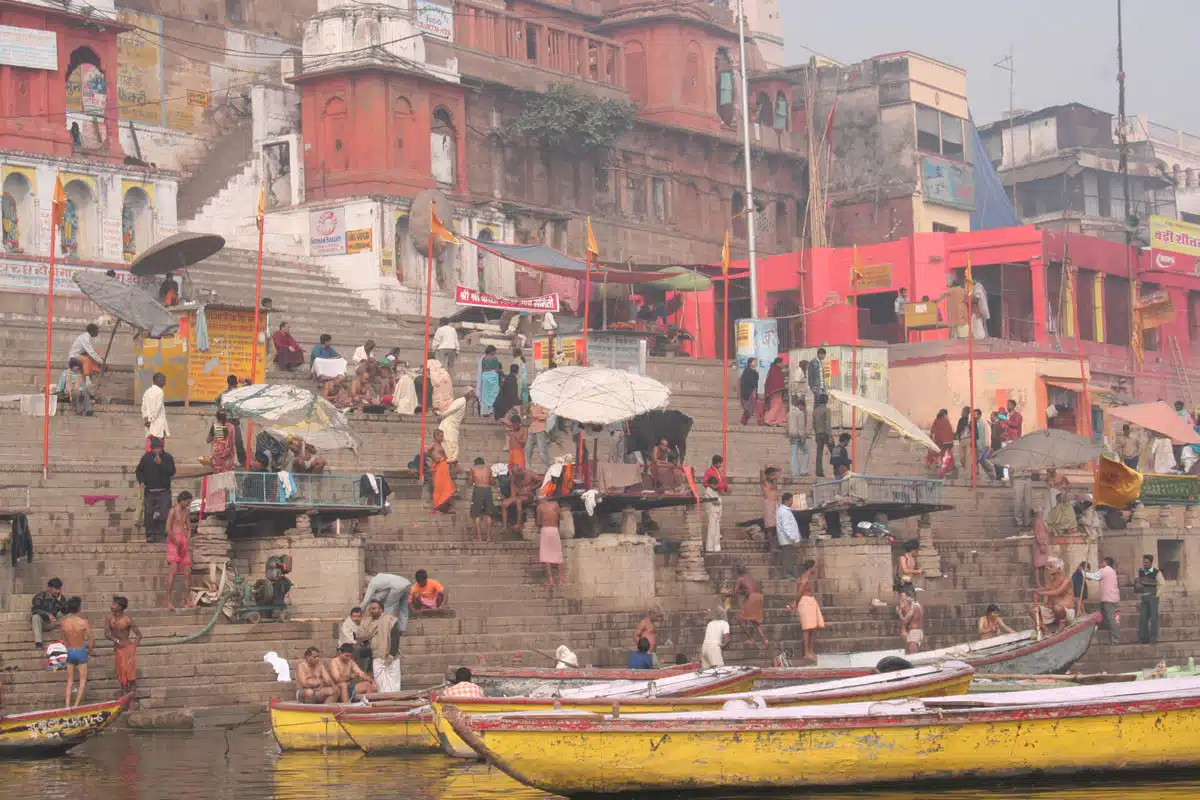
Varanasi, on the west bank of the Ganges in Uttar Pradesh, is one of the world’s oldest living cities and one of the holiest places in Hinduism. Its riverfront is a chain of more than 80 ghats, stone steps that lead down to the water. The best way to see them is from a boat at first light, when the city comes down to the river to bathe and pray.
This guide follows the classic sunrise route from Dashashwamedh Ghat north past Man Mandir and Lalita Ghat to Manikarnika and Scindia Ghat, with a short detour south. You can see the light, the boats and the ghats in our free photos of Varanasi. Here are the 10 best things to see and do on a sunrise boat ride in Varanasi, with tips on when to go and how to plan your trip.
1. Start at Dashashwamedh Ghat before dawn
Dashashwamedh is the main ghat of Varanasi and the easiest place to find a boat. Arrive while it is still dark, when boatmen wait along the lower steps and the first pilgrims are already in the water. A morning aarti is held here too, smaller than the famous evening ceremony. Walk down slowly, as the stone steps can be wet and uneven.
2. Choose your boat and agree the route
You have two main choices: a traditional rowing boat, which is slow and quiet, or a motorboat, many of which now run on CNG. A rowing boat suits the short stretch to Scindia Ghat; a motorboat suits the whole riverfront. Agree the route, the time and the price before you step on board. Life jackets are compulsory for passengers in Varanasi, so ask for one and wear it.
3. Float a flower lamp on the river

On the steps and from small boats, children and vendors sell diyas: little leaf bowls filled with marigolds and a small lamp or candle. You light it, say a prayer or make a wish, and set it on the water. It is a simple, gentle ritual and visitors are welcome to take part. Hold the lamp low and let it go carefully so it does not tip over.
4. Watch the city wake up
The ghats face east, so the sun comes up over the flat, sandy far bank and turns the buildings gold. Pilgrims bathe and pour water back into the river as an offering, priests sit under large umbrellas, people do yoga, and washermen beat clothes on the stones. Keep your voice low and ask before you photograph anyone at close range, especially people bathing.
5. Palace fronts around Darbhanga Ghat

Many boatmen head a short way south first. Here the riverfront becomes a wall of palaces and mansions, built by princely families. The large sandstone building with tall columns at Darbhanga Ghat, now a hotel, is one of the most photographed. Nearby Ahilyabai Ghat is named after the Maratha queen Ahilyabai Holkar, who also paid for the present Kashi Vishwanath temple.
6. Man Mandir Ghat and its observatory
Turning north past Dashashwamedh, you reach Man Mandir Ghat and its palace, built for Raja Man Singh of Amber. On the roof, Maharaja Jai Singh II added an open-air observatory in the 18th century, one of the Jantar Mantars he built across north India. The site is run by the Archaeological Survey of India and also houses a museum about the city and its ghats. Entry needs a ticket, so visit on foot later.
7. Lalita Ghat and the Kashi Vishwanath Dham
A little further on, look for a small wooden temple in Nepali style at Lalita Ghat, known for its carved woodwork. Beside it rises the large new gateway of the Shri Kashi Vishwanath Dham, opened in December 2021, which links the river directly to the Kashi Vishwanath temple. Some boats let passengers off here for the temple. Security at the temple is strict, so check the current rules on phones and bags before you go.
8. Manikarnika Ghat, seen with respect
Manikarnika is the main cremation ghat of Varanasi, and fires burn here day and night. Many Hindus believe that being cremated here brings liberation from the cycle of rebirth. You will see stacks of firewood and smoke rising from the pyres. Photography of cremations is not allowed, so put your camera and phone away. A large redevelopment of the ghat has been under way, so expect building work along this stretch.
9. Scindia Ghat and the leaning temple

Just north of the cremation fires, the Ratneshwar Mahadev temple leans steeply towards the river. It stands so low that its lower part disappears under water when the Ganges is high. Scindia Ghat, just beyond, was built by the Scindia rulers of Gwalior. Its steep steps and the leaning shrine make this the natural turning point for most rowing boats.
10. Add Subah-e-Banaras at Assi Ghat
If you want more ritual, start further south at Assi Ghat, the southernmost ghat of the city. Every morning before sunrise it hosts Subah-e-Banaras, a programme started in 2014 with Vedic chanting, a fire ritual, a morning Ganga aarti, classical music and yoga. Watch from the steps, then take a motorboat north along the whole riverfront.
When to visit Varanasi
October to March is the best season, with cool mornings and often clear skies. In December and January, fog can hide the sunrise and delay boats. April to June is very hot, so the early ride is the coolest part of the day. In the monsoon, roughly July to September, the river rises and boat services are often suspended for weeks for safety. Dev Deepawali, on the full moon of the Hindu month of Kartik in November, fills the ghats with lamps, but boats get booked up early. Sunrise times change through the year, so check the time the evening before.
Tips for planning your trip
Varanasi has an airport at Babatpur, about 25 km from the city, and good rail links through Varanasi Junction. Cars cannot enter the narrow lanes of the old city, so take an auto or e-rickshaw towards Godowlia and walk the last few minutes to Dashashwamedh. Stay near the ghats so you can walk down at dawn. Two or three days is enough for the boat ride, the evening aarti and the city’s most important Varanasi landmarks. Book a boat the evening before at the ghat or through your hotel, and carry small notes. Do not swim in the river, as the currents are strong and drownings happen every year. Check your government’s current travel advice before you go. Many travellers combine Varanasi with other places to visit in India, including Agra, so read our facts to know before you visit the Taj Mahal too.
Questions about a sunrise boat ride in Varanasi
How long does a sunrise boat ride take?
A rowing boat from Dashashwamedh to Scindia Ghat and back usually takes about an hour to an hour and a half. A motorboat trip along all the ghats takes longer, so agree the time with the boatman before you set off.
Can I take photos from the boat?
Yes, but do not photograph cremations at Manikarnika, and ask before taking close-up photos of people bathing or praying.
Do boats run during the monsoon?
Often not. When the Ganges rises, usually between July and September, the authorities suspend boat services, sometimes for several weeks.


