Things to Do in Vis: 12 Best Sights and Experiences
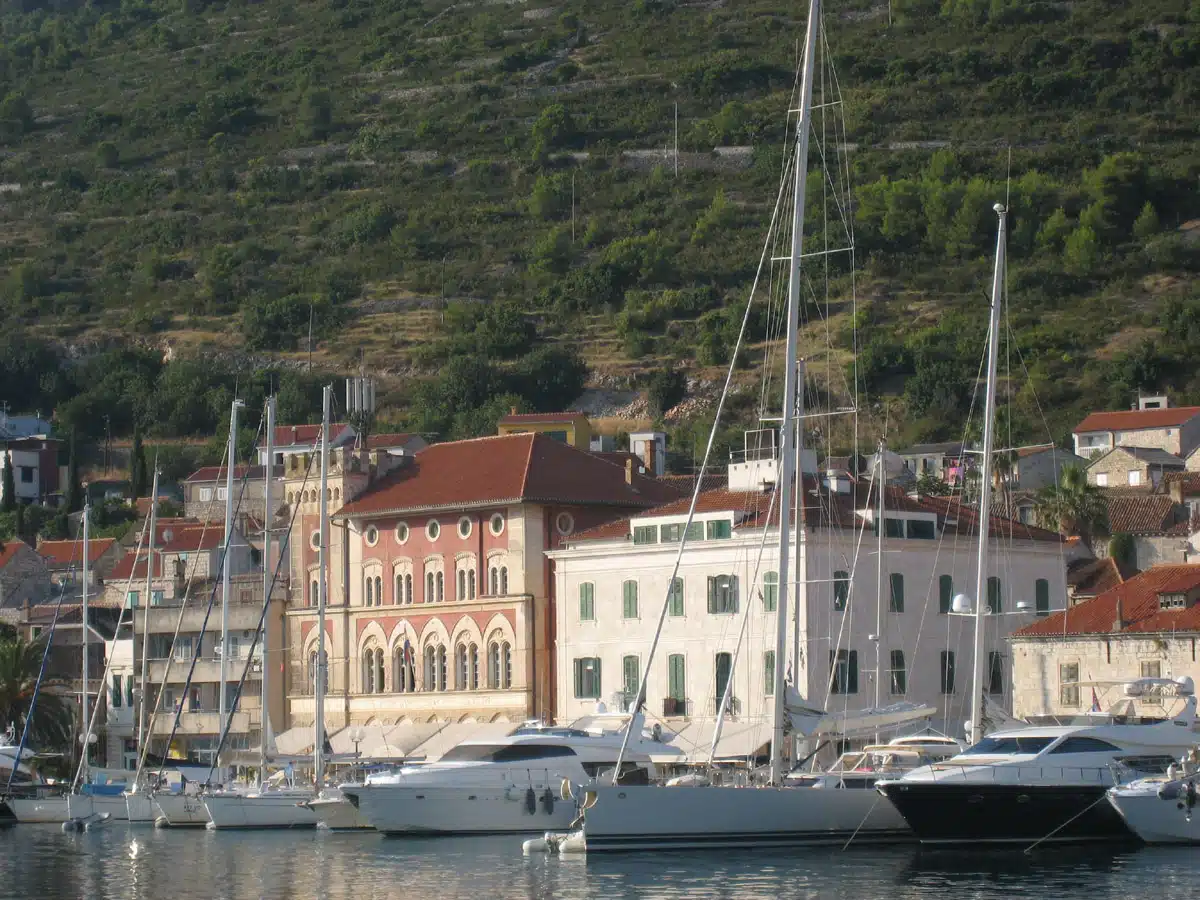
Vis town sits at the end of a deep, sheltered bay on the north-east coast of Vis, the most remote inhabited island in central Dalmatia, about 45 km from the Croatian mainland. The Greeks founded a town here called Issa in the 4th century BC. Today it is a quiet harbour town with stone palaces, old churches, Roman ruins and a long waterfront.
For much of the 20th century the island was a military base closed to foreign visitors, and it still feels calmer than many of its neighbours. Browse our free photos of Vis to get a feel for the bay before you go. Here are the 12 best things to do in Vis, with tips on when to go and how to plan your trip.
1. Walk the waterfront from Luka to Kut
Vis grew out of two villages: Luka, around the ferry harbour, and Kut, at the eastern end of the bay. A seafront promenade joins them, and walking its full length is the best introduction to the town. You pass cafés, the fishing quay, stone houses with green shutters and old palaces facing the water. Go early, when the bay is still, or in the evening, when locals come out for a stroll.
2. Visit the Church of Our Lady of Spilica
Gospa od Spilica is the main parish church of Vis. It was built in the 16th century between Luka and Kut, and the two villages slowly grew into one town around it. The name comes from the small caves found under its foundations. It is a short walk east along the seafront from the ferry quay. Step inside if it is open.
3. See the Archaeological Museum in the Batarija fort
The town museum is in Gospina Batarija, a fort the Austrians built in the early 19th century to guard the harbour. Its guns helped defend Vis in the naval battle of 1866. The museum holds the largest collection of Hellenistic finds in Croatia, including a bronze head of a Greek goddess from Issa. The fort reopened to visitors in July 2025 as part of the Vis Town Museum, with a new collection of finds from the sea around Vis, so check the current opening hours before you go.
4. Explore the lanes and palaces of Kut

Kut is the most atmospheric part of town. Noble families from Hvar and Vis built houses here, and you can still see the palaces of the Hektorović, Jakša and Gariboldi families, plus the house where the writer Ranko Marinković was born. Leave the seafront and wander uphill through arches, courtyards and stepped lanes to the small Church of St Cyprian and St Justina.
5. Find the British naval cemetery and swim near Kut
Walk on past Kut to a small wooded point with a walled British cemetery. It dates from the years after 1811, when the Royal Navy beat a French and Italian fleet off Vis and Britain held the island for a short time. There is a good beach close to the cemetery for a swim, and the sandy bay of Stončica lies a few kilometres further east.
6. Look for the remains of ancient Issa
West of the ferry quay, signs lead to Martvilo, the Hellenistic cemetery that lay outside the walls of Greek Issa. Close to the harbour are the remains of Roman baths with floor mosaics, partly fenced off while conservation work goes on. Issa was founded by Dionysius the Elder of Syracuse to control shipping in the Adriatic.
7. Visit the Franciscan monastery of St Jerome
On the small Prirovo peninsula, a few minutes’ walk from the harbour, the Franciscans built a monastery and church in the early 16th century. They built it on top of the Roman theatre of Issa and reused its stone. Marble blocks from the theatre, some with ancient inscriptions, are still set into the church front.
8. Walk up to Fort George
The British began Fort George in 1812 to protect the harbour and named it after King George III. It stands on the headland above the bay, about a 20 minute walk from town. Today the fort is used for a restaurant and summer events, but the old walls and the views over the bay to the open sea are reason enough to go up.
9. Take a day trip to Komiža and Mount Hum
Komiža, on the west coast, is the island’s other town, with a strong fishing tradition and a different feel from Vis. See our facts about Komiža before you go. On the way, stop at Hum, the highest point on the island at 587 m. On its slopes is Tito’s Cave, used as a headquarters in 1944. Local jeep tours also visit old military tunnels and bunkers.
10. See Stiniva cove on the south coast
Stiniva is a small pebble cove enclosed by high cliffs, with an opening to the sea only a few metres wide. It is a protected natural monument. You can reach it on a steep, rocky path from the road above, which needs good shoes, or by boat. Boats stop at the entrance and you swim in. In July and August, arrive early or late in the day.
11. Take a boat trip to the Blue Cave on Biševo
The Blue Cave on the small island of Biševo fills with blue light when the sun shines through an underwater opening. Boat trips run from Vis and Komiža in season. All visitors land at Mezoporat, get a numbered ticket and move to small boats for the cave. Daily numbers are limited, so buy tickets online in advance if you can, and expect cancellations in rough seas.
12. Spend an evening in Kut with local wine and fish

Some of the island’s best restaurants are in old stone houses and gardens in Kut. Expect fish caught that day, octopus and slow-cooked dishes such as peka. Try Vugava, the white wine of Vis, or a red made from Plavac mali. Book a table ahead in July and August, then walk back along the quiet waterfront.
When to visit Vis
The best months are late May, June and September. The sea is warm, boat trips and restaurants are open, and the town is calmer than in high summer. July and August are hot and busy. From late October to April Vis is very quiet, many places close and ferries are fewer, but it is a good time for walking.
Tips for planning your trip

Jadrolinija car ferries and faster passenger catamarans run from Split to Vis. Some catamarans call at Hvar, so you can combine the trip with our guide to things to do in Hvar, or head further south to Korčula. Timetables change by season, and in summer you should book ahead, especially with a car. Vis town is easy to walk. To see the rest of the island, rent a scooter, car or e-bike, or take the local bus to Komiža. Stay at least three nights and check your government’s current travel advice before you go.
Questions about Vis
How long is the ferry from Split to Vis?
The catamaran takes from about 1 hour 10 minutes to 2 hours, depending on its stops, and the car ferry takes about 2 hours 20 minutes. Times vary by boat, so check the current timetable when you book.
Do you need a car on Vis?
Not for Vis town, which is compact and walkable. A car or scooter helps for Komiža, Hum and the south coast beaches.
Can you visit Vis as a day trip from Split?
Yes, in summer an early boat out and an evening boat back gives you several hours in town. To see Stiniva, Komiža or the Blue Cave too, stay at least one night.


