Things to Do in Berlin: 12 Best Sights and Experiences
Germany’s capital sits on the River Spree in the north-east of the country. Few cities show the 20th century as plainly as Berlin. You can stand under the Brandenburg Gate, walk where the Wall once ran and climb into a glass dome above the parliament, all in a single day. It also has world-class museums, wide parks and an easy, relaxed street life.
Most of the big sights sit close together in Mitte, and public transport links the rest, so it is easy to plan. You can browse our free photos of Berlin and Germany before you go. Here are the 12 best things to do in Berlin, with tips on when to go and how to plan your trip.
1. Brandenburg Gate and Pariser Platz
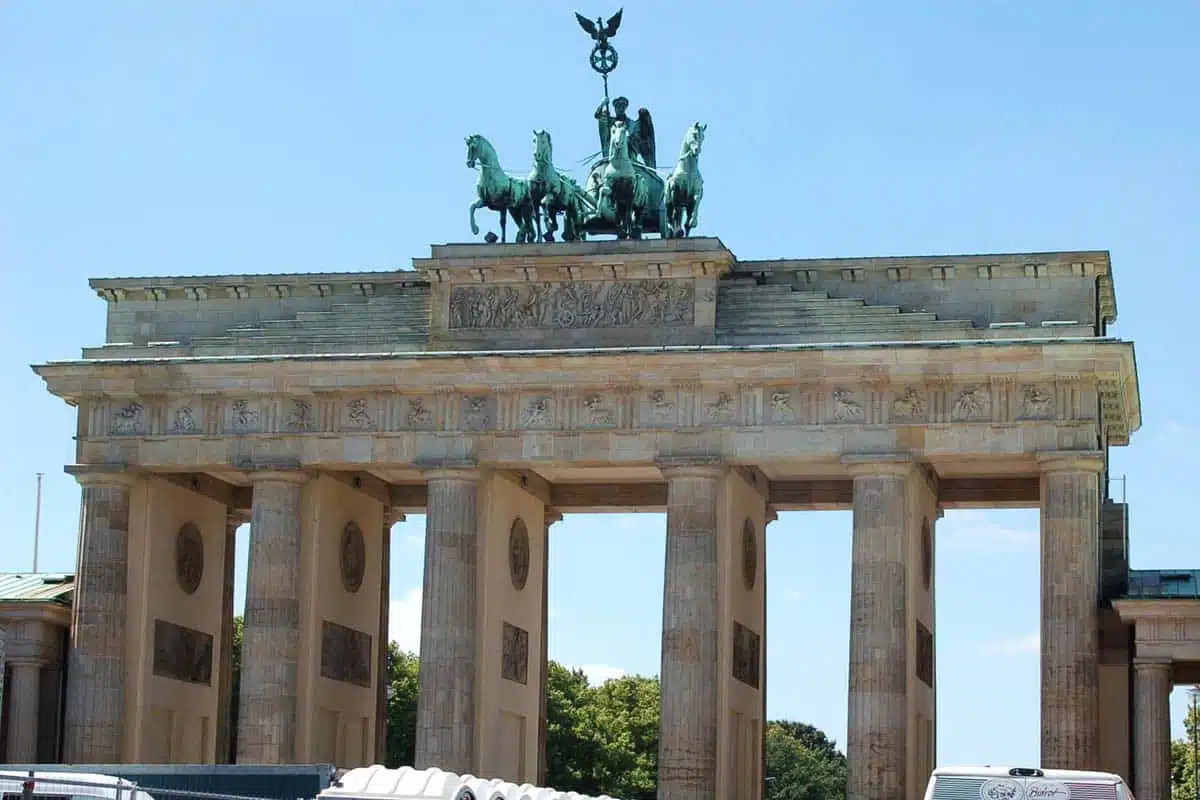
The Brandenburg Gate was built in the late 18th century and is the symbol of the city. The Quadriga on top is a chariot pulled by four horses. Napoleon took it to Paris in 1806, and it was brought back after his defeat. During the Cold War the gate stood in the border zone, so nobody could pass through it. Today Pariser Platz in front of it is closed to cars. Come early in the morning for photos without the crowds.
2. The Reichstag dome

The German parliament, the Bundestag, meets in the Reichstag building. Norman Foster’s glass dome was added when the building was rebuilt in the 1990s. A spiral ramp takes you up around a mirrored cone, with views over the government quarter and the Tiergarten. Entry is free, but you must register online in advance on the Bundestag website. Bring photo ID and expect an airport-style security check. Book early in summer.
3. Memorial to the Murdered Jews of Europe
Just south of the Brandenburg Gate, architect Peter Eisenman covered a whole city block with 2,711 concrete slabs of different heights. The memorial opened in 2005. As you walk in, the ground dips and the slabs rise around you, and the city noise fades. Below it is an information centre with personal stories of victims and their families. Entry is free. Please treat the memorial with respect: do not climb or sit on the slabs.
4. Museum Island
Museum Island is a UNESCO World Heritage Site in the Spree. It has five major museums. The Neues Museum holds the bust of Nefertiti, the Altes Museum has Greek and Roman art, and the Alte Nationalgalerie shows 19th-century paintings. The Bode-Museum has sculpture and coins. The Pergamonmuseum is closed for a long renovation, and the hall with the Pergamon Altar is not expected to reopen before 2027. Tickets are needed for each museum.
5. Berlin Cathedral

Berlin Cathedral, the Berliner Dom, stands at the edge of Museum Island beside the Lustgarten park. It was finished in 1905 and is the largest Protestant church in the city. Inside you will find a huge organ, painted mosaics and a crypt with the coffins of the Hohenzollern royal family. A ticket includes the climb of about 270 steps to the walkway around the dome, which gives one of the best views of the centre.
6. TV Tower, Alexanderplatz and the Hackesche Höfe
East Germany built the Fernsehturm in the 1960s, and at 368 metres it is the tallest structure in Germany. A fast lift takes you to a viewing floor at just over 200 metres, and above it is a revolving restaurant. The tower is due to close for several years of renovation from November 2026, so check the official website before you plan a visit. Afterwards, walk a few minutes to the Hackesche Höfe. These are eight linked courtyards from 1906, with Art Nouveau tiles, small shops, cafés and a cinema.
7. Berlin Wall Memorial on Bernauer Straße
This is the best place to understand how the Wall worked. The open-air memorial runs for about 1.4 km along the old border strip. It includes a preserved section of the Wall with the death strip and a watchtower behind it. Panels and photos tell the stories of people who escaped or died here. The documentation centre has a viewing platform over the strip. Entry is free, and the U8 and S-Bahn stop nearby.
8. Topography of Terror and Checkpoint Charlie

On Niederkirchnerstraße, a long stretch of the original Wall still stands beside the Topography of Terror. This free documentation centre stands on the site of the former Gestapo and SS headquarters and explains how the Nazi system of terror worked. Checkpoint Charlie, the famous Cold War crossing on Friedrichstraße, is a short walk away. Today it has a copy of the guardhouse and is very busy, so the open-air panels there are more useful than the photo stops.
9. East Side Gallery and the Oberbaum Bridge
The East Side Gallery is the longest surviving section of the Wall, at about 1.3 km along the Spree in Friedrichshain. In 1990, artists from many countries covered it with murals, including the well-known “Fraternal Kiss”. Walk to the end and you reach the Oberbaum Bridge. This red-brick bridge has the U1 line running along its top deck. It once marked a border crossing and now links Friedrichshain with Kreuzberg.
10. A boat trip on the Spree

A river cruise is a relaxing way to see the centre and rest your feet. Short city tours leave from piers near Museum Island, Friedrichstraße and the Nikolaiviertel. They pass the cathedral, the government quarter and the Reichstag. Longer trips also take in the Landwehr Canal. Several companies run boats, and most sail from spring to autumn, with fewer departures in winter. Sit on the open deck on a warm evening.
11. Tiergarten and the Victory Column
The Tiergarten is a huge park in the middle of the city, with lakes, wooded paths and beer gardens. You can walk or cycle through it from the Brandenburg Gate. At its centre is the Victory Column, crowned by a golden figure of Victoria that locals call “Goldelse”. Steps inside lead to a viewing platform. Check that the platform is open before you plan your visit around it.
12. Gendarmenmarkt and Charlottenburg Palace
Gendarmenmarkt is often called Berlin’s most elegant square. The French and German Cathedrals face each other across it, with Schinkel’s Konzerthaus between them. Further west, Charlottenburg Palace is the city’s largest surviving royal palace, and its baroque gardens are free to walk in. On the way, stop at Breitscheidplatz. There, the bombed tower of the Kaiser Wilhelm Memorial Church stands next to a modern church lit by blue glass.
When to visit Berlin
Late spring and early autumn are the best times to visit Berlin. May, June and September usually bring mild weather and long evenings, so it is easy to enjoy parks, beer gardens and boat trips. July and August are warmer and busier, and you will need to book popular sights such as the Reichstag dome and the TV Tower well ahead. Winter is cold and grey, but the museums are quieter. From late November, Christmas markets open across the city.
Tips for planning your trip
Most visitors fly into Berlin Brandenburg Airport (BER). Regional trains, including the FEX Airport Express, and the S-Bahn run from the airport to the centre. You need a ticket that covers zones A, B and C for this trip. In the city, the U-Bahn, S-Bahn, trams and buses are fast and frequent. Bus 100 and bus 200 pass many of the main sights. Three or four days is a good first visit. Book timed tickets early and wear comfortable shoes, because the distances between sights are bigger than they look on the map. Most shops close on Sundays. Dresden is about two hours away by train and makes a good extra stop: see our photos of Dresden. Visitors from outside the EU should check their government’s current travel advice and the latest Schengen entry rules before they travel.
Questions about Berlin
Do I need to book the Reichstag dome in advance?
Yes. Entry is free, but you have to register online on the Bundestag website and bring photo ID for the security check.
Is the Pergamon Museum open?
No, it is closed for a long renovation, and the altar hall is not expected back before 2027. The other museums on Museum Island stay open, including the Neues Museum with the bust of Nefertiti.
How many days do you need in Berlin?
Three days lets you cover the main sights in Mitte and the Wall memorials. With a fourth day you can add Charlottenburg Palace, a boat trip or a day trip out of the city.


