Gullfoss Waterfall: A Visitor Guide to Iceland’s Golden Falls
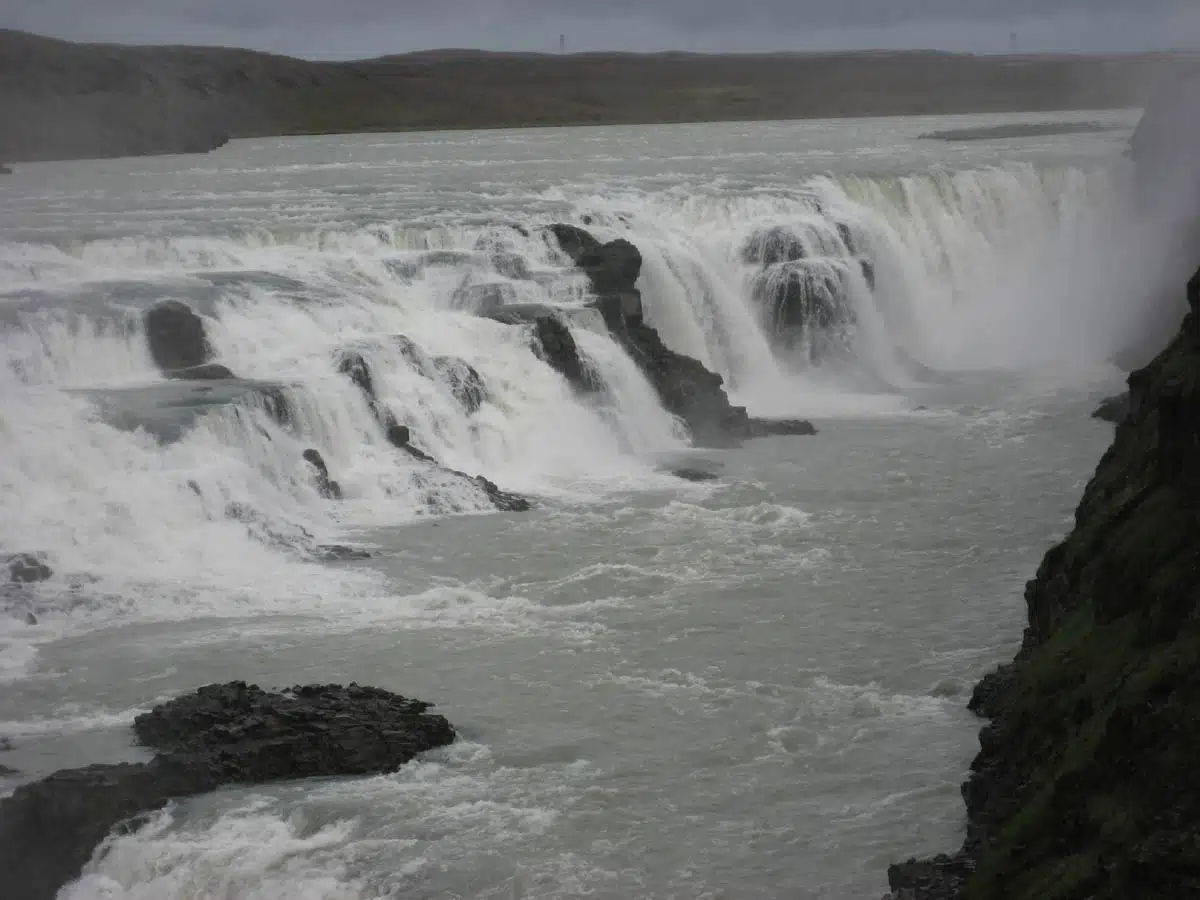
Gullfoss is a two-step waterfall on the Hvítá river in south-west Iceland, about 116 to 120 km east of Reykjavík on the Golden Circle route. The glacial river drops 11 metres, turns, then falls a further 21 metres into a narrow canyon up to 70 metres deep. The name means “golden falls”, and the noise and spray make it one of Iceland’s best-loved sights.
The falls are a protected nature reserve, open all year, with easy paths and two main viewpoints. It is much smaller than Niagara Falls, but you can stand far closer to the water. Before you go, browse our free photos of Gullfoss and Iceland. Here are the 10 best things to do at Gullfoss, with tips on when to go and how to plan your trip.
1. Take in the view from the upper viewpoint
Start at the upper viewpoint on the rim, next to the Gullfosskaffi café and shop. From here you see the whole layout: the broad upper step, the sharp turn in the river and the crack of the canyon running away to the south-west. On a clear day you can see the Langjökull ice cap on the horizon, where the Hvítá begins. This viewpoint is open in all seasons, so it is the one place you can always count on.
2. Walk the lower path to the rock ledge

Stairs lead down from the upper level to a path that runs along the edge of the canyon to a rocky ledge right beside the falls. Allow 10 to 15 minutes each way. The lower car park gives the gentlest route if you have a pushchair or wheelchair. Expect to get wet, as the spray can soak you when the wind blows your way. The ledge is close to the water, so stay behind the ropes and keep children near you.
3. Look down into the Gullfoss canyon

Below the lower fall, the river squeezes into Gullfossgljúfur, a gorge about 2.5 km long with walls up to 70 metres high. From the main viewpoint the canyon looks quite small, so walk along the rim to see how deep it really is. The dark rock walls, green moss and grey glacial water make a strong contrast. The protection of the reserve covers this canyon too, along with its plants and wildlife.
4. Learn the story of Sigríður Tómasdóttir
In the early 1900s, foreign investors wanted to use Gullfoss for hydroelectric power. Sigríður Tómasdóttir (1871 to 1957), who grew up on the nearby Brattholt farm and guided early visitors to the falls, fought the plans and is said to have walked to Reykjavík to meet her lawyer. The dam was never built. A memorial to her stands near the falls, and she is often called Iceland’s first environmentalist. Gullfoss became state property and was protected in 1979.
5. See Gullfoss in winter
In winter, less water flows and parts of the falls and canyon walls freeze into large ice shapes, so the scene looks very different from summer. The upper viewpoint stays open, but the lower path is often closed from autumn to spring because of ice. Even the upper paths can be slippery, so wear boots with good grip and bring ice grips. Daylight is short in midwinter, so plan your drive to arrive in the middle of the day.
6. Go rafting on the Hvítá
In summer, rafting companies run trips on the Hvítá through the canyon downstream of Gullfoss. Most start from a base at Drumboddsstaðir, near the village of Reykholt, and include wetsuits, helmets and a safety briefing. Age limits apply, with gentler family trips for younger children. Some operators combine rafting with a Golden Circle tour from Reykjavík. You need to book ahead, and trips depend on water levels and weather.
7. Join a glacier tour on Langjökull
The Hvítá flows from Langjökull, Iceland’s second-largest ice cap, and the Kjölur highland road (F35) starts near Gullfoss. Several operators run glacier tours from a meeting point at Gullfoss, using large modified trucks to reach the ice. Seasons depend on the type of trip, and tours must be booked in advance. Do not drive the F35 yourself in an ordinary car: highland F-roads need a 4×4 and open only in summer.
8. Watch Strokkur erupt at Geysir
The Geysir geothermal area in Haukadalur is about 10 km, or a ten-minute drive, from Gullfoss. The Great Geysir, which gave its name to all geysers, is now mostly quiet, but Strokkur next to it erupts every few minutes. Walk the paths past bubbling pools and steaming vents. The water is boiling hot, so stay on the marked paths and behind the ropes. Most people visit Geysir and Gullfoss on the same day.
9. Stop at Faxi waterfall
Faxi, also called Faxafoss, is a wide, low waterfall on the Tungufljót river, a short detour off Route 35 about 12 km south of Geysir. It is far quieter than Gullfoss and makes a calm contrast after the crowds. In summer you may spot the salmon ladder beside the falls. It works well as a stop on the way back towards Reykjavík.
10. Visit Þingvellir National Park
Þingvellir, a UNESCO World Heritage Site, completes the Golden Circle. Iceland’s parliament, the Alþingi, first met here around 930, and the Almannagjá gorge lets you walk through the rift between the North American and Eurasian plates. You can snorkel or dive in the clear water of Silfra, but only with a licensed operator, booked in advance. The park charges for parking, so have a card ready.
When to visit Gullfoss

Gullfoss is open all year. The flow is biggest and loudest from late spring to late summer, when glacier melt fills the river, and this is also when the lower path is usually open. Summer brings long days and the most visitors, so arrive early in the morning or in the evening for quieter paths. Winter has ice, short days and fewer people, but you can usually only use the upper viewpoint. On sunny days, look for rainbows in the spray.
Tips for planning your trip
Gullfoss is about 1 hour 45 minutes to 2 hours from Reykjavík by car, via Route 1 and Route 35. You can drive yourself or join one of the many Golden Circle day tours, which is easier in winter. Allow 45 to 60 minutes at the falls, or a full day for the Golden Circle. The site has a café, a shop and toilets. Bring a waterproof jacket, as the spray reaches the paths. Flying drones for fun is banned all year at Gullfoss. Permits are only given for commercial filming, by the Nature Conservation Agency of Iceland (Náttúruverndarstofnun), which manages the reserve. In winter, check road and weather conditions before you set off. Check your government’s current travel advice before you travel. Combine the trip with a day or two exploring Reykjavík’s culture and history.
Questions about Gullfoss
Do you need a ticket to see Gullfoss?
No, there is no entrance ticket to see the falls. Check the signs at the car park for any parking charges.
Can you visit Gullfoss in winter?
Yes, the upper viewpoint is open all year. The lower path to the ledge is often closed in winter because of ice, so bring ice grips and take care.
How long do you need at Gullfoss?
Most visitors spend 45 to 60 minutes walking both viewpoints. Add time if you want a meal at the café.


