10 Most Famous Temples in India: Rock-Cut, Cave and River Temples
India has some of the oldest and most unusual temples in the world. This list covers temples cut straight into cliffs, cave shrines filled with sculpture and paintings, and holy temples on the banks of great rivers. Many are UNESCO World Heritage Sites, and several are still busy places of worship.
The temples are spread from the Himalayan foothills to Tamil Nadu, so most travellers pick one region per trip. Our own photographers visited Ellora, Ajanta, Elephanta and Varanasi, and you can browse their shots in our free temple pictures. Here are 10 of the most famous temples in India, with tips on visiting them.
1. Kailasa Temple, Ellora, India
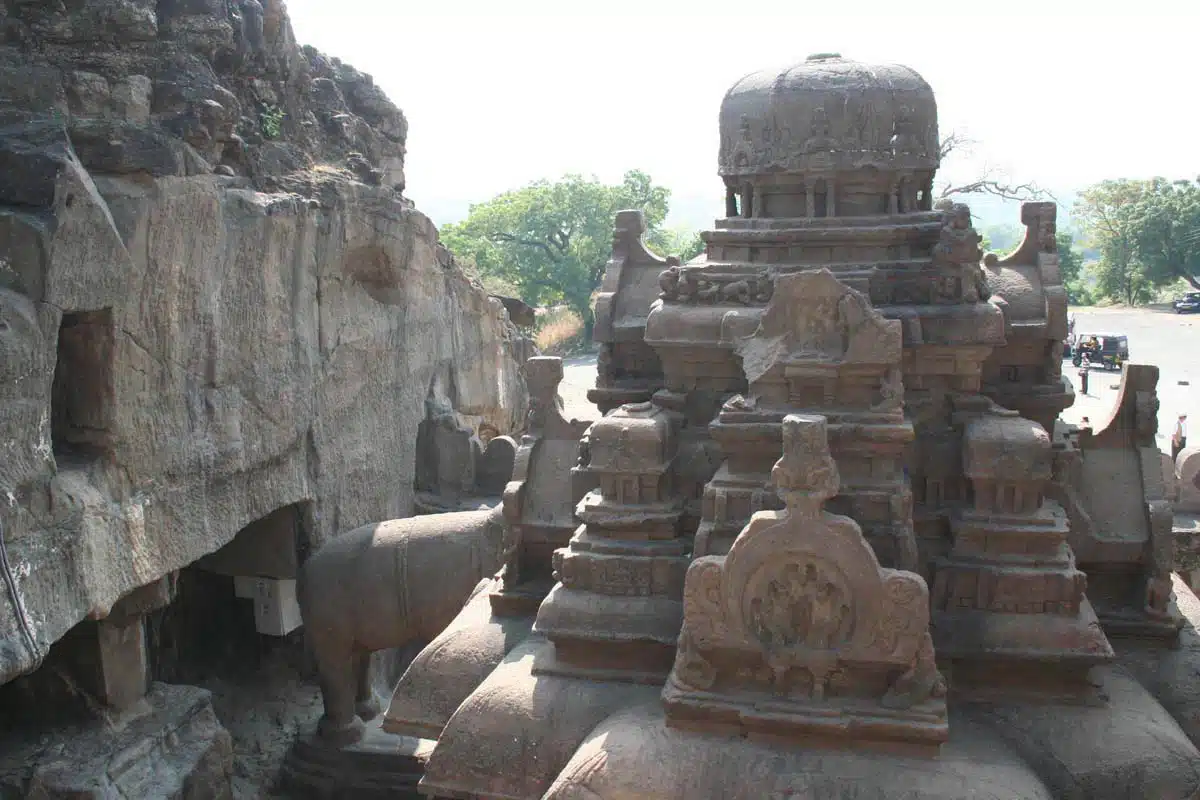
Cave 16 at Ellora is not really a cave. The Kailasa Temple is a complete temple to Shiva, carved downwards out of a single basalt hillside in the 8th century under the Rashtrakuta kings. Workers cut away the rock to leave a tower, halls, a bridge and life-size stone elephants standing free in a deep pit. Ellora is about 30 km from Chhatrapati Sambhajinagar (Aurangabad). It is closed on Tuesdays, and you need an ASI ticket, sold at the gate or online. Our Ajanta and Ellora caves guide has more planning tips.
2. Ajanta Caves, India

About 100 km from Chhatrapati Sambhajinagar, the Ajanta Caves are around 30 Buddhist caves cut into a curved gorge above the Waghur River. The oldest date from about the 2nd century BCE and the later ones from the 5th century CE. Prayer halls hold carved stupas and Buddha figures, and the walls keep some of the finest ancient paintings in Asia. Ajanta is closed on Mondays. Cars stop at a visitor centre, and shuttle buses take you the last stretch to the caves. Never use flash near the paintings.
3. Elephanta Caves, India

On an island in Mumbai harbour, the Elephanta Caves are rock-cut shrines to Shiva, roughly 1,500 years old. The main cave holds huge carved panels, including the three-headed Sadashiva, about 5.5 metres tall. Ferries leave from the Gateway of India and take about an hour each way. The caves and the ferries do not run on Mondays, and sailings can stop in rough monsoon weather. From the jetty there is a long flight of steps, so bring water. Read our Elephanta Caves guide before you go.
4. Ratneshwar Mahadev Temple, Varanasi, India

The leaning temple of Varanasi stands at the edge of the Ganges between Scindia Ghat and Manikarnika Ghat. Ratneshwar Mahadev is a Shiva temple that tilts by about 9 degrees, and its lower part is often under the river, especially after the monsoon. The best view is from a boat at sunrise. Manikarnika is the main cremation ghat, so do not photograph cremations. For more of the city, see our 5 most important Varanasi landmarks.
5. Shore Temple and Pancha Rathas, Mahabalipuram, India
Mahabalipuram (Mamallapuram), south of Chennai on the coast of Tamil Nadu, was a port of the Pallava kings. In the 7th century they carved the Pancha Rathas, five temples each cut from a single block of granite. The Shore Temple, built in stone in the early 8th century, stands right beside the Bay of Bengal. The whole group is a UNESCO World Heritage Site. One ASI ticket, bought near the Shore Temple, covers the main sites. Come early in the morning, before the heat and the day-trip crowds from Chennai.
6. Badami Cave Temples, India
In northern Karnataka, four cave temples are cut into red sandstone cliffs above Agastya Lake, a man-made lake from the time of the Chalukya kings. The earliest caves date from the 6th century. Three honour Shiva and Vishnu, and one is Jain, with large carved figures and traces of paint on the ceilings. Plan a full day and combine Badami with nearby Aihole and Pattadakal, which is a UNESCO site. Watch your bags, as monkeys are bold here.
7. Virupaksha Temple, Hampi, India
The Virupaksha Temple stands on the south bank of the Tungabhadra River in Hampi, once the capital of the Vijayanagara Empire. It is the main temple of the ruined city and has been used for worship for many centuries, which makes it one of the oldest working temples in India. Hampi is a UNESCO World Heritage Site, and the nearest railway station is at Hosapete. Remove your shoes at the gate, and walk down to the river ghats after your visit.
8. Ranganathaswamy Temple, Srirangam, India
Srirangam is a river island in Tiruchirappalli, Tamil Nadu, with the Kaveri River on one side and the Kollidam on the other. Much of the island is taken up by the Ranganathaswamy Temple, a vast complex dedicated to Vishnu, with seven rings of walls and many tall carved gateway towers. It is one of the largest working temples in the world. Non-Hindus can visit the outer courts but not the inner sanctum. Dress modestly, and expect to leave your shoes at the entrance.
9. Masrur Rock-Cut Temples, India
In the Kangra Valley of Himachal Pradesh, the Masrur temples are a group of Hindu shrines carved from one sandstone ridge in the early 8th century. They are the only monolithic rock-cut temple complex in northern India. A large pool in front reflects the carved towers, and on clear days you can see the snowy Dhauladhar range behind. Masrur is an easy road trip from Dharamshala or Kangra town. Clear autumn days give the best views.
10. Udayagiri and Khandagiri Caves, India
On twin hills at the edge of Bhubaneswar in Odisha, these rock-cut caves were made around the 2nd century BCE, during the reign of King Kharavela, as retreats for Jain monks. Udayagiri has the finest carving, including the two-storey Rani Gumpha with its long sculpted friezes, and the Hathigumpha cave with an important royal inscription. Go early in the morning, when the rock is cool and the light is soft. Keep food out of sight because of the monkeys.
Tips for visiting
The best time for most of these temples is October to March, when days are dry and cooler. The monsoon, roughly June to September, brings green views but also slippery steps, rough seas at Elephanta and high water at Varanasi. Many ASI sites close one day a week, so check before you plan. Wear clothes that cover shoulders and knees, and slip-on shoes, because you take them off at working temples and some caves. Stone floors get very hot, so socks help. Licensed guides at the gates make the carvings much easier to understand. Before you travel, check your government’s current travel advice for India.
Questions about temples in India
Which is the most impressive rock-cut temple in India?
Most visitors pick the Kailasa Temple at Ellora. It is a full temple carved from a single hillside, and one of the largest single-rock structures in the world.
Can non-Hindus visit Hindu temples in India?
Most temples welcome respectful visitors of any faith. Some, such as the Ranganathaswamy Temple at Srirangam, keep the inner sanctum for Hindus only, so follow the signs and ask staff if unsure.
How many days do I need for Ajanta and Ellora?
Plan at least two days from Chhatrapati Sambhajinagar, one for each site. Remember that Ajanta closes on Mondays and Ellora on Tuesdays.


