Things to Do in Mumbai: 12 Best Sights and Experiences
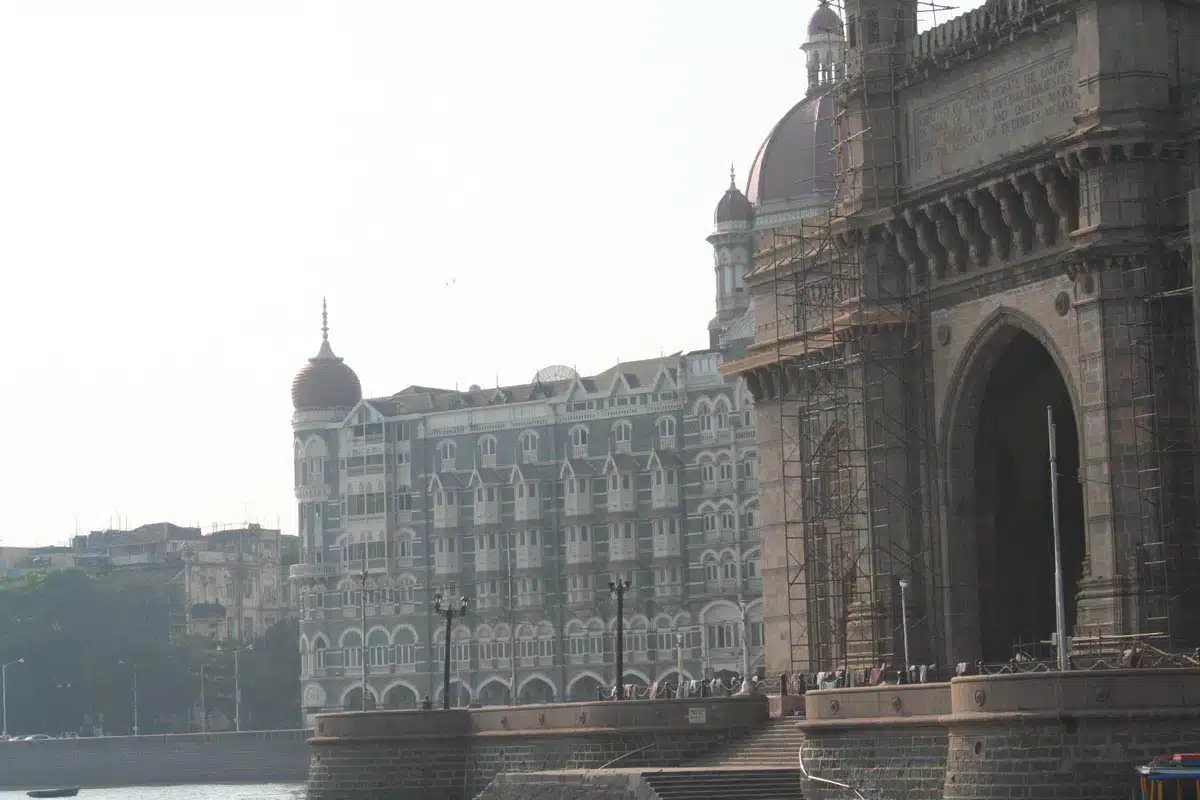
Mumbai is India’s biggest city and its financial capital. It sits on a peninsula on the Arabian Sea, in the state of Maharashtra. Most of the sights are at the old southern tip, around Colaba and Fort. Here you find the Gateway of India, the Taj Mahal Palace hotel and a busy working harbour. There are also streets of Victorian Gothic and Art Deco buildings that UNESCO lists as a World Heritage Site.
Most first visits start on the Colaba waterfront and then head north through the colonial streets to Marine Drive. To see the harbour and the Gateway before you go, browse our free photos of Mumbai. Here are the 12 best things to do in Mumbai, with tips on when to go and how to plan your trip.
1. Gateway of India
The Gateway of India is a basalt arch on the Apollo Bunder waterfront in Colaba. It was built to mark the 1911 visit of King George V and Queen Mary, and it was finished in 1924. The last British troops to leave India marched out through it in 1948. Expect crowds, snack sellers and photographers, especially in the evening. Bags are scanned at the entrances. The monument has been restored in recent years, so parts may be fenced off.
2. Taj Mahal Palace hotel
The Taj Mahal Palace stands opposite the Gateway. It opened in 1903 and is still one of India’s best-known hotels, with red domes and arched windows looking over the harbour. You don’t need to be a guest to go in. Many visitors stop for tea or a meal, or just look at the lobby. Dress neatly and expect a security check at the door. For the classic view of the hotel and the Gateway together, walk along the harbour wall in front.
3. Take a harbour boat trip

Small boats leave from beside the Gateway for short trips around Mumbai harbour, and you buy tickets at the jetty. From the water you can see the Taj and the Gateway from the sea, with tugs guiding cargo ships past old wooden boats. Behind them, the skyline fades into the haze. Don’t photograph the naval dockyard or any warships, because this is not allowed.
4. Take the ferry to the Elephanta Caves

Ferries from the Gateway of India take about an hour to cross the harbour to Elephanta Island. Its rock-cut cave temples are a UNESCO World Heritage Site. They are dedicated to Shiva, and the main cave holds the huge three-headed Maheshmurti sculpture. Allow most of a day. The caves and the ferries are closed on Mondays. You need a ferry ticket and a separate ticket for the site. A new passenger jetty is being built nearby at the Radio Club, so check where boats leave from. Our Elephanta Caves guide has the details.
5. Colaba Causeway and Sassoon Dock

Colaba Causeway, officially Shahid Bhagat Singh Road, is a long street of arcades lined with pavement stalls, cafés and shops. You can buy clothes, jewellery and souvenirs, and bargaining at the stalls is normal. Leopold Cafe and other old cafés have been serving travellers for well over a century. Further south, Sassoon Dock is one of the city’s oldest docks and still a busy fish market. Go early in the morning, when the boats unload. Ask before you photograph people.
6. Kala Ghoda and the city museum
Kala Ghoda is the art quarter of Fort, a short walk from the Gateway. Its main sight is the Chhatrapati Shivaji Maharaj Vastu Sangrahalaya, formerly the Prince of Wales Museum. It has sculpture, miniature paintings and decorative arts in a domed Indo-Saracenic building, and you need a ticket to go in. Next door, the Jehangir Art Gallery shows work by contemporary Indian artists. Every February the Kala Ghoda Arts Festival fills the streets with music, talks and installations.
7. Oval Maidan and the UNESCO buildings
The Oval Maidan is a long green ground where you will often see cricket matches. Victorian Gothic buildings line its east side, including the Bombay High Court and the University of Mumbai with its Rajabai Clock Tower. A row of Art Deco apartment blocks faces them from the west side. Together they form the Victorian Gothic and Art Deco Ensembles of Mumbai, which UNESCO listed in 2018. The late afternoon light is good for a walk along the maidan.
8. Chhatrapati Shivaji Maharaj Terminus
Many people still call this railway station Victoria Terminus, or VT. It was completed in 1888 and is a UNESCO World Heritage Site. Its domes, gargoyles and stone carvings mix Victorian Gothic with Indian details, while thousands of commuters hurry through below. Look at the front from across the road and then step into the concourse. A guided heritage tour takes you into the railway museum and under the central dome. You must book it online in advance.
9. Crawford Market
Crawford Market, officially Mahatma Jyotiba Phule Mandai, is a covered market from the 1860s, a short walk north of the station. John Lockwood Kipling, father of the writer Rudyard Kipling, designed the stone reliefs at the entrance. Inside are stalls of fruit, spices and household goods, and the streets around it lead into busy wholesale bazaars. Go in the morning, when it is cooler. Keep your bag in front of you, as it gets crowded.
10. Marine Drive and Girgaum Chowpatty
Marine Drive is a seafront road that curves for over three kilometres along Back Bay, from Nariman Point to Girgaum Chowpatty. At night its street lights form an arc that locals call the Queen’s Necklace. Join the walkers on the sea wall at sunset. Chowpatty, the beach at the northern end, is for strolling and street food like bhel puri and pav bhaji, not for swimming. During Ganesh Chaturthi, huge crowds carry Ganesh idols into the sea here.
11. Haji Ali Dargah and the Dhobi Ghat
The Haji Ali Dargah is a white mosque and the tomb of a Sufi saint. It stands on an islet off Worli at the end of a narrow causeway. The causeway floods at high tide, so check the tide times before you go. People of all faiths visit, and you should dress modestly. Nearby in Mahalaxmi is the Dhobi Ghat, a huge open-air laundry where washers scrub and beat clothes in rows of concrete tubs. The best view is from the bridge by Mahalaxmi station.
12. Ride a black-and-yellow taxi

Mumbai’s black-and-yellow taxis are called kaali-peeli, Hindi for “black-yellow”, and they are part of the city’s image. The classic Premier Padmini cars were retired in October 2023 under a 20-year age limit for taxis. Newer small cars now wear the same colours. A ride from Colaba to Marine Drive or the station is an easy way to see the old streets. Ask the driver to use the meter, or book through a ride-hailing app.
When to visit Mumbai
The best time to visit is from November to February, when days are warm, dry and less humid. March to May is hot and sticky. The monsoon lasts from about June to September. It brings very heavy rain, flooded streets and rough seas, and boats to the harbour and Elephanta may not run. The big festivals are Ganesh Chaturthi in August or September and Diwali in October or November. The city is lively then, but crowded, and hotels fill up early.
Tips for planning your trip
Mumbai has two airports. Chhatrapati Shivaji Maharaj International Airport is in the northern suburbs. The new Navi Mumbai International Airport, across the harbour, opened to passengers in December 2025. Long-distance trains arrive at the main terminus and at Mumbai Central. If you stay in Colaba or Fort, you can walk to most of the sights in this guide. For longer trips, the underground Metro Line 3 (Aqua Line) runs from Cuffe Parade in the south to the main airport and beyond, so you avoid road traffic. Suburban trains are fast but packed at rush hour. Allow three or four days: one for Colaba and the harbour, one for Elephanta, one for Fort and Marine Drive, and more if you want to see the suburbs. Most visitors need a visa, and many nationalities can apply online for an e-Visa. Check your government’s current travel advice before you go. To travel further in Maharashtra, read our Ajanta and Ellora Caves guide, and for more ideas see our picks of places to visit in India.
Questions about Mumbai
How many days do you need in Mumbai?
Three days is enough for the main sights of south Mumbai and a trip to Elephanta. Add a day or two if you want to explore the suburbs or the Kanheri Caves in Sanjay Gandhi National Park.
How do you get to the Elephanta Caves from Mumbai?
Ferries leave from the Gateway of India area and take about an hour each way. The caves and the ferries are closed on Mondays.
Are the old Premier Padmini taxis still running in Mumbai?
No. The last ones were retired in October 2023, but black-and-yellow taxis are still everywhere, now using newer car models.


