César Manrique’s Lanzarote: 11 Places to See His Art and Architecture

César Manrique was an artist and architect born in Arrecife, on Lanzarote in the Canary Islands, in 1919. More than anyone else, he shaped how the island looks today. He turned lava tubes, an old quarry and a cliff edge into places to visit. He also campaigned for low white houses and against billboards and high-rise building. Following his work is one of the best ways to understand Lanzarote’s volcanic landscape.
Most of his centres are in the north and centre of the island, so you can see the main ones in two or three days by car. Before you go, look through our free photos of Lanzarote to get a feel for the black lava, white walls and green-painted wood. Here are the 11 best places to see César Manrique’s work in Lanzarote, with tips on when to go and how to plan your trip.
1. Fundación César Manrique, Taro de Tahíche
Manrique built his first home on Lanzarote here in 1968, on top of a lava flow from the 18th-century eruptions. The upper floor looks like a traditional island house. The lower floor uses five natural volcanic bubbles as rooms, linked by tunnels in the rock, with a small pool and garden. Today it is the headquarters of his foundation and shows his paintings and his private art collection. Allow about an hour and a half, and arrive early to beat the tour coaches.
2. Jardín de Cactus, Guatiza
Manrique’s last major project on the island opened in the early 1990s. It sits in an old quarry where farmers once dug volcanic ash to spread on their fields. He shaped it as an amphitheatre of stone terraces, planted with thousands of cactuses and succulents from all over the world. Look for the tall metal cactus at the gate, the pond and the restored windmill at the top, which gives the best view. The fields around Guatiza are full of prickly pears, once grown for cochineal dye.
3. Jameos del Agua
This was Manrique’s first centre. It opened in the 1960s inside a lava tube formed by the eruption of the Volcán de La Corona. A staircase leads down to a dark saltwater lagoon where tiny white blind crabs live. Please do not throw coins into the water, as they harm the crabs. Beyond the lagoon are a white garden, a turquoise pool that is only for looking at, and a concert hall built into the cave. Check the CACT website for concerts and events.
4. Cueva de los Verdes
Just inland from Jameos, another stretch of the same lava tube is open on guided tours. The work to light and open up the cave was led by Jesús Soto, an artist who worked closely with Manrique, so it belongs on the same trail. The route takes about an hour and passes through low, narrow sections. It ends with a surprise that guides ask visitors not to give away. Skip it if you dislike tight spaces.
5. Mirador del Río
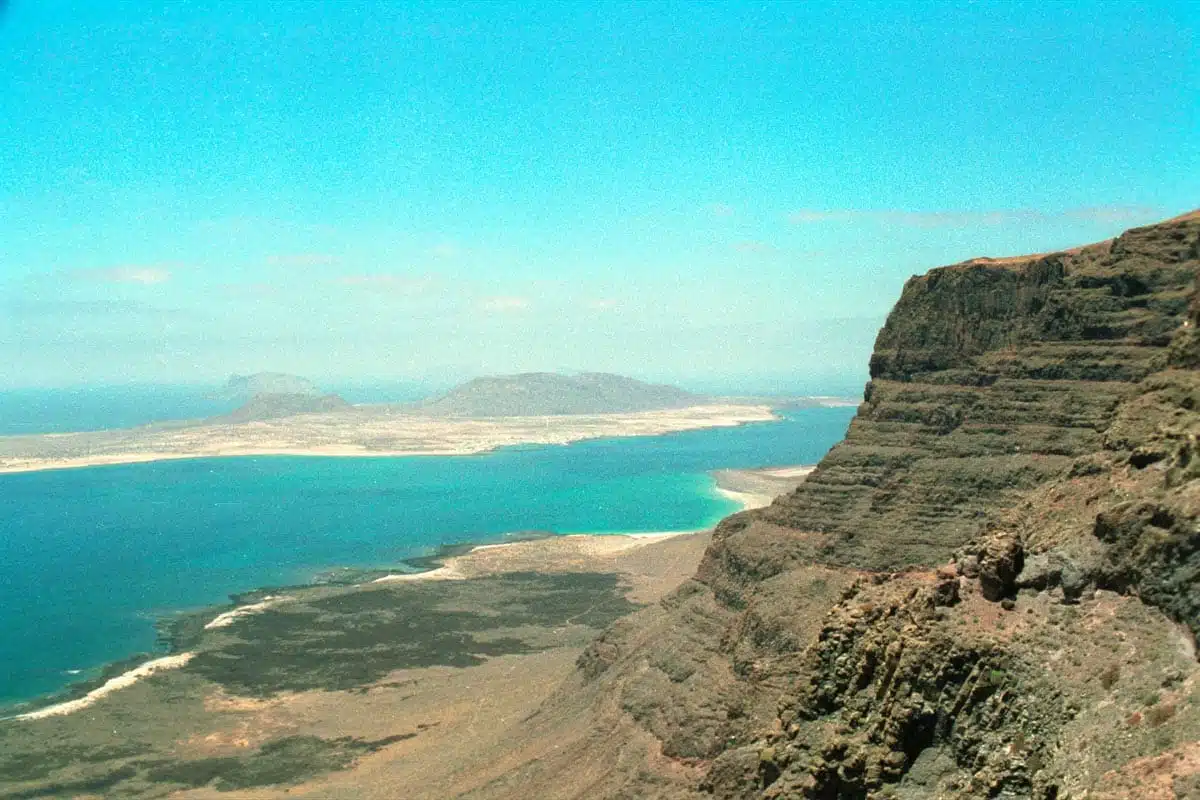
At the northern end of the Famara cliffs, Manrique turned an old gun battery into a viewpoint that is almost invisible from outside. The building opened in 1973 and is dug into the rock. It has curved white rooms and large windows high above the sea. From the café and terraces you look across the El Río strait to La Graciosa and the smaller islets of the Chinijo Archipelago. Go on a clear day, because cloud can hide the view.
6. A day trip to La Graciosa
After seeing it from above, many visitors take the ferry to La Graciosa from Órzola, at the northern tip of Lanzarote. The island has sandy streets, a small harbour village called Caleta de Sebo and quiet beaches. There are no tarmac roads, so most people walk, hire a bike or use the local 4×4 taxis. La Graciosa is part of a protected natural park, so take your rubbish home with you. Several companies run the crossing, and timetables change by season.
7. Casa-Museo César Manrique, Haría
In the late 1980s Manrique moved to a quieter house in the palm-filled valley of Haría, in the north of the island. He lived there until his death in 1992. The house opened to the public in 2013 and is kept much as he left it. That includes his studio, with brushes, paint pots and unfinished work. Afterwards, stroll through Haría’s shady main square, or visit the town cemetery, where Manrique is buried.
8. Monumento al Campesino, San Bartolomé
Near the centre of the island, close to Mozaga, stands Manrique’s tribute to Lanzarote’s farmers. The tall white sculpture, often called the Monumento a la Fecundidad, dates from 1968 and was made from the old water tanks of fishing boats. Next to it, the Casa-Museo del Campesino recreates a traditional farmhouse, with craft workshops and a restaurant serving island dishes. From here you can drive on into La Geria, where vines grow in hollows dug into the black ash.
9. Castillo de San José and the MIAC, Arrecife
On the edge of Arrecife, Manrique’s home town, an 18th-century fort above the port houses the Museo Internacional de Arte Contemporáneo. Manrique set it up in the 1970s. The galleries show Spanish and Canarian modern art, including his own work. Downstairs, a restaurant he designed looks out over the harbour through a wide curved window. Afterwards, head into Arrecife to see the Charco de San Ginés, a seawater lagoon lined with white fishermen’s houses.
10. Timanfaya and the El Diablo restaurant
Timanfaya National Park protects the lava fields left by the 1730s eruptions. At the Islote de Hilario, Manrique designed the round El Diablo restaurant, where food is grilled over heat rising from the ground. The devil logo on the park signs is also his work. Your entry ticket includes a coach tour along the Ruta de los Volcanes, because you cannot drive or walk freely in the core of the park. Staff also show how hot the ground is just below the surface.
11. Manrique’s wind sculptures

As you drive around the island, look out for Manrique’s Juguetes del Viento, or wind toys. These tall metal mobiles turn and spin in Lanzarote’s steady trade winds. Several stand on roundabouts, including one at Tahíche near the Fundación. You can see them for free at any time. Many are in the middle of busy junctions, though, so only stop where it is safe to park and walk.
When to visit César Manrique’s Lanzarote
Lanzarote is warm all year, with mild winters, little rain and frequent trade winds. Spring and autumn are pleasant for driving between sites, and winter is popular with people looking for sun, as our guide to winter sun destinations in Spain explains. The centres are busiest in the late morning, when tour coaches arrive, so start early or go later in the afternoon. Save the Mirador del Río for a clear day.
Tips for planning your trip
Lanzarote’s airport is just outside Arrecife, and ferries link Playa Blanca with Corralejo if you also want to see Fuerteventura. A hire car is the easiest way to see Manrique’s work, because the sites are spread out. Public buses link the main towns, and many organised tours cover several centres in one day. Allow two days. Use one for the north: the Jardín de Cactus, Jameos del Agua, Cueva de los Verdes, the Mirador del Río and Haría. Use the other for the Fundación, the Monumento al Campesino, Arrecife and Timanfaya. Most of the centres belong to the island’s CACT network, which sells tickets online. Booking ahead is wise in busy periods, and opening times change by season. Wear comfortable shoes for the steps and the uneven volcanic ground. Check your government’s current travel advice before you go.
Questions about César Manrique’s Lanzarote
Is there a combined ticket for the César Manrique sites?
Yes. The CACT network sells combined tickets for several of its centres, such as Jameos del Agua, the Mirador del Río and the Jardín de Cactus. The Fundación César Manrique and the house in Haría are not part of CACT and sell their own tickets.
Which Manrique sites should I see if I only have one day?
Head north, where the Jardín de Cactus, Jameos del Agua and the Mirador del Río are all close together. Stop at the Fundación in Tahíche on the way back.
Can I visit the Manrique sites without a car?
Yes, organised day tours from the main resorts cover the most popular centres. A car gives you much more freedom to stop at viewpoints and the wind sculptures, though.


