Most Beautiful Deserts in the World: 10 Places to Visit

This guide covers ten of the most beautiful deserts in the world, from the red sand of Wadi Rum and the craters of the Negev to the salt flats and dunes of the Sahara, plus a few famous deserts further afield. Deserts are some of the quietest places on earth, with huge skies, bright stars and rock and sand in colours you will not see anywhere else.
Our photographers have walked many of these landscapes, so browse our free desert pictures of sand, dunes, canyons and camels. Most places below are easy to reach with a hire car, a local guide or a tour. Here are 10 of the most beautiful deserts in the world, with tips on visiting them.
1. Wadi Rum, Jordan
Wadi Rum is a protected desert valley in southern Jordan, about an hour’s drive from Aqaba. It became a UNESCO World Heritage Site in 2011 for its red sand, its sandstone and granite mountains and its thousands of rock carvings. Most visitors take a jeep or camel tour with a Bedouin guide and sleep in a desert camp. Pay the entry fee at the visitor centre (the Jordan Pass includes it). You can also combine the trip with the ancient city of Petra, about two hours north.
2. Makhtesh Ramon, Israel
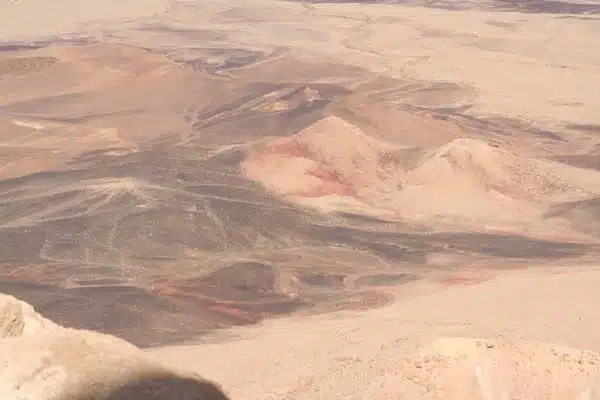
Makhtesh Ramon in the Negev is the world’s largest erosion crater, about 40 km long and up to 500 metres deep. Water carved it, not a meteorite. The town of Mitzpe Ramon sits on the rim, on Road 40 between Be’er Sheva and Eilat, and Nubian ibex often wander near the viewpoints. Hike into the crater or stay for the dark night sky. You need a reservation for the visitor centre on the rim. Learn more about the desert in southern Israel.
3. Masada and the Judean Desert, Israel

The Judean Desert drops steeply from the hills near Jerusalem to the Dead Sea, the lowest place on land. Above the shore stands Masada, King Herod’s clifftop fortress and a UNESCO World Heritage Site. Take the cable car up, or climb the Snake Path, which opens about an hour before sunrise, and watch dawn over the mountains of Jordan. Go early, as the heat builds fast. The Ein Gedi oasis, with springs and small waterfalls, is a short drive north.
4. Giza and the Western Desert, Egypt

The Pyramids of Giza stand where Cairo ends and the Sahara begins. Arrive early to beat the heat and crowds. Going inside the Great Pyramid needs a separate ticket. The Grand Egyptian Museum, which officially opened in November 2025, is close by. Further west, the White Desert near Farafra has chalk rock shapes and is usually visited on overnight trips with a licensed operator. Start with our guide to Cairo, the capital of Egypt.
5. Chott el Jerid, Tunisia

Chott el Jerid is the largest salt pan in the Sahara, covering roughly 5,000 square kilometres of southern Tunisia. Most of the year it is a dry, white crust, but after winter rain a thin layer of water can mirror the sky. A causeway road crosses it between Tozeur and Kebili, and drivers often see mirages in the heat. Stop near sunrise or sunset for the softest colours. Nearby Douz is the usual starting point for camel rides into the dunes of the Grand Erg Oriental.
6. Erg Chebbi, Morocco
Erg Chebbi is Morocco’s best-known field of Sahara dunes. It is about 22 km long, and its orange sand rises to around 150 metres. The village of Merzouga sits on its western edge. The classic trip is a camel ride at sunset to a desert camp, then a climb up a dune for sunrise. It is a long drive from Marrakech or Fès, so many people join a tour of several days over the Atlas Mountains. Spring and autumn are the most comfortable seasons.
7. Wahiba Sands, Oman
Also called the Sharqiya Sands, this sea of red and honey coloured dunes lies a few hours’ drive south east of Muscat. Camps range from simple to comfortable. Driving on sand needs a 4×4 and experience, so many visitors arrange a pickup with their camp instead. Combine it with a swim in Wadi Bani Khalid, a green valley with pools not far away. Go in the cooler months, roughly October to March.
8. Namib Desert, Namibia
The Namib is often called the oldest desert in the world, and the Namib Sand Sea is a UNESCO World Heritage Site. At Sossusvlei, in Namib-Naukluft National Park, red dunes rise over white clay pans. Deadvlei, with its dead camel thorn trees, is one of the most photographed desert scenes. Enter through the Sesriem gate, which opens at sunrise. Only guests staying inside the park can get in earlier. A tarred road runs most of the way, but the last soft stretch needs a 4×4 or the park shuttle.
9. Atacama Desert, Chile
The Atacama in northern Chile is the driest non-polar desert on earth. From San Pedro de Atacama you can visit the salt ridges of the Valle de la Luna, high lagoons with flamingos and the El Tatio geysers at dawn. San Pedro sits at about 2,400 metres and some trips go much higher, so take the first days slowly. The clear skies make night sky tours popular. Some sites limit visitor numbers, so book ahead.
10. Death Valley, USA
Death Valley National Park, in California and Nevada, is the hottest, driest and lowest national park in the United States. Badwater Basin is the lowest point in North America. Dunes, salt flats, coloured badlands and canyons are all within a day’s drive. Zabriskie Point at sunrise and the Mesquite Flat dunes at sunset are favourite stops. Visit between autumn and spring, because summer heat here is dangerous. Carry plenty of water and pay the park entrance fee. If your car breaks down, stay with it.
Tips for visiting
Plan desert trips for the cooler months. Walk early or late in the day, when the light is also best for photos. Carry more water than you think you need, plus a hat, sunscreen, sunglasses and a warm layer, because desert nights can be cold even after a hot day. Use licensed local guides for jeep, camel and overnight trips. Never drive off marked tracks without a 4×4 and local knowledge. Check whether parks or visitor centres need tickets or booking, as rules and times change by season. Some desert regions are close to borders, so check your government’s current travel advice before you go.
Questions about visiting deserts
When is the best time to visit the desert?
For most deserts in the Middle East and North Africa, spring and autumn are best, with warm days and cool nights. Summer can be dangerously hot, and winter nights can be very cold.
Do I need a guide to visit the desert?
You can visit places like Masada, Makhtesh Ramon or Death Valley on your own using marked roads and trails. For deep sand, camel treks and remote camps, as in Wadi Rum or Erg Chebbi, a local guide is safer.
Which desert has the most beautiful sand dunes?
For tall, classic dunes, Erg Chebbi in Morocco and Sossusvlei in Namibia are hard to beat. Wadi Rum mixes red sand with rock mountains.


