Things to Do in Madagascar: 12 Best Places and Experiences
Madagascar is the fourth-largest island in the world, about 400 kilometres off the coast of East Africa across the Mozambique Channel. It split from the other continents so long ago that most of its plants and animals live nowhere else: more than 100 kinds of lemurs, chameleons, the cat-like fossa and six of the world’s eight baobab species.
Distances are long and roads are slow, so most visitors choose one or two regions rather than trying to see everything. Here are the 12 best things to do in Madagascar, from the famous baobab avenue to whale watching and quiet beaches, with tips on when to go and how to plan the trip.
1. Watch the sunset on the Avenue of the Baobabs
The Avenue of the Baobabs is a dirt road near Morondava on the west coast, lined with about 25 giant Grandidier’s baobabs, some of them hundreds of years old and around 30 metres tall. It is the most photographed place in Madagascar, and the best time to come is the last hour before sunset, when the trunks turn red and the sky behind them glows. Nearby you can also see the “Baobabs in Love”, two trees twisted around each other.
2. Hike among the needles of Tsingy de Bemaraha
Tsingy de Bemaraha National Park, a UNESCO World Heritage Site, protects a forest of razor-sharp limestone pinnacles. Trails with ladders, cables and suspension bridges lead over and between the stone needles of the Grand Tsingy and the Petit Tsingy. The park is reached on a rough road from Morondava and is open only in the dry season, roughly April to November.
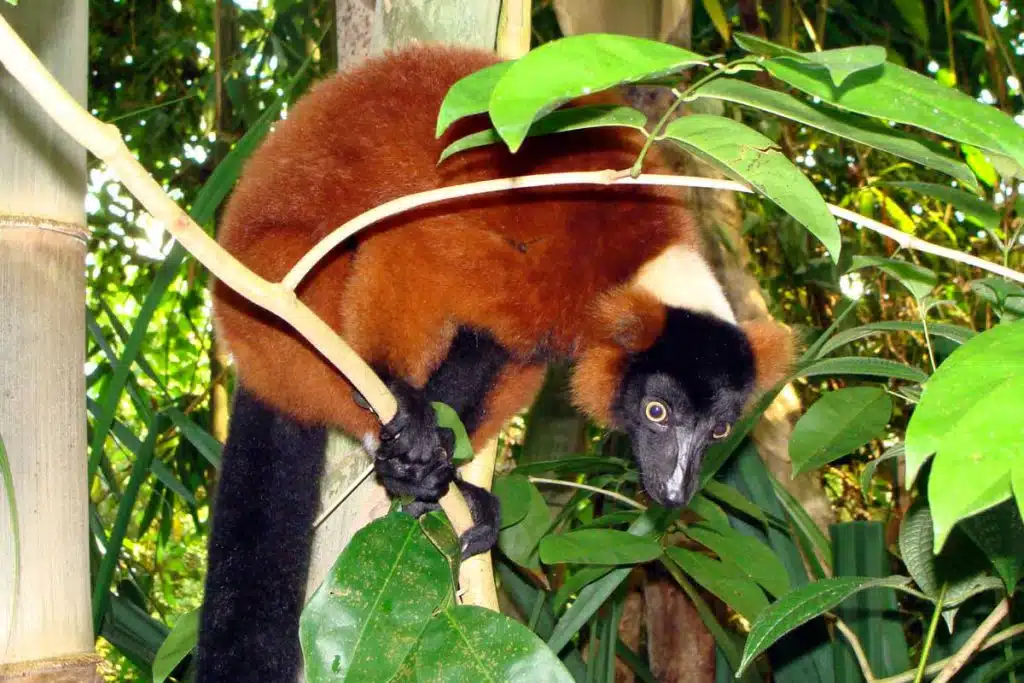
3. Look for lemurs in Andasibe-Mantadia National Park
Three to four hours east of Antananarivo, the rainforest of Andasibe is the easiest place to see lemurs in the wild. It is home to the indri, the largest living lemur, whose wailing call carries through the forest every morning. Night walks with a local guide show mouse lemurs, frogs and chameleons.
4. Swim in the natural pools of Isalo National Park
Isalo in the south is a landscape of sandstone ridges, deep canyons and grassland. Walks lead to the Piscine Naturelle, a clear pool under a small waterfall fringed with palms, and to the Canyon des Singes, where ring-tailed lemurs and sifakas live. The light at sunset on the “Window of Isalo” rock arch is worth the wait.
5. Walk the rainforest of Ranomafana
Ranomafana National Park protects misty mountain rainforest with about a dozen species of lemurs, among them the rare golden bamboo lemur, discovered here in 1986. The trails are steep and often wet, but the forest, the rivers and the hot springs in the village make it a highlight of the road south from Antananarivo.
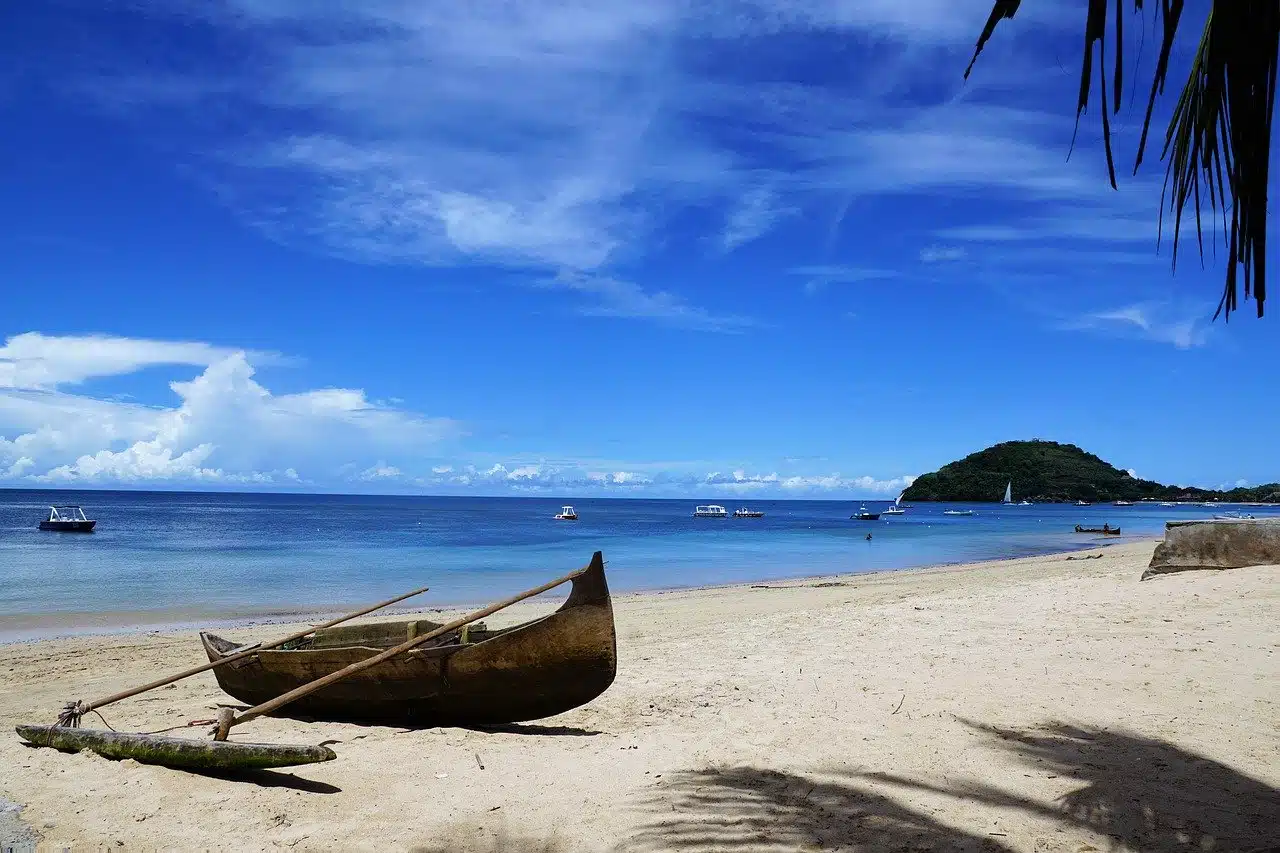
6. Relax on the beaches of Nosy Be
Nosy Be off the northwest coast is Madagascar’s best-known beach island, with calm water, resorts and day trips by boat. Visit Nosy Komba, where black lemurs come close to visitors, snorkel with turtles at the Nosy Tanikely marine reserve, and walk through the forest of Lokobe reserve.
7. Swim with whale sharks
The waters around Nosy Be are one of the best places in the Indian Ocean to swim with whale sharks, the largest fish in the world. They come to feed on plankton roughly from October to December. Whale sharks are harmless to people; go with an operator that keeps a respectful distance and limits the number of swimmers.
8. Watch humpback whales off Île Sainte-Marie
Every year from about July to September, humpback whales come to the warm, sheltered waters between Île Sainte-Marie and the east coast to give birth and raise their calves. Boat trips leave from the island’s villages, and you can often see the whales breaching from the shore. The island also has quiet beaches and an old pirate cemetery.
9. Float down the Tsiribihina River
A two to three day trip by pirogue (dugout canoe) or small motorboat down the Tsiribihina River is one of the most memorable ways to travel in western Madagascar. You camp on sandbanks, pass villages and gorges, look for lemurs and birds along the banks and end near Belo-sur-Tsiribihina, on the way to the Tsingy.
10. Explore the north: Ankarana, Montagne d’Ambre and the Emerald Sea
The far north around Antsiranana (Diego Suarez) packs a lot into a small area: the caves and grey tsingy of Ankarana reserve, the rainforest and waterfalls of Montagne d’Ambre, the eroded red pinnacles of the Tsingy Rouge, and a day sailing on the turquoise lagoon called the Emerald Sea.
11. Discover the history of Antananarivo
Most trips start in the capital, a city of hills, rice fields and red brick houses. Climb to the Rova, the palace of the Merina queens that overlooks the city, browse the stalls of Analakely market, and take a day trip to the royal hill of Ambohimanga, a UNESCO World Heritage Site about 20 kilometres northeast of the city. It is the best place to learn the island’s history, from the Merina kingdom to French colonial rule and independence in 1960.
12. Spot a fossa in Kirindy Forest
Kirindy, a dry deciduous forest north of Morondava, is the best place to see the fossa, Madagascar’s largest predator, which looks like a cross between a cat and a mongoose. The forest is also home to the giant jumping rat and several lemurs, and it combines well with a visit to the Avenue of the Baobabs.
When to visit Madagascar
The best time to visit is the dry season from April to November. September to November is warm and good for wildlife, as many lemurs have young. The rainy season from December to March brings heavy rain and cyclones, especially on the east coast, and some parks and roads close.
Tips for planning your trip
Roads are slow and long trips take a full day, so plan two or three regions for a two-week stay, or use domestic flights. Hire a local guide in every national park; in most parks it is required, and guides find far more animals than you would on your own. The local currency is the ariary, and cash is needed outside the cities. French and Malagasy are the main languages. Check the current entry and visa rules before you travel.
Questions about things to do in Madagascar
What is Madagascar best known for?
Its wildlife: lemurs, chameleons and many other animals that live nowhere else, and the giant baobab trees, especially on the Avenue of the Baobabs.
How many days do you need in Madagascar?
Two weeks is enough for one route, such as Antananarivo, Andasibe and the south (Ranomafana and Isalo), or the west (Morondava, the baobabs and the Tsingy). Three weeks or more let you add the north or a beach island.
Where can you see lemurs in Madagascar?
Andasibe-Mantadia and Ranomafana in the eastern rainforest, Isalo and Anja reserve in the south, Kirindy in the west and Nosy Komba near Nosy Be are the easiest places to see them in the wild.