Things to Do in Tanzania: 12 Best Places and Experiences
Tanzania is a large country in East Africa, between the Indian Ocean and the Great Lakes. It is home to Mount Kilimanjaro, the Serengeti plains and the spice island of Zanzibar. Few countries offer such a mix of wildlife, mountains, beaches and ancient history.
Much of the country is savannah, with highlands, lakes and a long coast. It holds a huge variety of large animals, and the human story here goes back millions of years. Here are the 12 best things to do in Tanzania, with tips on when to go and how to plan your trip.
1. See the Serengeti
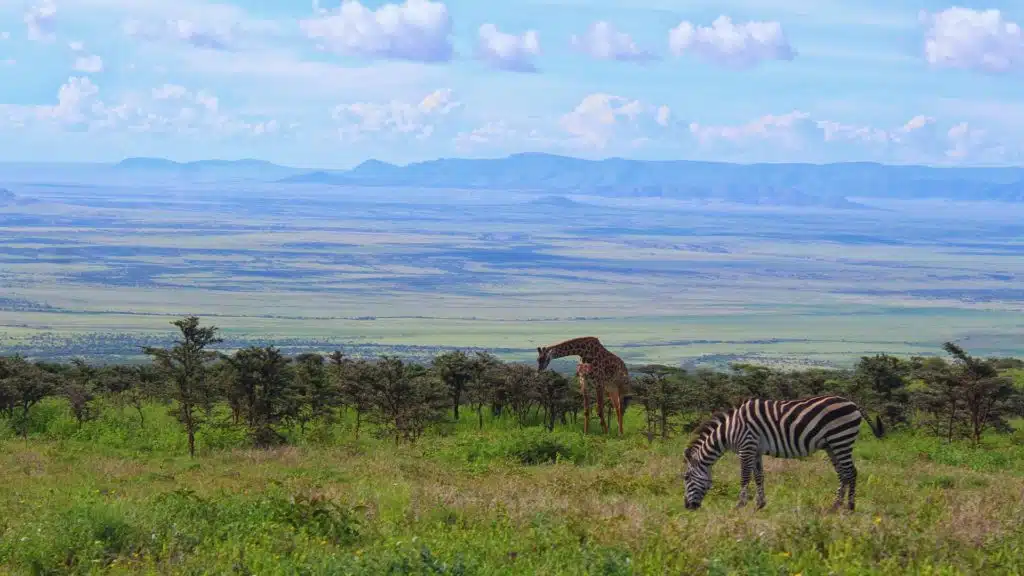
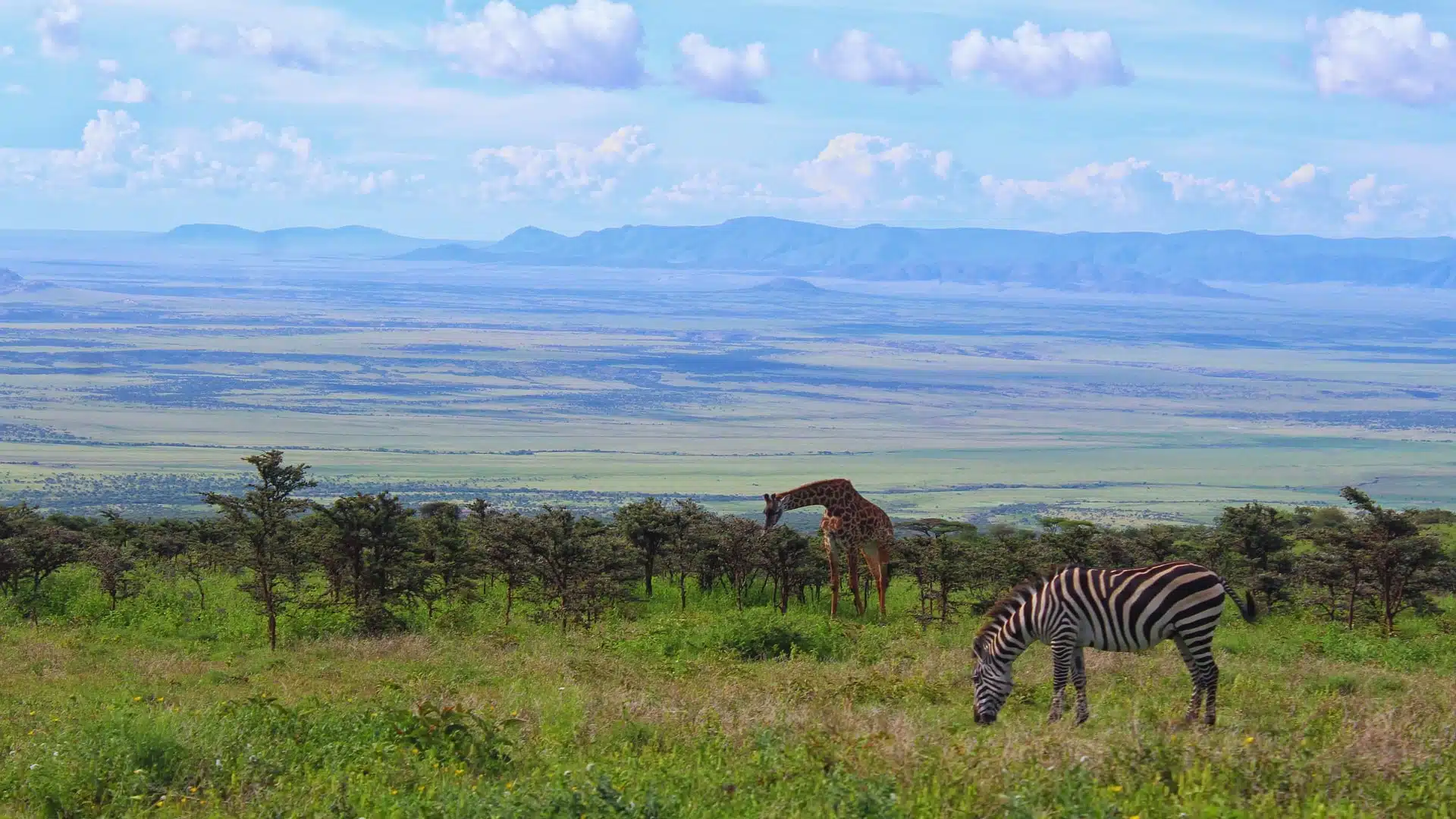
The Serengeti is the classic African savannah, in the north of Tanzania next to the Kenyan border. Lions, leopards, hyenas, elephants and giraffes live here all year. Each year huge herds of wildebeest and zebra follow the rains in the Great Migration. Flat-topped acacia trees give shade to grazers and lookout spots to big cats.
2. Climb Mount Kilimanjaro
At 5,895 metres, Kilimanjaro is the highest mountain in Africa. It is a huge volcano that stands alone rather than in a chain, and its name is often translated as “shining mountain”. Several routes lead to the top and none needs technical climbing skills. The real challenge is altitude, so choose a longer route that gives your body time to adjust. You will need warm clothing near the summit.
3. Visit Ngorongoro Crater
Ngorongoro is a vast volcanic caldera with steep walls and a flat floor. Lions, elephants, hippos, zebras and wildebeest live on the crater floor, and it is one of the best places in the country to look for black rhino. A day trip with a 4×4 and a guide takes you down the crater road. Start early, because the best light and the quietest hours are in the morning.
4. Explore Olduvai Gorge
Olduvai Gorge lies between the Serengeti and Ngorongoro. Here, Louis and Mary Leakey found early human fossils and stone tools, which helped show that our origins lie in East Africa. The finds span about two million years. A small museum at the rim explains the digs and the fossils. The true history here is in the ground rather than in buildings, so a guided visit helps a lot.
5. Watch elephants in Tarangire National Park
Tarangire is known for its large elephant herds and its old baobab trees. In the dry season, animals gather along the Tarangire River, which makes them easy to find. You can also see giraffes, buffalo, lions and many birds. It is quieter than the Serengeti and fits well into a northern circuit, with Lake Manyara and Ngorongoro nearby.
6. Drive through Lake Manyara National Park
Lake Manyara is a small park under the wall of the Rift Valley escarpment. A groundwater forest at the entrance leads to open plains and the shore of a shallow soda lake. It has baboons, elephants, hippos and many birds. The lake’s flamingo numbers change with the seasons. The park is easy to reach from Arusha and works well for a short visit.
7. Walk through Stone Town and the Old Fort
Stone Town is the old centre of Zanzibar City and a UNESCO World Heritage Site. Its narrow lanes, carved wooden doors and old merchants’ houses show centuries of Swahili, Arab, Indian and European influence. The Old Fort, or Ngome Kongwe, was built by Omani Arabs in the late 17th century. Today it holds cafes, craft stalls and an open-air amphitheatre used for events.
8. Snorkel and dive at Mnemba Island
Mnemba is a small private island off the northeast coast of Zanzibar, surrounded by a marine conservation area. The reef water is clear and full of tropical fish. Green turtles and dolphins are often seen. Day trips by boat leave from nearby beaches for snorkelling and diving, though the island itself is reserved for guests of its lodge.
9. Take a boat safari in Nyerere National Park
Nyerere National Park is in the south of the country and was once part of the Selous Game Reserve. The Rufiji River runs through it, and boat safaris let you see hippos, crocodiles and birds from the water. Elephants, lions and wild dogs live on land. Walking safaris are also offered, and the park is much quieter than the northern circuit.
10. Meet the chimpanzees at Gombe Stream
Gombe Stream is a small national park on the shore of Lake Tanganyika in western Tanzania. It is best known for the long chimpanzee research begun by Jane Goodall in 1960. You reach it by boat from Kigoma and explore on foot with a ranger. Trekking can be steep and humid, but seeing wild chimpanzees up close is memorable.
11. Hike in Arusha National Park
Arusha National Park is small but varied. It includes forest, grassy plains, crater lakes and Mount Meru, which rises to 4,566 metres. Giraffes, buffalo, warthogs and black-and-white colobus monkeys are easy to see. Walking safaris with a ranger are possible here. The park is close to Arusha town, so it suits a short trip or a first day of acclimatisation before Kilimanjaro.
12. Discover the ruins of Kilwa Kisiwani
Kilwa Kisiwani is a small island off the southern coast and a UNESCO World Heritage Site. In the Middle Ages it was a rich Swahili trading city. You can still see the remains of a large mosque, a palace and a later fort. The ruins are reached by boat from Kilwa Masoko, and few visitors come, which makes it a calm break from safari.
When to visit Tanzania
The dry season, from June to October, is the best time for wildlife, because animals gather near water and the grass is shorter. Kilimanjaro is usually best climbed in January to March or June to October. The long rains fall from March to May, and short rains often come in November. Zanzibar’s beaches are pleasant for most of the year, but heavy rain is common in April and May.
Tips for planning your trip
Most visitors fly into Kilimanjaro International Airport near Arusha for the northern parks, or into Dar es Salaam or Zanzibar. Small domestic flights link many parks, and ferries run between Dar es Salaam and Zanzibar. Most safaris are done with a guide and a 4×4 vehicle, and a licensed guide is required to climb Kilimanjaro. Check visa, vaccination and health rules in good time, and read your government’s current travel advice before you book.
Questions about Tanzania
How many days do you need in Tanzania?
A week lets you combine two or three northern parks, such as the Serengeti, Ngorongoro and Tarangire. Add four or five days if you want to climb Kilimanjaro or relax in Zanzibar.
Do you need a guide to climb Kilimanjaro?
Yes. Climbers must go with a licensed guide and support crew, and the main routes are managed by the national park authority.
When is the Great Migration in the Serengeti?
The herds move all year in a rough circle. Calving is usually in the south around January and February, and river crossings in the north are often seen between July and October.