5 Natural Wonders of Greece You Must See: Meteora, Santorini and More
Greece is known for ancient temples, classical history and the birthplace of democracy and the Olympic Games. It is also a country of dramatic landscapes, from towering rock pillars and sea caves to mountain lakes and volcanic islands. Many of these places sit well away from the famous ruins.
Some are easy to reach by road or ferry. Others need a boat trip or a long hike. Together they show a different side of Greece, and each one rewards a visit in the right season. Here are the 5 natural wonders of Greece you must see, with tips on when to go and how to plan your trip.
1. Meteora
Meteora in Thessaly is a forest of huge sandstone pillars rising above the plain near the town of Kalambaka. Wind, water and time shaped the rocks over millions of years. Monks later built monasteries on the summits, and six are still active today. The site is a UNESCO World Heritage Site. You can walk between the monasteries on paths and stairs, or simply watch the light change on the cliffs at sunset. Dress modestly if you plan to go inside.
2. Blue Caves of Zakynthos
On the northern tip of Zakynthos, near Cape Skinari, the sea has carved arches and caves into the limestone cliffs. Sunlight enters the water and bounces off the pale seabed. This makes the water glow in shades of blue and turquoise, especially when you swim or float inside. Small boats run trips from Agios Nikolaos and other ports. Many tours also stop at Navagio, or Shipwreck Beach, which can only be reached by sea. Calm weather is important, as rough seas can cancel trips.
3. Island of Lemnos
Lemnos lies in the north Aegean, and most visitors never think of it as a place for sand dunes. Near the village of Gomati, the Pachies Ammoudies dunes form a small, pale desert beside the sea. The wind keeps reshaping them. The contrast between golden sand and blue water is striking, and photographers love it at low evening light. The rest of the island is green and quiet, with long beaches, hot springs and small villages. Flights and ferries link it with the mainland.
4. Drakolimni
Drakolimni means “Dragon Lake”. It is the name of a high mountain lake on Mount Tymfi in Epirus, in the Pindus range. The lake sits at around 2,050 metres, in a stony alpine setting. Local legend says dragons once fought here. The best-known route starts from the village of Mikro Papingo in the Zagori region and takes several hours on foot. Alpine newts live in the cold water. Another Drakolimni lies on nearby Mount Smolikas. Go only in good weather, as snow can linger into early summer.
5. Santorini
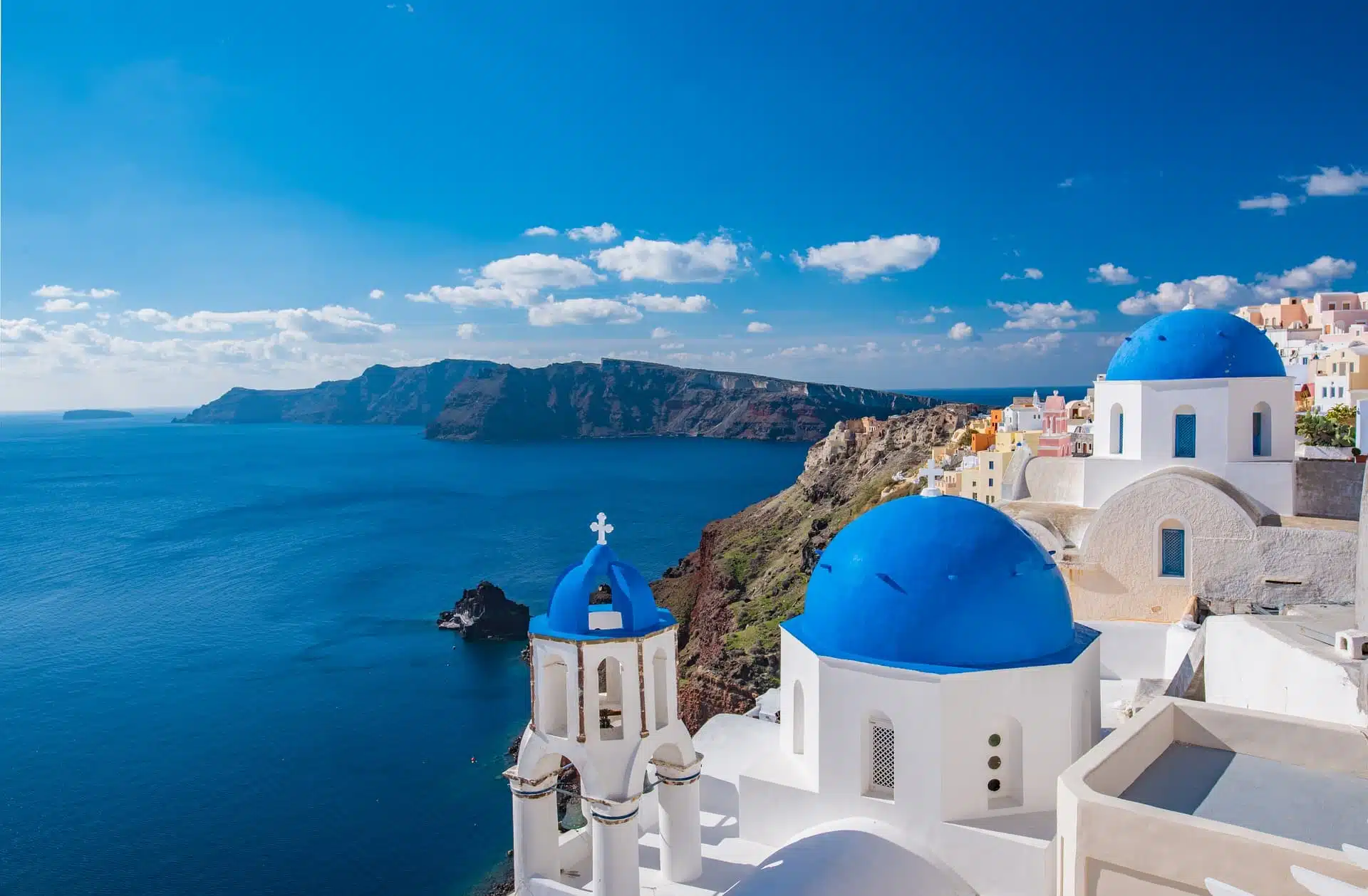
Santorini is what remains of a volcanic island that erupted violently about 3,600 years ago. The sea flooded the centre and created the great caldera, a curved bay with steep cliffs on its inner side. White villages perch along the rim. Oia is famous for its sunsets, Fira is the busy main town and Imerovigli is a quieter option. Volcanic soil also gives the island its own wines, especially the white Assyrtiko, so a winery visit is worth adding.
When to visit Greece’s natural wonders
Late spring and early autumn suit most of these places. May, June, September and early October bring warm weather, calmer seas and smaller crowds than July and August. Meteora is pleasant in spring, when the valley is green. Boat trips to the Blue Caves run best in summer, when the sea is calm. Drakolimni is a summer and early autumn hike, once the snow has gone. Santorini is crowded at sunset in high season, so arrive early or visit outside July and August.
Tips for planning your trip
Athens is the usual starting point. Trains and buses run from Athens to Kalambaka for Meteora, and flights or ferries serve Zakynthos, Lemnos and Santorini. For Drakolimni, a hire car helps in Epirus, where public transport is limited. Do not try to see all five in one short trip, as they lie far apart. Pair them by region instead: Meteora with Zagori on the mainland, and the islands in separate island-hopping trips. Book boats and ferries ahead in summer. Wear proper shoes for hiking, bring water, and check the weather before any mountain walk.
Questions about the natural wonders of Greece
Which of these wonders is easiest to visit?
Meteora and Santorini are the easiest, as both have good roads, plenty of hotels and regular transport. Drakolimni takes the most effort because of the long hike.
Can I swim in the Blue Caves?
Yes, many boat tours let you swim in or near the caves when the sea is calm. Follow your skipper’s advice, as conditions can change quickly.
Do I need a car?
It helps in Epirus, Lemnos and parts of Zakynthos. On Santorini you can use buses, taxis or a quad bike. At Meteora, many visitors walk or use local tours from Kalambaka.