Things to Do in Saint Petersburg: 12 Best Places and Experiences
Saint Petersburg is a Russian city on the Neva River, at the head of the Gulf of Finland on the Baltic Sea. Peter the Great founded it in 1703. It is Russia’s second-largest city after Moscow and an important Baltic port. Its Historic Centre and related groups of monuments are a UNESCO World Heritage Site, which is why many people call it Russia’s cultural capital.
The city is easy to enjoy on foot and by water. Palaces, cathedrals, canals and wide avenues sit close together, and the light on the river makes it a great place for photography. Here are the 12 best things to do in Saint Petersburg, with tips on when to go and how to plan your trip.
1. The Winter Palace and the Hermitage
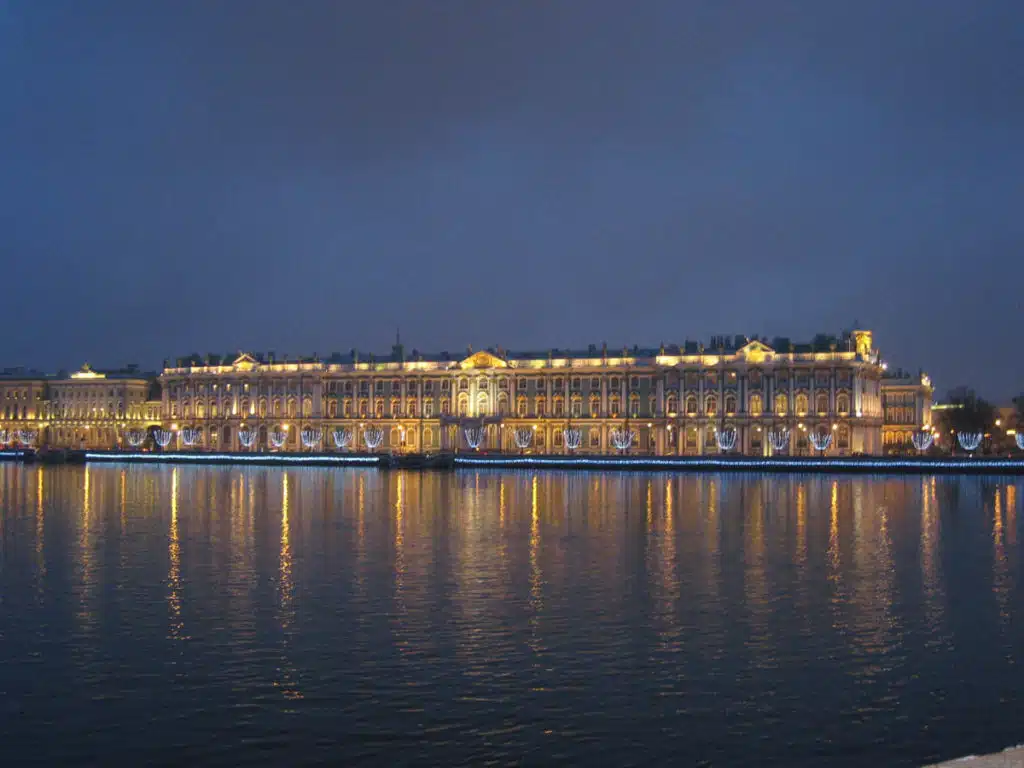
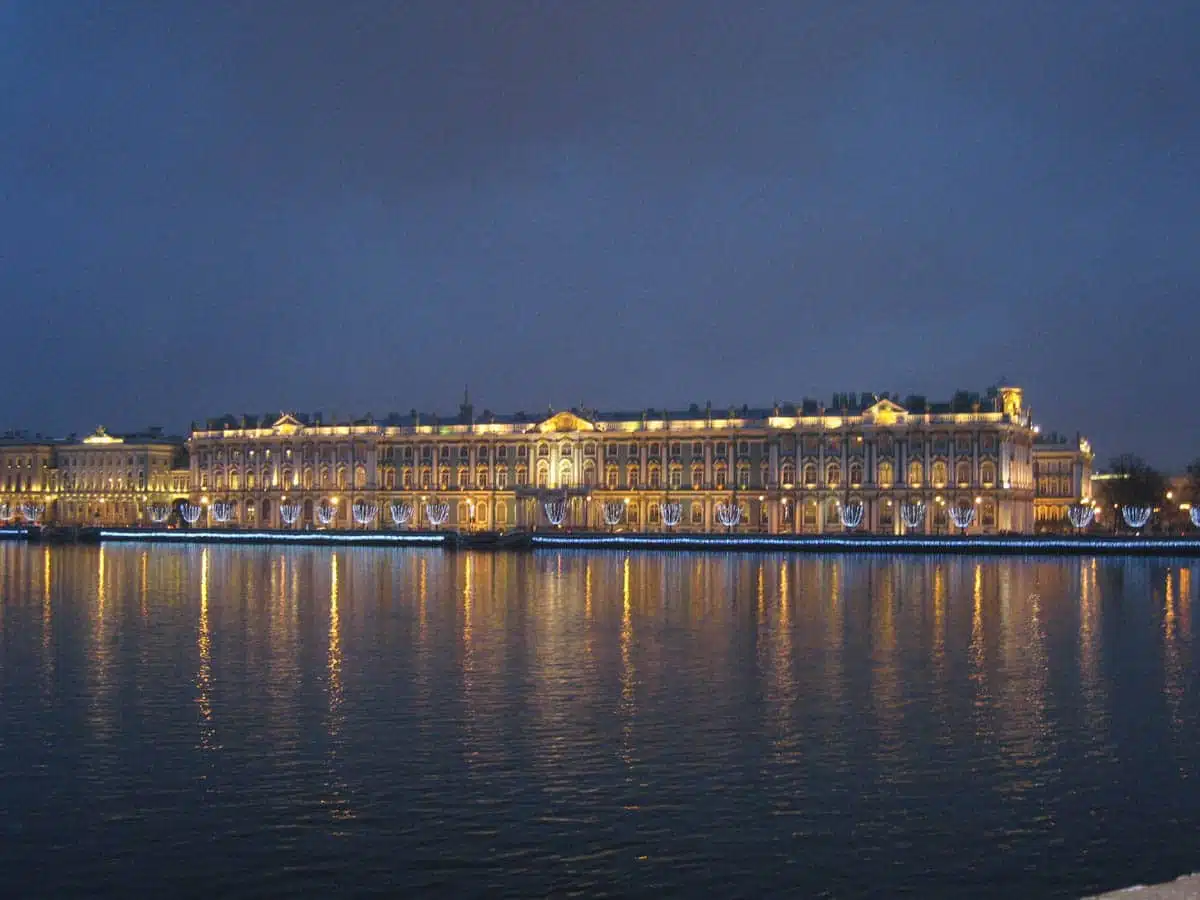
The Winter Palace was the official residence of the Russian emperors from 1732 to 1917. Today it forms part of the Hermitage Museum. Bartolomeo Rastrelli designed it in the Elizabethan Baroque style. A fire in 1837 damaged it badly, but it was rebuilt quickly, and the exterior stayed the same while many interiors were redesigned.
2. Palace Square
Palace Square is the huge open space in front of the Winter Palace, between the palace and the curved General Staff Building. It is the city’s main public square and a good place to start a walk. Come early in the morning for quieter views, or at sunset when the pale facades turn warm. The Alexander Column stands in the centre.
3. The Peter and Paul Fortress
Peter the Great founded this star-shaped fortress in 1703, and it is the original citadel of the city. Domenico Trezzini’s designs shaped the building work from 1706 to 1740. Today it is the central part of the State Museum of Saint Petersburg History. You can walk along the walls and visit several buildings, and the fortress is a favourite subject for photographers.
4. Peter and Paul Cathedral
The cathedral stands in the middle of the fortress, and its gilded spire is a landmark of the skyline. It is the burial place of most Russian tsars from Peter I to Alexander III. The remains of Nicholas II and his family were reburied in the side chapel of St Catherine in 1998. Below the walls are sandy beaches, which fill up on summer days.
5. Church of the Saviour on Spilled Blood
Construction began in 1883 under Alexander III, two years after the assassination of his father, Alexander II. The church is a memorial to him. Its style looks back to medieval Russian architecture and recalls Yaroslavl churches and St Basil’s Cathedral in Moscow. Inside, more than 7,500 square metres of mosaics cover the walls, which its restorers say is more than in any other church.
6. Nevsky Prospekt
Nevsky Prospekt is the city’s main street, running for several kilometres past canals, shops, cafés and historic buildings. Walking it gives you a feel for everyday life in Saint Petersburg. Take your time and look up at the facades. Many of the best-known sights, including Kazan Cathedral and Singer House, are on or just off the avenue.
7. Singer House
Singer House, also known as the House of the Book, stands where Nevsky Prospekt meets the Griboyedov Canal, opposite Kazan Cathedral. Pavel Suzor designed it for the Russian branch of the Singer Sewing Machine Company. The firm first wanted a skyscraper like its headquarters in New York City, but city rules blocked anything taller than the Winter Palace. The answer was an Art Nouveau building with a glass tower and globe.
8. Kazan Cathedral
Kazan Cathedral faces Nevsky Prospekt with a great curved colonnade that reaches out towards the street like two arms. It was built in the early 19th century and is inspired by St Peter’s in Rome. Inside, it is calm and often quieter than the larger sights. It is an easy stop when you are already exploring the avenue.
9. St Isaac’s Cathedral
St Isaac’s is one of the largest cathedrals in the city, and its golden dome can be seen from far away. Inside, you will find rich marble, paintings and mosaics. You can also climb to the colonnade around the dome. From there you get wide views over the rooftops, the Admiralty and the river.
10. Canals, bridges and the Neva
Saint Petersburg is often compared with Venice because of its canals and many bridges. A boat trip is a relaxed way to see palaces and embankments from the water. In the warmer months the large bridges over the Neva open at night to let ships through, and watching this is a famous local experience.
11. Peterhof and Tsarskoye Selo
Two imperial palace complexes lie outside the city centre. Peterhof, on the Gulf of Finland, is known for its fountains and gardens. Tsarskoye Selo, in the town of Pushkin, is home to the Catherine Palace. Each makes a good half-day or full-day trip. Check what is open and how to travel there before you go.
12. The Lakhta Center
The Lakhta Center is an 87-storey skyscraper on the northern edge of the city. At 462 metres, it is the tallest building in Russia and in Europe. RMJM designed it, and it is a hub for offices and public facilities. It is also known for the large concrete pour of its foundation slab, which Guinness World Records recognised. It makes a striking contrast with the historic centre.
When to visit Saint Petersburg
Late May to August is the most popular time. Days are long, and in June the White Nights keep the sky light until very late. It is also the busiest and most expensive period. May and September are milder and quieter. Winters are cold and dark, but snow on the canals is beautiful, and museums such as the Hermitage are warm indoor options.
Tips for planning your trip
Most visitors arrive by air at Pulkovo Airport, or by train from Moscow. Entry rules, visas and safety advice for Russia can change, so check your government’s current travel advice before you book. The centre is compact and good for walking, and the metro is useful for longer distances. Buy tickets for big museums in advance when you can, and wear comfortable shoes.
Questions about Saint Petersburg
How many days do you need in Saint Petersburg?
Three days is enough for the main sights in the centre. Add one or two more if you want to visit Peterhof or Tsarskoye Selo and see the Hermitage in more detail.
Why is Saint Petersburg called the cultural capital of Russia?
The city has a World Heritage historic centre, major museums such as the Hermitage, and many theatres and palaces. It was the imperial capital for two centuries, which shaped its art and architecture.
What is the best way to get around the city?
Walk in the centre, and use the metro or buses for longer trips. Boats on the canals and the Neva are a pleasant way to see the sights from a different angle.