Things to Do in Shiraz: 12 Best Historical Places to Visit
Shiraz is a city in the Fars province of southern Iran, long linked with poetry, gardens and wine-making legends. It is also the usual base for visiting Persepolis, one of the great ancient sites of the Middle East. The city itself has Persian gardens, Zand-era buildings and busy bazaars.
You cannot see everything in one visit, but a few landmarks give a good picture of the city’s history. Some are in the centre, and some are a short drive away. Here are the 12 best things to do in Shiraz, with tips on when to go and how to plan your trip. Many of them are across Iran on most visitors’ lists.
1. Eram Garden
Eram Garden (Bagh-e Eram) lies on the north bank of the Khoshk River. It is one of the best-known Persian gardens in Iran and is part of the UNESCO listing for Persian Gardens. Paths run between cypress trees, roses and long pools, with a Qajar-era pavilion at the centre. Spring is the busiest and most colourful season. The garden belongs to Shiraz University and also serves as a botanical garden.
2. Nasir al-Mulk Mosque
Nasir al-Mulk Mosque was built between 1876 and 1888, in the Qajar period. It is often called the Pink Mosque because of the pink tiles used inside and out. The courtyard has a rectangular pool and arched walls decorated with tilework. The main attraction is the stained glass in the prayer hall. Go early in the morning, when the sun throws coloured patterns across the carpets.
3. Vakil Bazaar
Vakil Bazaar was built in the 18th century under Karim Khan Zand, who wanted to make Shiraz a major trading centre. Its brick vaults keep the halls cool in summer and mild in winter. Merchants sell spices, rugs, copperware, antiques and Persian sweets. It is still a place where locals shop every day. Prices can differ for visitors, so bargain politely or shop with a local friend.
4. Tomb of Hafez
The Tomb of Hafez stands in a peaceful garden and honours the 14th-century poet. Hafez is one of the greatest names in Persian literature, and his collected poems, the Divan, are found in many Iranian homes. The tomb sits under an open pavilion with eight columns and a tiled dome, built in 1935. Visit around sunset, when Iranians gather to read his verses aloud.
5. Vakil Bath
The Vakil Bath dates from the Zand period, about 250 years ago. It is part of the same complex as the bazaar and the Vakil Mosque. The bath has a clever heating and drainage system, with water channels running under the floor. Marble basins and painted walls remain in place. Wax figures in the different rooms show how people once bathed, relaxed and met here.
6. Vakil Mosque
The Vakil Mosque is next to the bazaar and was also built under Karim Khan Zand. Its large prayer hall is known for 48 carved stone columns with spiral patterns. The walls are covered in tiles with flower designs, which is typical of Zand art. It is a calm place to rest after the bazaar, and a good spot to take photographs in soft light.
7. Karim Khan Citadel
The Karim Khan Citadel (Arg of Karim Khan) is a fortress in the city centre, built in the 18th century. It has thick brick walls, four round towers and a small courtyard with orange trees. One of the towers leans slightly. Karim Khan Zand ruled much of Iran from Shiraz, and the citadel recalls the years when the city was effectively the capital.
8. Tomb of Saadi
The Tomb of Saadi (Saadiyeh) honours the 13th-century poet Saadi, whose works include the Gulistan and the Bustan. The modern building stands in a garden with pools and cypress trees. Many visitors come for the quiet atmosphere. A tea house nearby is a pleasant place to sit. Saadi is quoted often in Iran, so you may hear his lines recited.
9. Shah Cheragh
Shah Cheragh is a major Shia shrine, holding the tomb of Ahmad ibn Musa, a brother of Imam Reza. The halls are covered with thousands of small mirrors that glitter under the lights. It is a working place of worship, so dress modestly and behave quietly. Rules for foreign visitors can change, so check at the entrance whether you need a guide or a headscarf.
10. Narenjestan Qavam
Narenjestan Qavam is a 19th-century house and garden once owned by the Qavam family, a wealthy merchant and political family. Its name refers to the bitter orange trees in the courtyard. The main hall has mirrored walls, painted ceilings and fine woodwork. It shows how rich families lived in Qajar-era Shiraz, and it is a good stop for architecture lovers.
11. Persepolis
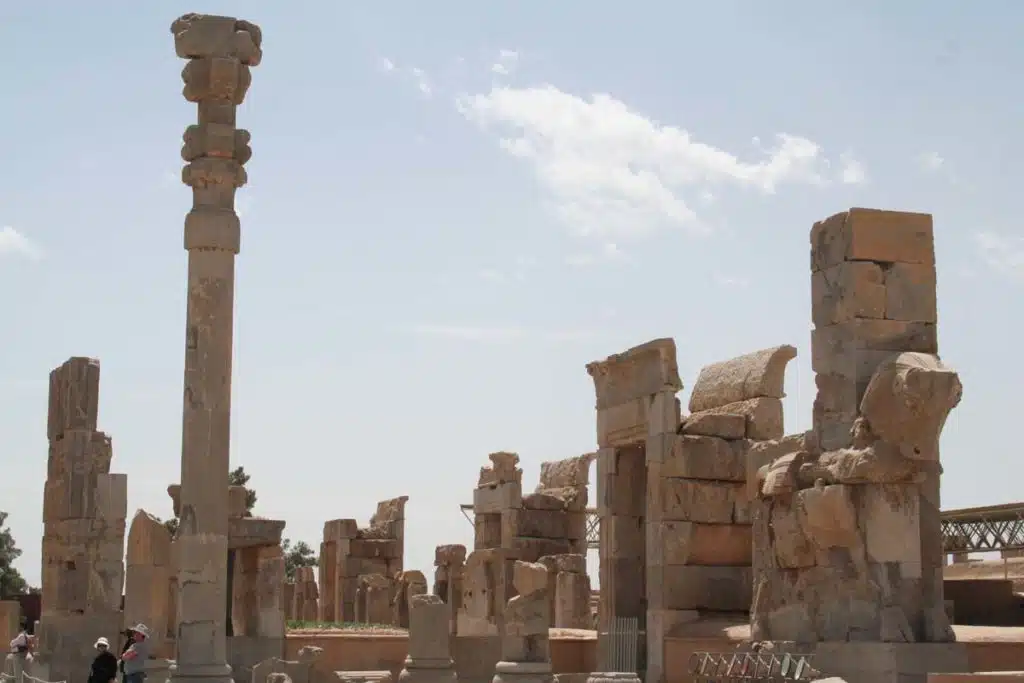
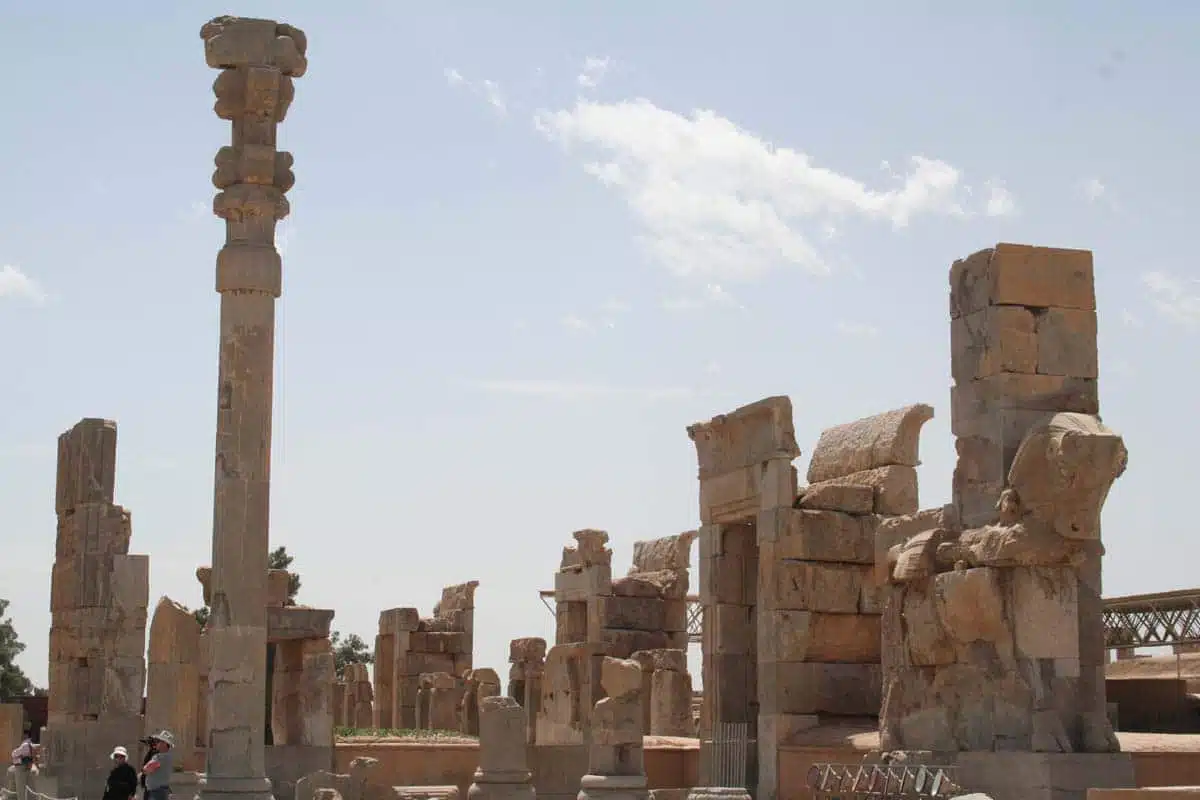
Persepolis is about 60 km north-east of Shiraz and is the city’s biggest day trip. It was begun by Darius I around 518 BC as a ceremonial capital of the Achaemenid Empire. Visitors walk among tall column bases, gateways and stone reliefs showing delegations bringing gifts. It is a UNESCO World Heritage Site. Allow at least half a day and bring water and a hat.
12. Naqsh-e Rustam
Naqsh-e Rustam is a few kilometres from Persepolis, so the two are easy to combine. Four tombs of Achaemenid kings are cut high into a cliff face, and one is thought to be that of Darius I. Below them are large Sasanian rock reliefs showing kings on horseback. The site is smaller than Persepolis but very striking, especially in the afternoon light.
When to visit Shiraz
Spring (March to May) and autumn (October and November) are the best seasons. The weather is mild, the gardens are at their best and sightseeing at Persepolis is comfortable. Summers are hot and dry, so start early and rest in the middle of the day. Winters are cool but usually sunny. The Persian New Year in March is a lively time, but it is also busy.
Tips for planning your trip
Shiraz has its own international airport and domestic flights from Tehran and other cities. Buses and trains also link it with Isfahan, Yazd and Tehran. In the city, taxis and ride-hailing apps are cheap and easy to use, and the main sights in the old centre can be reached on foot. For Persepolis and Naqsh-e Rustam, hire a taxi or join a tour. Dress modestly at mosques and shrines, and carry cash, as foreign bank cards often do not work in Iran. Check your government’s current travel advice and visa rules before you book.
Questions about Shiraz
How many days do you need in Shiraz?
Two to three days is enough for the main sights in the city and a day trip to Persepolis and Naqsh-e Rustam. Add a day if you want to see gardens and museums slowly.
How far is Persepolis from Shiraz?
Persepolis is about 60 km north-east of Shiraz, and the drive takes roughly an hour. Naqsh-e Rustam is only a few kilometres further, so you can visit both in one trip.
What should I wear when visiting mosques and shrines in Shiraz?
Dress modestly, with arms and legs covered, and women should wear a headscarf. At some shrines, such as Shah Cheragh, a chador may be offered at the entrance.
Free photos: Iran (45 photos).